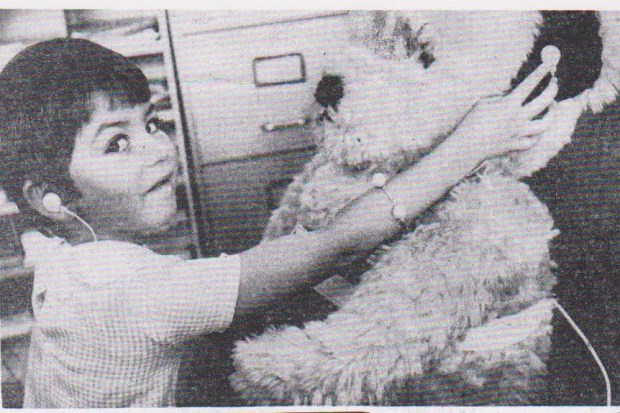
How good are you in lip reading without the hearing the sound or in the loud noisy room?
As a deaf linguist, I learnt a lot on lip reading and speech via sounds through my linguistic papers at the University of Waikato in the past. When I was young before going to the primary school, I learnt to speak properly through speech therapy. In the photo above, this is me when I was young and the photo was printed in the newspaper – Waikato Times. In the old days, Ministry of Education paid the funding – the speech therapy in all school but today there was no speech therapy in all school. My face have not change much today.
I starting to understand why many people even Deaf people struggle to understand what they were saying or talking about the topic. The young generations are getting worst off when I noticed young people in the supermarket or writing a short letter. Let me explain here.
Listen to the sounding of each word. Lip and sound patterns
here
hair
hare
ear
air
for
four
Did you watch or notice the lip patterns??
Many Deaf people prefer to use visual signs such as sign language, body language, gesture, facial expression and visual clue. This is why Deaf people use their first language as sign language for many years. Not all Deaf people can read lips and they receive around 30% or less than 25% of the words through lip reading. Not all the grammatical structures and sounds are impossible to read through lip reading. Many Deaf people are not good at speaking with the right sound and they use their voice off as it is their culture. Simply is that many Deaf people can not hear the right sound by looking at the lip pattern, cannot see the tongue structure or movement behind the teeth.
I am using more than two languages – English, English-NZSL (New Zealand Sign Language) and International Sign Language. For me, it is not always easy to pick up the whole conversation in the meeting or watching the t .v. because it was too noisy, people turned their face away from me, talking too fast, mumbling or gibbering even men wear long beards or moustaches over the lips.
Last year I was with a Somalian Deaf lady in the ESOL classroom and the ESOL teacher was trying to teach one African man who struggles to say ‘kitchen’ instead of ‘chicken’ and ‘khicken’ instead of ‘chicken’. Because of his accent and speaking with a clicking sound is a ‘k’. There were several other ESOL refugee students in the same classroom and they struggle to say the right sound by using particular words such as two, too, Firth, Fifth etc. I was happy to teach them but I was not allowed to teach them due to the ESOL Teacher’s instruction. In the classroom, there were two or three volunteers for 16-17 refugee students. I was not a volunteer, just a paid job as ESOL teacher aide/communicator for the Somalian Deaf lady under one of the organisations for people with disabilities. However, the students asked me during the break hours and I helped them.
How can a Deaf family with a hearing child manage to communicate in their home? There is always the opportunity for many Deaf families to place their hearing child in a kindergarten, pre-kindergarten, with another family member’s children, grandparents, storytelling books even hearing friends’ children. Of course, the Deaf family will have two-way of communication under one roof – sign language and speaking.

 Life in Eureka
