A Half-Day Out to the Hamilton Gardens

The most highlight for this Deaf with CP and speech impaired elderly chap enjoyed his half-day outing at the Hamilton Gardens today.

It had been a long time since this chap visited the Hamilton Gardens and his name is Jacek, who is over 67 years old. In New Zealand, we people faced the lockdown – COVID19 back in March 25th 2020. No one was allowed to visit the Hamilton Gardens in fear of catching and spreading the nasty grimes – COVID19. This year is the worst history of COVID19 around the world since the outbreak in Wuhan, China between October and December 2019. The WHO (World Health Organisation) announced the outbreak COVID19, was declared a Public Health Emergency of International Concern in January 2020, and a pandemic in March 2020. Now in New Zealand, we are in Level One two weeks ago where we go anywhere as long as we make sure to wash our hands, keep the distance within 1 metre and if anyone is not well or feeling ill then must stay home.

Hamilton Gardens is one of the popular attractions in Hamilton City. There is much history about this gardens back to 1960s where there was a bleak city rubbish dump near the Hamilton East Cemetery. The rubbish dump covered blackberries with seagull flying circle around looking for foods and berries. Hamilton City Council owned and managed the Hamilton Gardens along with the local support and community groups such as Roses Club and Hamilton Friends Garden over many years. Today this Hamilton Gardens receive popular visitor attraction of nearly 1.5 million visitors each year and become an award-winning public garden. I want to say these Hamilton Gardens are accessibility for all people with disabilities like Jacek, for example, you can hire a wheelchair or a mobility scooter if you have elderly parents or a disabled person finding challenging to walk along the way. My suggestion is to book to hire a wheelchair or a mobility scooter advance for the weekend outing. There is an accessible toilet facility along with public toilets, public bus transport and plenty of car parks. For your information about accessibility, there is a map of the Hamilton Gardens can be found on the website here –https://hamiltongardens.co.nz/visit/

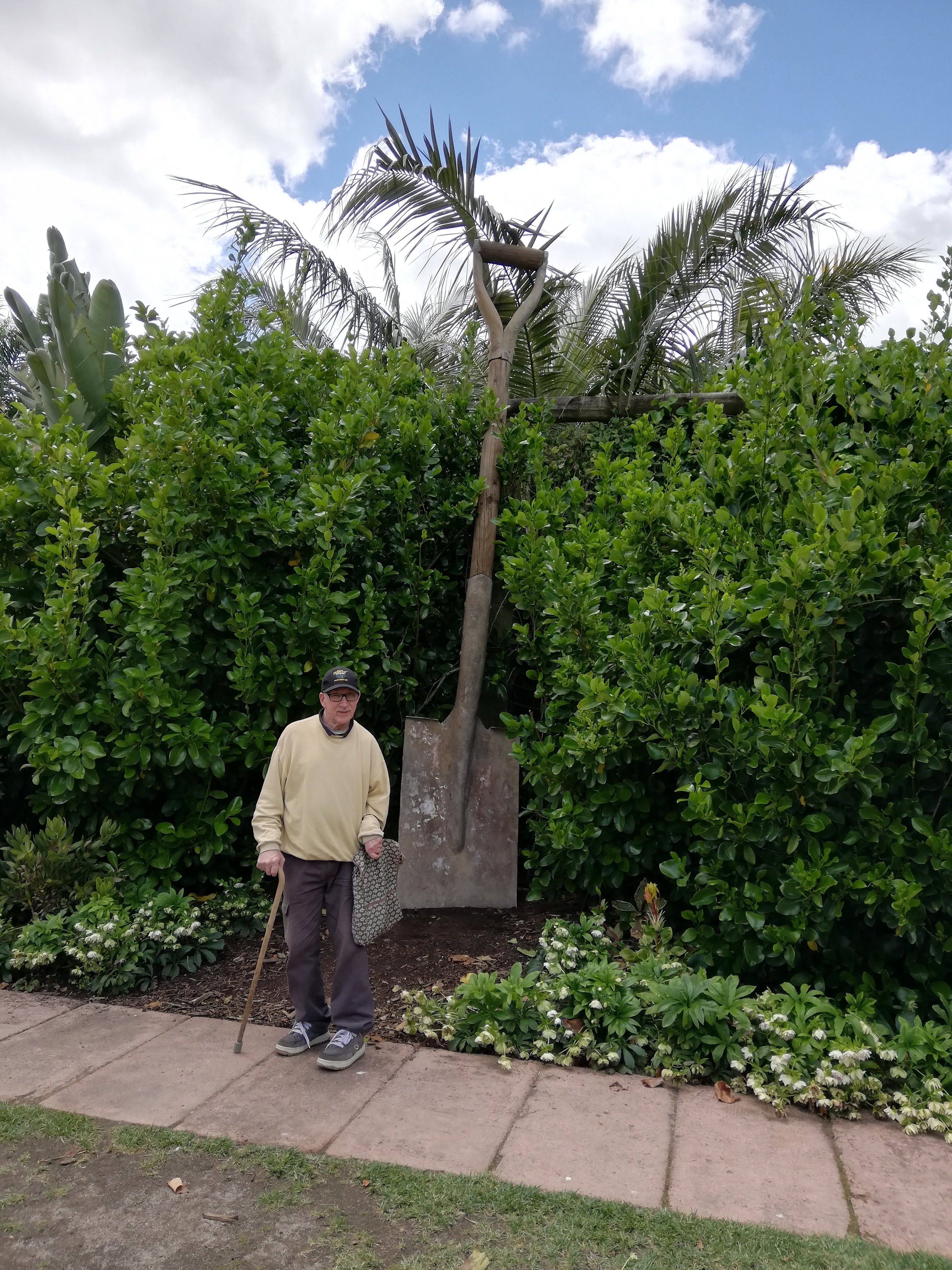
Jacek at the Surrealist Garden

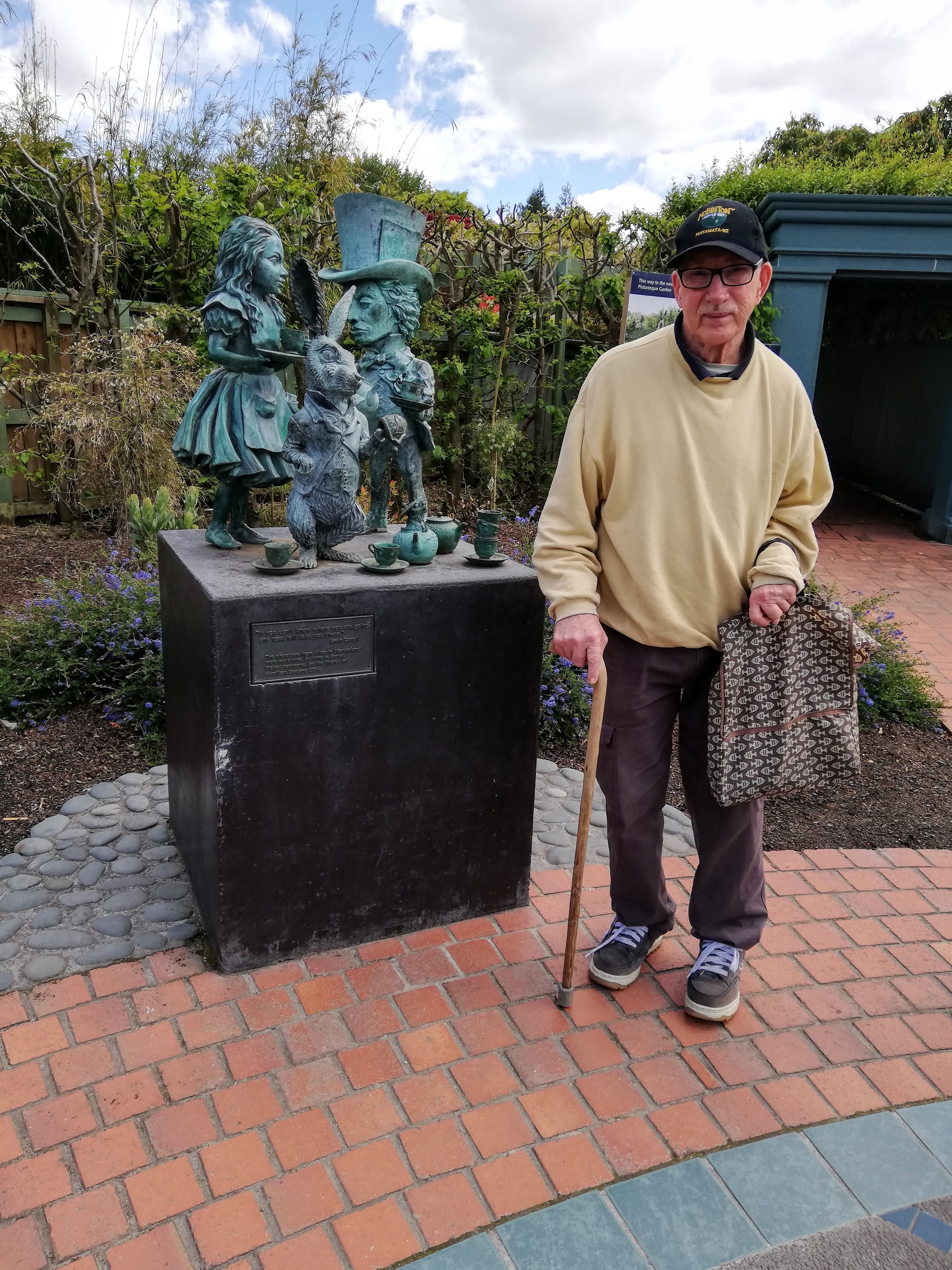
Today I took Jacek to one or two of the newest gardens in one of the Fantasy Garden Collection. It is called the Surrealist Garden and the Tudor Garden. Here are a few more photos to show.
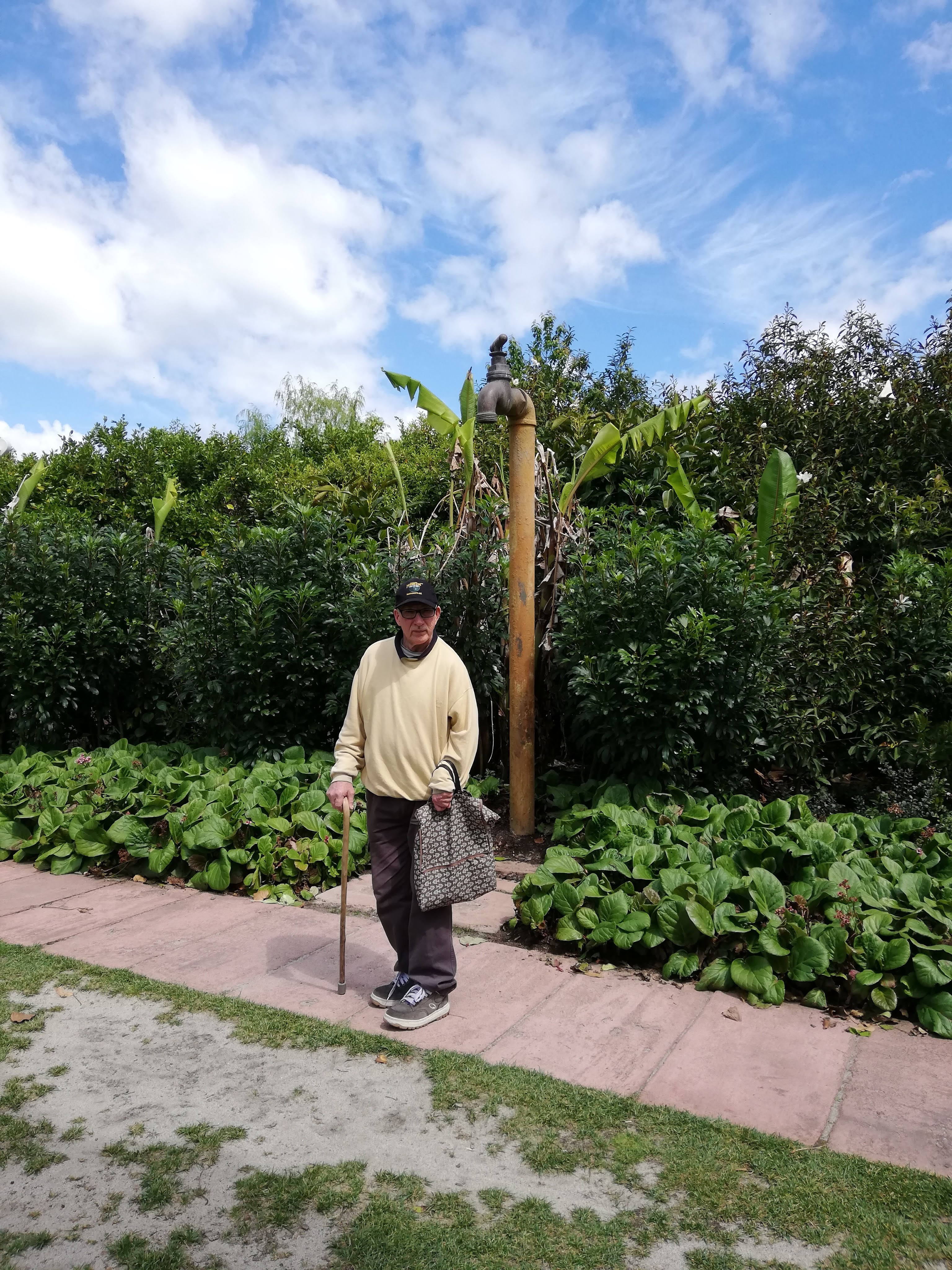
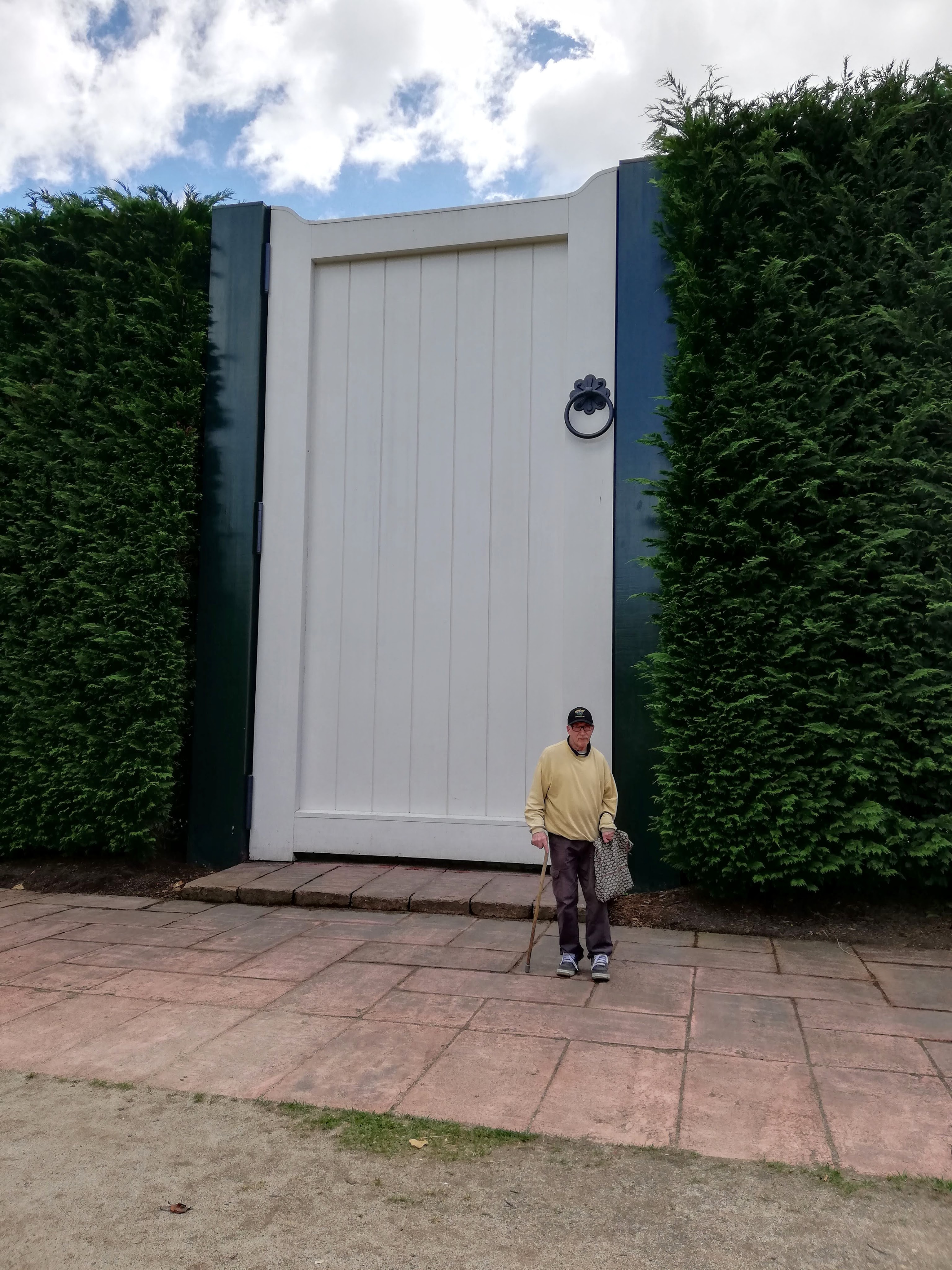
Oh and awe what remarkable picturesque of the plants and enormous figures display and delighted to many people and children. As you can see the photos, there were many people with children entertained and ran around the gardens with awe, gladly and amusing with laughter and fun. How about the video here?

Video by Jean M. The Surrealist Garden

Indeed, what a beautiful day to attend the gardens and enjoy having lunch at the cafe near Turtle Lake. Mind you, at the cafe, it was hectic, and the cafe business will reap for the loss of the profit during the lockdown. We were grateful for one of the staff managed to find a table for us to sit down due to Jacek’s disability.

Another day to revisit the other garden collections on a beautiful sunny day in the future or before Christmas time. Why not? It would be best if you visited this Hamilton Gardens and enjoy your time walking around, relax on the grass and to play bocce, even go to the cafe and have a meal there.

One-Time
Monthly
Yearly

Make a one-time donation

Make a monthly donation

Make a yearly donation

Choose an amount

NZ$5.00
NZ$15.00
NZ$100.00
NZ$5.00
NZ$15.00
NZ$100.00
NZ$5.00
NZ$15.00
NZ$100.00

Or enter a custom amount

NZ$

Your contribution is appreciated.

Your contribution is appreciated.

Your contribution is appreciated.

DonateDonate monthlyDonate yearly
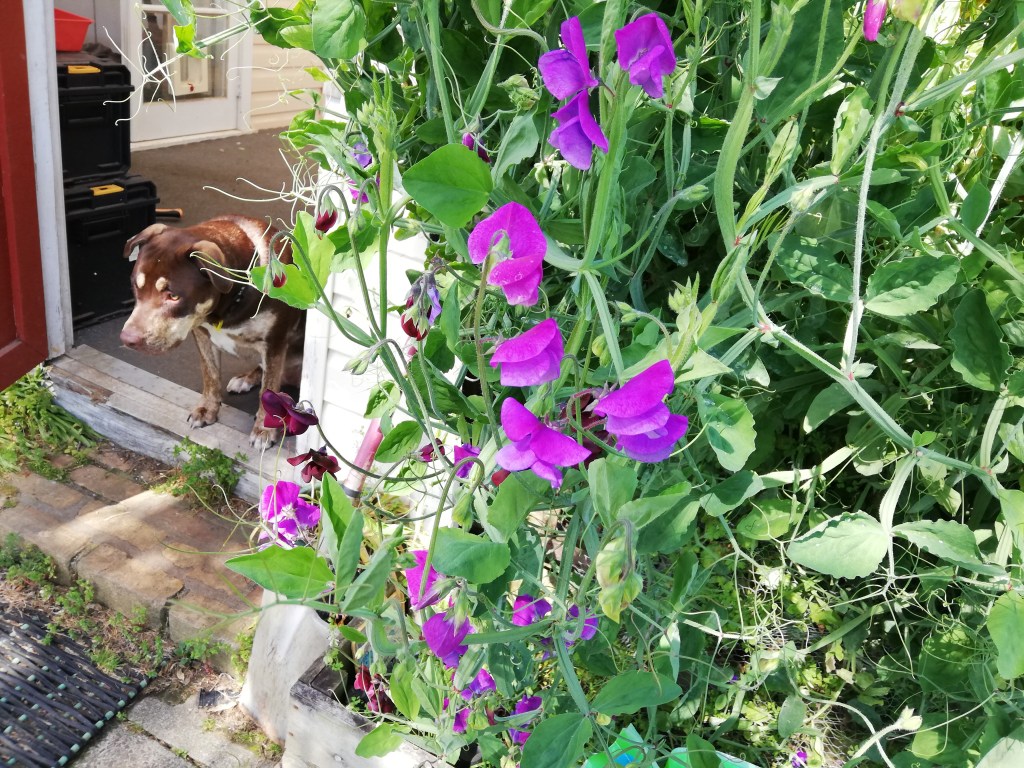
Sweet Peas snippet

Sweet peas flowering by the side door and young pup

How sweet smelling floating through the side door,

Sweet peas flowers dancing in the breezeway while young pup guarding at the door,

Sweet pea flowers

Colour of mauve and purple sweet peas display majesty in the air of the sunshine day. The day before it was raining and gloomy day. How great full today the sun broke through the gloomy and cold day.

What a sight to see the sweet peas climbing up and up toward the blue skies above, brand new leaves keep growing, and we keep sprinkling water day-to-day, the more merry delightful flowering sweet peas, the more will flowering through Spring into Summer days,

For the blind people smell and try to picture the sweet peas look like while the Deaf people watch flowers dancing gracefully for can not hear the sound of fluttering and patting each leaves and flowers,

Sweet peas bring many happiness and memories of our lives, and yours lives from childhood days on the farm, living in the cottages or from the gardener’s books.

The work on the garden project must go on and it will be never-ending throughout day to day of our lives out on the rural home.

Lives within the Psychology

Quotes on Mental Illness Stigma | HealthyPlace

Every year, October 10th it is called a Mental Health Day.

Psychology is the sciences of mind and behaviour. We including people with disAbilities, even Deaf people, do ourselves differently from other people, BUT our mind and behaviour are not the same to other people. 

https://upload.wikimedia.org/wikipedia/commons/1/1b/Gautier_-_Salpetriere.JPG
https://en.wikipedia.org/wiki/Mental_disorder

Did anyone know this word ‘psychology’ came from and what is mean? This word psychology derives from the Greek roots meaning the study of psyche, or soul (ψυχήpsychē, “breath, spirit, soul” and -λογία -logia, “study of” or “research”). The Latin word psychologia was first used by the Croatian humanist and Latinist Marko Marulić in his book, Psichiologia de ratione animae humanae in the late 15th century or early 16th century.[9] The earliest known reference to the word psychology in English was by Steven Blankaart in 1694 in The Physical Dictionary which refers to “Anatomy, which treats the Body, and Psychology, which treats of the Soul.”[10]

In 1890, William James defined psychology as “the science of mental life, both of its phenomena and their conditions”. This definition enjoyed widespread currency for decades. However, this meaning was contested, notably by radical behaviourists such as John B. Watson, who in his 1913 manifesto defined the discipline of psychology as the acquisition of information useful to the control of behaviour. Also, since James defined it, the term more strongly connotes techniques of scientific experimentation.[11][12] Folk psychology refers to the understanding of ordinary people, as contrasted with that of psychology professionals.[13]This quote was from Wikipedia. 

brogdonwiki [licensed for non-commercial use only] / Vocab ...

There are so many different types of psychology in all human, but what about people with disAbilities, even D/deaf people/children? Yes, there are many underlying or hidden issues or cognitive psychology in every human. Here is the first picture of what is the disability to everyone for example, the blogger here is deaf since birth and with cervical radiculopathy and chronic disc disease degeneration several years ago.

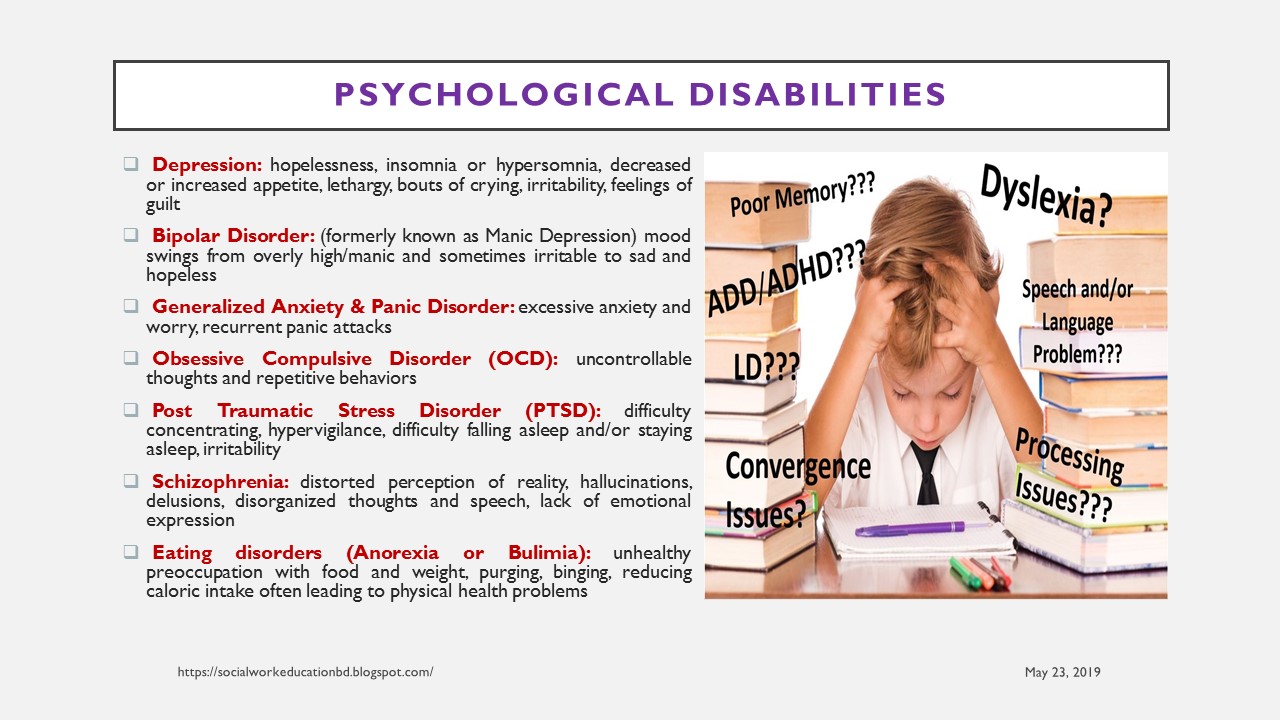
Then there is another picture called psychological disabilities. Yes, it is more than anyone who can think or do not realise that they have or may have more problems. What about grieving, behaviour problem, druggie, living isolated from their family, no family surrounding, stressing, hunger for more alcohols and drugs to make themselves feel better, emotional issues?

The critical role of recovering and managing the mental healths must go through counselling, peer support groups, time out groups such as camping, quiet time by tramping. Alternatively, let do the gardening, finding a place where there is a relaxing and calming room at the beach sides, a change of dietary, conservative approaches for rehabilitation are ideal or Therapeutic exercises. The best option is to write a diary and do a recording video by talking to the camera. Daily, the deaf blogger does gardening as a time out from work in the city and at the home office as a favourite past time hobby.

Positive Psychology | Mappalicious
Want a Career in Psychology? These are the Different Fields
One-Time
Monthly
Yearly

Make a one-time donation

Make a monthly donation

Make a yearly donation

Choose an amount

NZ$5.00
NZ$15.00
NZ$100.00
NZ$5.00
NZ$15.00
NZ$100.00
NZ$5.00
NZ$15.00
NZ$100.00

Or enter a custom amount

NZ$

Your contribution is appreciated.

Your contribution is appreciated.

Your contribution is appreciated.

DonateDonate monthlyDonate yearly

A young lady from Oxford, New Zealand

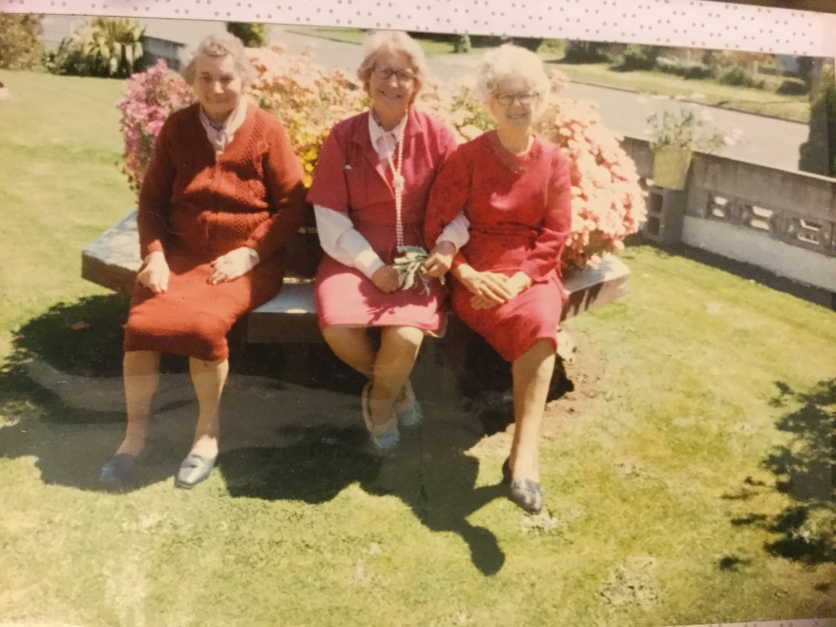
Rose, Delice and Hilda Oct-Nov 1979

My childhood with Great-grandma Rose, when she travelled up to Hamilton City, Waikato and Bay of Plenty where she visited her son – Alan (Shorty as everyone called him), grandsons and great grandchildren.

After my grandmother – Hilda (Biddy as everyone named her) passed away with breast cancer, I continued to see great grandma Rose down in Christchurch, New Zealand until a year before her death in 1986, the day before our late father – Raymond’s birthday.

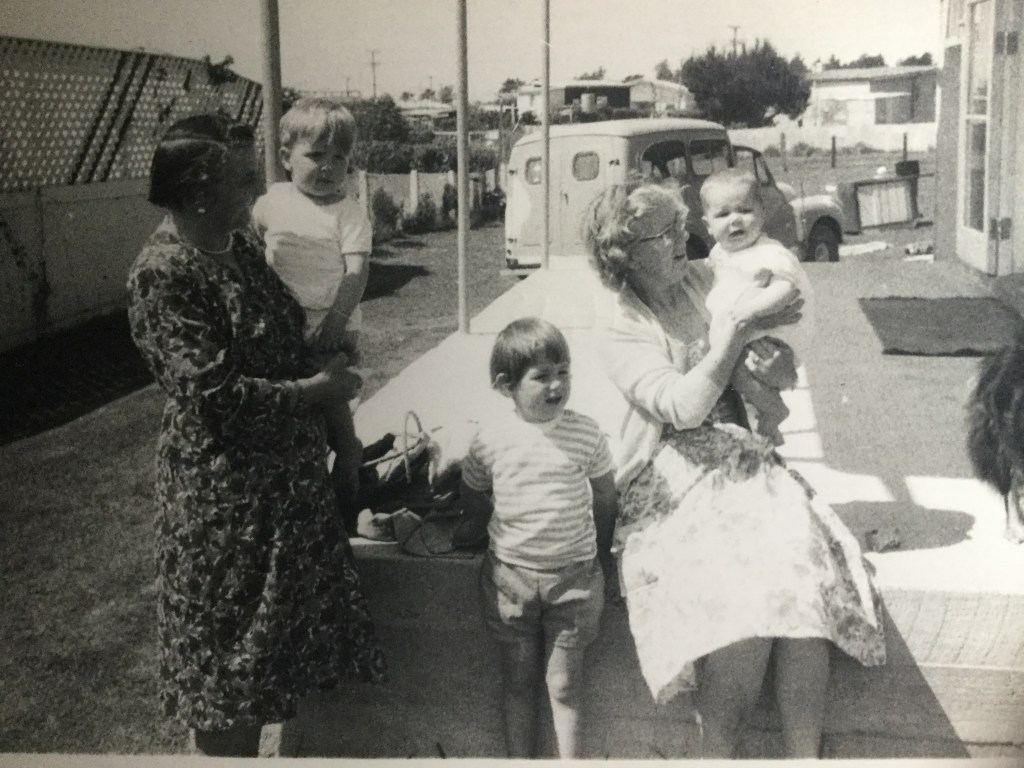
Left to right: Rose holding Craig, Jean (the deaf blogger) with Hilda (Biddy) holding Kerry at Tauranga.

Rose’s life was instead a mystery to everyone before I was born, and I grew up to get to know her through her daughter Jessie and Keith (senior) down in Christchurch. Between 1982 and 1985, I told Rose that I am doing genealogy, and in the first year, she refused to tell me about her family lineage. I went ahead to do tracing Osborne’s families, and they came out to Christchurch and settled in Oxford, Eyreton, Kaiapoi, and several other small farming areas. As I mentioned in the previous blog, her father was Thomas Osborne, and her mother was Mary Jane Cherry of Oxford. Thomas and Mary had ten children (including Rose) in the second marriage of Thomas. Thomas had married previous and had five children in the first marriage. Mary Jane Cherry had two children from a different father for I don’t have the record yet.

One day I was stopping at Oxford and visited the town Hall there 1983. A gentleman noticed me several times, and I thought it was odd for him to saw me without saying anything. Then he approached to me if I know any Osborne and Cherry even Rose, and to my reply to him, yes Rose is my great-grandma through my father’s side family. This gentleman was Havery, and he invited me to the cafe for a genealogy chat. Harvey came from the Cherry family, and his family lived near Rose, brothers, sisters and Thomas’s home. Harvey asked me if I know what happened to Thomas or the children after moving out to the Christchurch Receiving Home. This Christchurch Receiving Home was a temporary housing to many orphans, female children under 16 years, waiting on foster homes or sent to a service. My reply to Harvey, yes, I understood, BUT I was not clear on why this has happened because Rose refused to answer me. From time to before Rose’s death, Rose mention the name of the family, where they were living, the reason why she tried hard to get all of her brothers and sisters in one house along with her other older family member, the pact from Rose to her brothers and sisters on to stay in touch until they died etc. I recalled Rose refused to stay in any Rest Home if anyone who was from Oxford, because of the bad past, shame and family spat.

My question was why Rose and her brothers and sisters were sent away to somewhere after their father – Thomas’ mystery ending of his life. The answer was Thomas took his life by committing suicide in the home where the children sleeping and Rose was in the other room. Thomas could not cope and manage with a large number of children and no income in 1912. Mary Jane died in 1911, and the previous year young Martha was born. I revisited Rose and mention to her about Thomas. Rose spoke that their father was a good man but went depressed and found life unbearable. Rose and I visited rarely visited to a special person at the home – Norman Eric Kirk’s wife – Lucy Ruth Kirk BUT I did not realised that Norman Eric was related to the female Cherry family as well. Because Norman Eric’s father was a Norman Kirk and he married to a Vera Janet Jury of the Jury-Cherry family. Note Norman Eric Kirk was a New Zealand Prime Minister between 1972 and 1974. His death made a huge impact on every New Zealanders. Rose does not speak highly of Ruth (Lucy) for some reason because of the past in Oxford, New Zealand.

As you Oxford is a small town with a population of 600 people before 1900. The earliest population in 1861 was only barely 25 people, and in 1881 there were 513 or more people. There was a disaster – the Great Fire in Oxford on January 14th, 1898.

Mary Jane Cherry
Mary Jane Cherry

Let recap the Cherry’s sisters – Mary Jane and Emily Alice Cherry. Their parents were James Cherry and Sarah Jane Jones. Sarah Jane Jones was born in Tasmania in 1846 to Samuel Jones and Mary Ann McGilligan. Samuel Jones and Mary McGilligan were convicts as well. I must explore the records under the convicts in Tasmania when I can do in my own times.

Black sheep or a convict in your family?

Going through genealogy to update my ancestry for the last few days. I am a deaf genealogist for more than 28 years, and I came across many dark secrets, shocking revelations, newfound cousins for we did not realise through friends instead of cousins. Of course, I just found out there were two more links from the Deaf community, which I never thoughts until they mention the name of their ancestors through Facebook. Even discovering that we have several famous cousins dating back to England, Ireland and Europe. Blimey wow!

Let me tell you something exciting stories which fall one of the new cousins of their fifth/sixth male generation back which link to my fifth/sixth female generation back as a brother and a sister of the same line to one of my ancestors – Cherry family.
Emily Alice Cherry married her husband of Canterbury, New Zealand and this husband’s families had the most fascinated lives such as convicts, a famous couple of the well-known city in the South Island, several sad stories, a con man, a whaler, and a captain.

Convicts
https://libraries.tas.gov.au/convict-portal/Pages/convicts.aspx

Well, let start with a woman born and raised in England. She was a good woman but for one little problem was she stole a pecking apron. The staff reported the constable as it was called in these old days. From there, she was arrested and went on a trial. The court charged her on transportation to Norfolk Island for seven years. Her name was Sarah G. Fast forward, she had three daughters, and a son with different fathers for no one was sure over the actual parentage lineage. It sounds like tramping over the muddy water. Her daughter – Mary married the chap in Tasmania for his father was a convict back in Ireland and sailed to Tasmanian for seven years. He was also a conman, exclusive character with many misdemeanors because the surname was difficult to track down where he was in trouble with the law. Mary’s husband Charles was a criminal over stealing woods, a barrel of salt, money, drunken and fighting in Tasmania, and his life was not a good experience due to his criminal for a long time. Mary died while being separated and John remarried to another woman on a permitted through the court, so he received a grant to married the woman who was a widow from her previous marriage. Now John’s father – Charles was also fraud fellow with many disguised names, and he came from Bologna, Italy. We, genealogists, have trouble tracing his surname for there were too many to track and find the clues together.

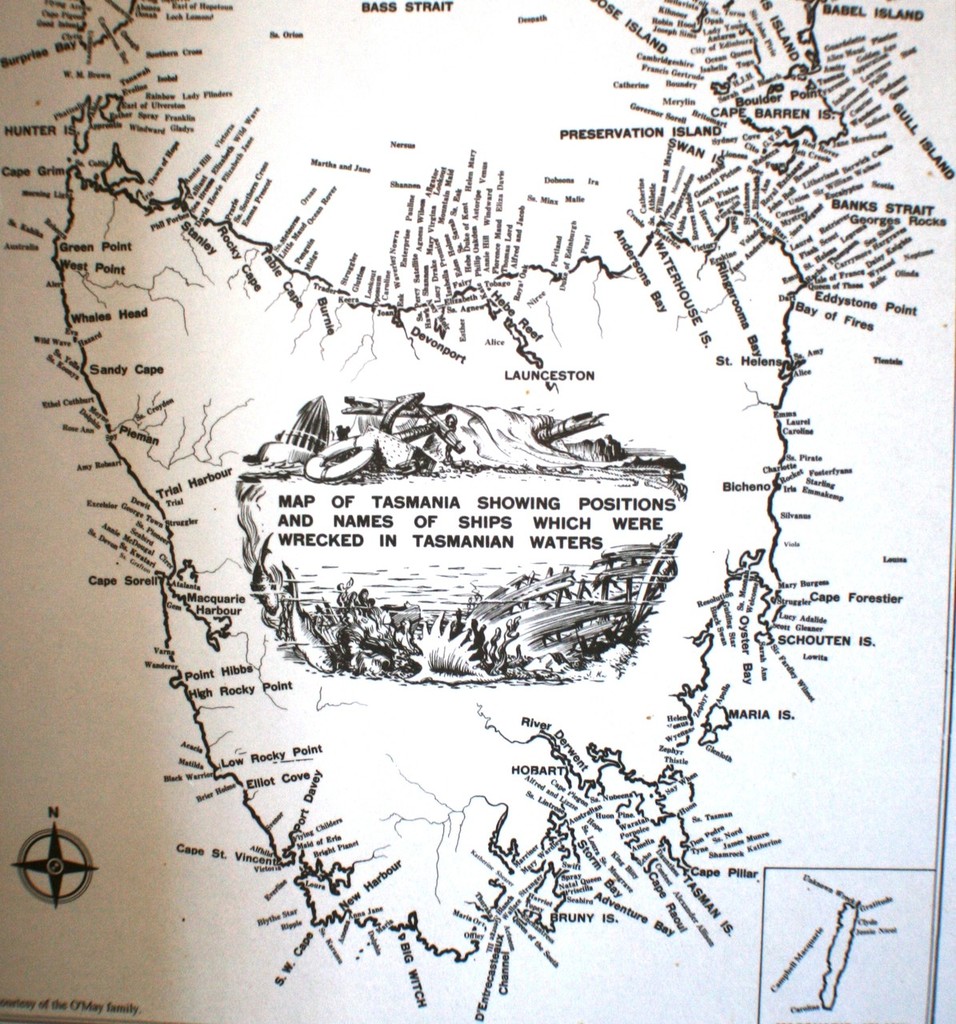
Right, here is another mystery and discovering of Charles and Mary’s children. Let focus one male child called Joseph C, F.and he became a captain with a wife and four children in Australia. One day, Captain Joseph C. F became a captain after several months as a … and he took his men on the ship – Creole along with the cargo. They sailed out for Dunedin, New Zealand by leaving Launceston, Tasmania but the fateful day/night the vessel went aground near Tasmania. There were no survivors as all. Captain J lost his life and left a wife with four children. https://www.fishingboating-world.com/n/photo/176493

Old shipwreck map photo copyright Carl Hyland taken at  and featuring the  class

Now, Captain J had a brother called John J. F, and he was a whaler/timber cutter along with his best mate – George Mason. Both of them decide to travel to one of the whaling stations, New Zealand on a vessel – “Vansittart”. John J. F and George Mason decided to settle down in Canterbury, near Christchurch. One of the whaling stations is Peraki Bay and here is a picture of the bay.

Canterbury Centennial | New Zealand Post Stamps

https://stamps.nzpost.co.nz/new-zealand/1950/canterbury-centennial

Each of these men got the land purchased by one of the Māori iwi and John J. F married to a Māori woman. Anyway, there was something fishing about John J. F. and his background back in Tasmania if he had done a crime or something else. Mutu’s hapu (a group of the family clan) related to the Māori chief – Tutemakohu, and KokerePokoriri, who fought the war in the South Island.

Under John. F and Mutu, had got a large number of children. In this family, there were so many tragedies over the years, such as drowning, missing, crimes. One of their children married to our Osborne/Cherry’s side family – Emily Alice Cherry. Emily had got a sister called Mary Jane Cherry who married to the Osborne family of Oxford, near Christchurch, New Zealand. With our Osborne and Cherry family, Mary Ann’s husband Thomas committed suicide because he can not cope with over 10 children. After all, Mary Ann died passed away and leaving our great-grandma Rose the eldest child in Thomas’s second marriage. The Osborne children were sent to the State Home (Orphan Home in Christchurch, New Zealand). Rose was under 18 years old, and she kept in touch with her brothers and sisters but nothing to do with the other children from Thomas’s first marriage but often ran into them.