Next month, there is a special day to remind you all. Have a look at the photo here.
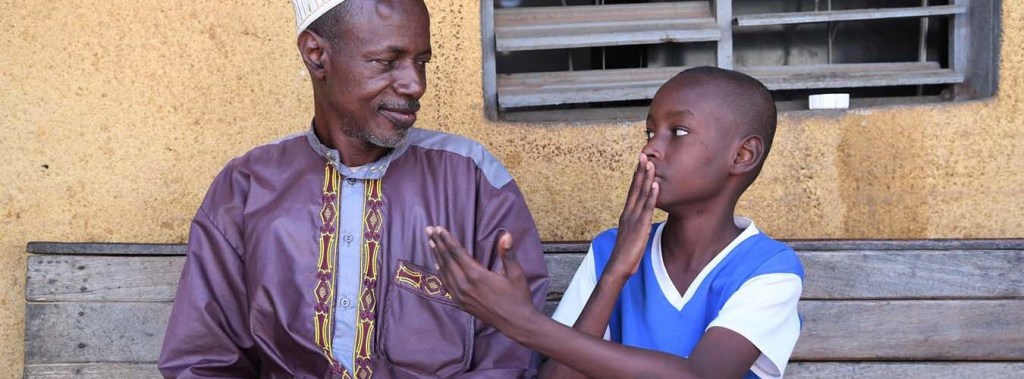
Modibo Sall, 10, teaches his 52-year-old father, Amadou, sign language. Modibo was born deaf. He lives in the village of Bouaké, in the centre of Côte d’Ivoire. UNICEF/Frank Dejongh
It is on the 3rd of December and the theme is “NOT ALL DISABILITIES ARE VISIBLE”. Nothing about us, without us.
The quote from UN –
According to the WHO World Report on Disability, 15 per cent of the world’s population, or more than 1 billion people, are living with disability. Of this number, it’s estimated 450 million are living with a mental or neurological condition— and two-thirds of these people will not seek professional medical help, largely due to stigma, discrimination and neglect.
Another 69 million individuals are estimated to sustain Traumatic Brain Injuries each year worldwide, while one in 160 children are identified as on the autism spectrum.
These are just some examples of the millions of people currently living with a disability that is not immediately apparent, and a reminder of the importance of removing barriers for all people living with disability, both visible and invisible.
During the COVID-19 pandemic, isolation, disconnect, disrupted routines and diminished services have greatly impacted the lives and mental well-being of people with disabilities right around the world. Spreading awareness of invisible disabilities, as well as these potentially detrimental— and not always immediately apparent— impacts to mental health, is crucial as the world continues to fight against the virus.
What we, Persons with disAbilities want you to remember and to be sure that we ARE part of the society same as you anywhere in the world. The key messages are inclusive, accessible, sustainable society, and the future IS ACCESSIBLE.
Over many years, we, persons with disAbilities are list almost at the bottom of the colonialism (Anthropology – Social, Cultural, socioeconomic) but above indigenous people. We are not equal to societies around the world such as receive little income/funding, stop us from working in the businesses, from living in a home where there are a friendly accessible environment and accessible communication like internet, video chat.
Today there are many high rise apartments without lifts in the communities, fast-growing technologies, high cost of equipment as as iPhones, power wheelchairs, large mobility vehicles, the lack of resources about people with disAbilities even Deaf people/children’s first language – Sign Language for home, work and educations, cochlear implants, stem cells or designers babies in medical areas. Who are the countries miss out and a long delay of catching up with our disAbilities in the world? Here is the quote from UN Enable – disAbilities in developing countries.
“The problems of disability in developing countries need to be specially highlighted. As many as 80 per cent of all disabled persons live in isolated rural areas in the developing countries. In some of these countries, the percentage of the disabled population is estimated to be as high as 20 and, thus, if families and relatives are included, 50 per cent of the population could be adversely affected by disability. The problem is made more complex by the fact that, for the most part, disabled persons are also usually extremely poor people. They often live in areas where medical and other related services are scarce, or even totally absent, and where disabilities are not and cannot be detected in time. When they do receive medical attention, if they receive it at all, the impairment may have become irreversible. In many countries, resources are not sufficient to detect and prevent disability and to meet the need for the rehabilitation and supportive services of the disabled population. Trained personnel, research into newer and more effective strategies and approaches to rehabilitation and the manufacturing and provision of aids and equipment for disabled persons are quite inadequate.
In such countries, the disability problem is further compounded by the population explosion, which inexorably pushes up the number of disabled persons in both proportional and absolute terms. There is, thus, an urgent need, as the first priority, to help such countries to develop demographic policies to prevent an increase in the disabled population and to rehabilitate and provide services to the already disabled.” https://www.un.org/esa/socdev/enable/diswpa04.htm#Disabilities%20developing%20countries


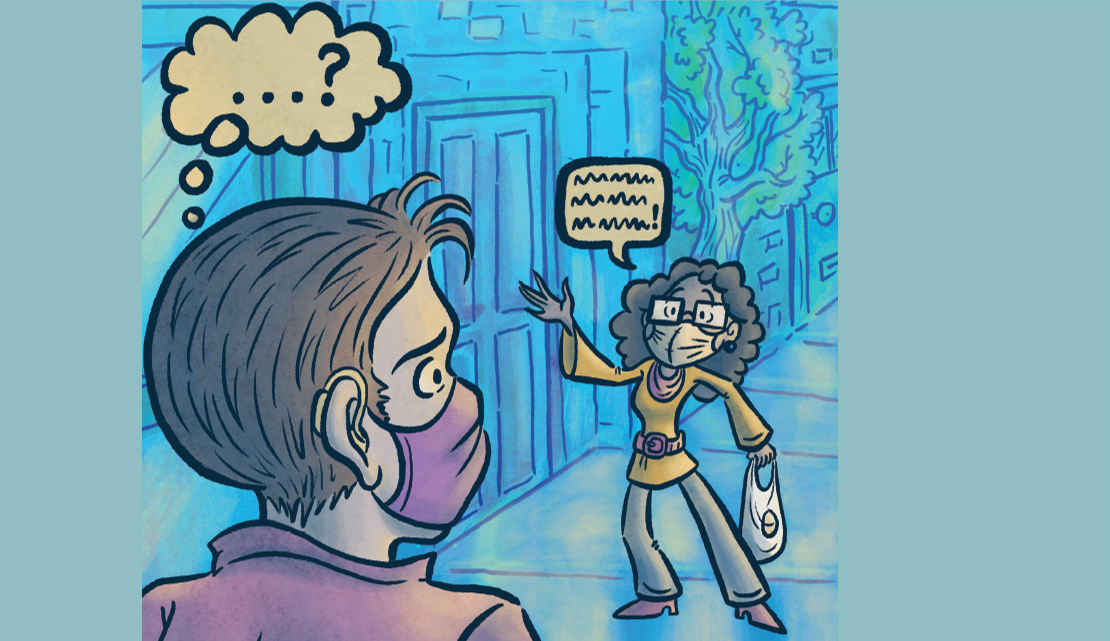
Let anyone who works in the Architecture businesses, technologies, ITs, property developers, and many more, stop for a moment and start to think about us as people/children with disAbilities/Deaf people/children first. Is design plans are friendly accessible for EVERYONE in the societies or not?
Financial is no big deal if anyone who is a property developer, businessperson, want a cheaper and fast buck plan goal then turn into a quick investment financial in return profit.
It is a time to stop and start learning from people/children with disAbilities, Deaf people/children, even many elderly disabled people as well. We, D/deaf people and people with disAbilties are advocators for many years. We have the right to speak/sign louder in the societies in every country until we achieve to be inclusive and equal and won the battle. Nevertheless, the battle is not over yet for there is plenty of times to come. We are (must) not to be ignored by anyone in the Governments, City Councils, businesses, and in the societies.

 Life in Eureka