I ngakaunui a Jean ki te rongo i te matenga o te Kingi Maori, me te harikoa ki te ako i o ratou tikanga me o ratou hitori. Ka ako tonu a Jean mo te reo, mo o ratou tikanga, te Tiriti o Waitangi, me nga tikanga. Jean was heartfelt to hear of the passing of the Maori King and graceful to learn of their culture and history. Jean will continue to learn more about te reo, their background culture, the Treaty of the Waitangi, and customs.
”Kua wheturangitia te haere o te Kingi whakahirahira, he wā i whakakotahi ai te Kīngitanga me te motu whānui o Aotearoa i te wā whakamahana e whā rā.”
The passing of the mighty Kiingi was a moment that united the entire Nation of New Zealand in a week-long mourning period, showcasing the strength and unity of the Māori community.
The Maori tāngata, Jean, knows several of them through our lives in Waikato, University of Waikato and has been in close contact with Kiingi Tūheitia and iwi Waikato-Tainui.
Prof Tom Roa of Ngāti Maniapoto, Waikato, Ngāti Apakura is a Tainui leader and Ahorangi/ Professor at the University of Waikato’s Te Pua Wananga ki te Ao—Faculty of Māori and Indigenous Studies.
Rahui Papa -Closest advisor to Kiingi Tuheitia, an orator, spokesperson, and recognised authority on Waikato reo and tikanga.
Ruakiwi Hond – Mātanga Reo, Ike Rakena, Anne Salmond (author), Nanaia Mahuta – formerly Labour MP and many more.
In 2006, a momentous event in Māori history unfolded as Kuini Te Arikinui Dame Te Atairangikaahu, the Queen, succeeded her son, Kiingi Tūheitia, to become the Māori monarch in a traditional tangihanga. This historic moment will forever be etched in our history, a testament to our reverence and respect for our traditions and leaders. Their iwi is Waikato-Tainui. Kiingi Tūheitia’s whaea (mother/Kuini) held the longest reign since Kiingi Korokī Te Rata Mahuta Tāwhiao Pōtatau Te Wherowhero from 1966 to 2006.
Te Whakawahinga me Te Raa Nehu Kiingi Tuuheitia’s nehu (Burial). 05/09/2024
“Today marks the seventh and final day (5/9/2024) of formal tangihanga proceedings for the king at Tūrangawaewae Marae in Ngāruawāhia as he will be taken to his maunga, Taupiri, to be laid to rest among his ancestors, including his mother, Te Arikinui Dame Te Atairangikaahu.” NZ Herald, https://www.nzherald.co.nz/nz/politics/kingi-tuheitia-tangi-new-maori-monarch-announced-this-morning-ahead-of-funeral-proceedings-for-kingi-tuheitia/COSCQGZP5VC4DBYNXMLF754VXQ/
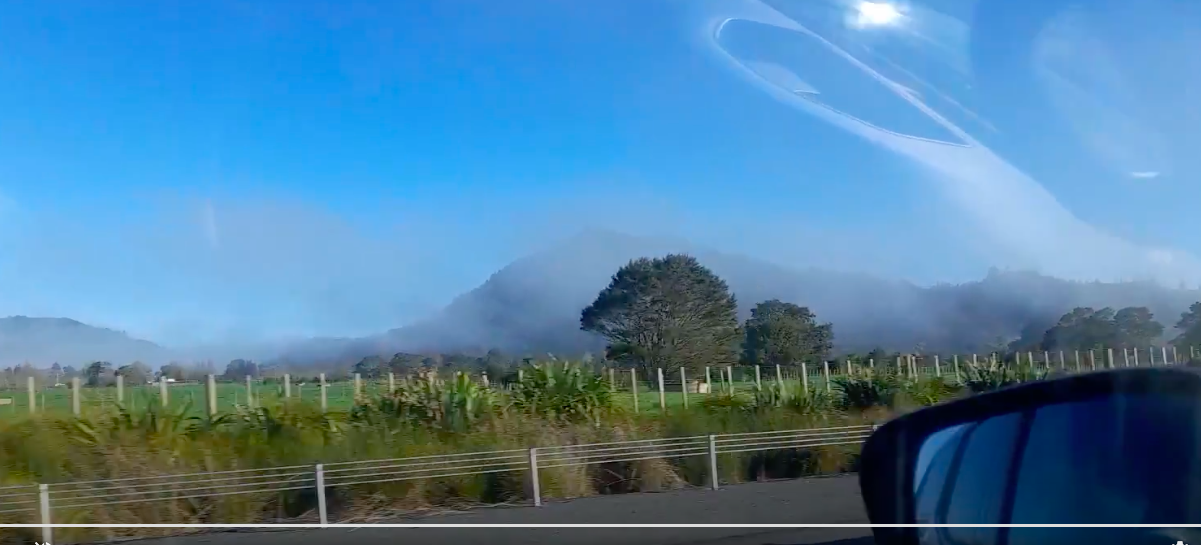
Taupiri Maunga – known as ‘Taupiri-Kuao – The embracing mountain‘.
For our lives, we travel to Auckland or further up to the North, for example, to Whangārei, and we pass Taupiri maunga on the left side, further away from the Waikato Expressway Motorway. There was no Waikato Expressway Motorway in the past, and anyone drove past this maunga to Huntly, then to Auckland. This maunga is a sacred place to Waikato-Tainui and the Māori tribal for their identity. This maunga is sacred because it is a nehu (burial ground) and tapu for all Waikato-Tainui iwi since the death of Chief Te Putu.
Who is Chief Te Putu? Te Putu was the son of Tapuae, the uncle of Whare – grandsons of Mahuta and the leaders of Ngāti Mahuta lived in Kaitotehe, below the Hakarimata Range. Te Putu built Taupiri pā, the summit of a spur of the Taupiri maunga, after his father and uncle were killed in the 1600s. In the 1700s, Te Putu was violently killed by Ngātokowaru of Ngaati Raukawa at Te Mata-o-tutonga, outside the pā where his home was by the banks of Waikato River. Te Putu was nehu (burial) at the pā, and the site became tapu (sacred) and abandoned. The Taupiri maunga became a nehu ground where many Royal and prominent Maaori families have been laid to rest. Today, Kiingi Tūheitia lay there with his wheae (mother) – Te Arikinui, Dame Te Atairangikaahu, and his matua tāne (father).
“Be who we are, live our values, speak our reo and care for our mokopuna, our awa, our maunga, just be Māori. Māori all day, every day, we are here, we are strong.”
Quote from the Kiingi Tūheitia during the largest hui aa motu over the Government issues – “to discuss how to respond to current issues and to hold the Government to account for policies that many consider to be anti-Māori – a charge the Government rejects.” NZ Herald https://www.nzherald.co.nz/nz/politics/the-king-of-kotahitanga-mourners-prepare-to-farewell-kingi-tuheitia-a-monarch-remembered-for-his-ability-to-unite-people/JNPVPUHWCJCUBO2OUU7TTBRH54/
“For Māoridom, he has clearly been this very strong unifying force at a time when that is needed – bringing a strong voice to some pretty obvious attacks on the progress that has been made.”
Quote from Kiingi Tūheitia- “The best protest we can make right now is being Māori. Be who we are. Live our Values. Speak our reo. Care for our mokopuna, our awa, our maunga.”
Jean reflects on nehu, kiingitanga, and our people today because we have marvellous technology such as online, television and radio broadcasting, and social media. It is the second time Jean has watched Television broadcasting Live Streaming—the first one was Tangi for Te Arikinui Dame Te Atairangikaahu in 2006 without online broadband internet, and the second one was Tangi for the Kiingi Tūheitia through television broadcasting Live Streaming (and online live streaming). Jean found these social media and online brought many thousand people or more together to watch the live streaming of the Kiingi Tūheitia’s nehu services. Another excellent and unique to watch the four waka along the Waikato River from Ngāruawāhia -Tūrangawaewae Marae (river bank landing) to Taupiri Maunga Urupa – Mount Taupiri Cemetery area, where there is a river bank lending and overviewing the Taupiri Maunga by the helicopter/drone which permitted for the broadcasting. The weather was more or less for a week. On the day of the announcement of the kiingi’s hemonga (death), it was raining, and on the day of the nehu, the sun came out as the skies opened up to bless everyone there.
Jean asked her mother if she recalled watching or listening to the live streaming of the late kiingi Koroki Mahuta and the celebration of the new kuini in 1966. Her message was, “We did not have a television until a few years later, Maaori TV came later. There was a regional news channel early on Radio was still the main news for most people I do not know. They used to show newsreels at movie theatres so a film may exist.”
1960 – First TV Broasting in NZ
https://www.nzonscreen.com/title/tangi-for-te-arikinui-dame-te-atairangikaahu-2006
Korokī Te Rata Mahuta Tāwhiao Pōtatau Te Wherowhero (1908/9?–1966) was the eldest son of Te Rata, the fourth Maori King. https://nzhistory.govt.nz/people/koroki-te-rata-mahuta-tawhiao-potatau-te-wherowhero
King Mahuta’s tangi 1912
https://teara.govt.nz/en/zoomify/37870/mahutas-tangi-1912
King Koroki’s Tangi 1966
https://teara.govt.nz/en/photograph/27289/burial-on-taupiri-mountain
Queen Te Atairangikaahu, 1966
https://teara.govt.nz/en/photograph/37881/queen-te-atairangikaahu-1966
Jean noticed something missing through live-streaming Television and social media. Where was the trilingual interpreter for the Tangata Turi Māori (Māori Deaf people) for these special events? At Jean’s workplace, one of the Māori Trustees mentioned the missing trilingual interpreters, and these trustees believe many Tangata Turi Māori must understand the culture of kiingatanga and the tangihanga. One event, Waitangi Day in February every year, is about honouring the Te Tiriti o Waitangi (The Treaty of Waitangi). The trilingual interpreter – Stephanie Awheto, was always there for Tangata Turi Māori, but sadly, Stephanie is no longer around due to her passing nearly three months ago. Stephanie was the first trilingual interpreter. Jean knew one of the interpreters was there for a very short time, and there was nothing to show on live streaming on a Tuesday at noon.
Now it is time for the celebration of the new kuini (Queen) Te Puhi Ariki Ngā Wai Hono I Te Pō Paki – the youngest favourite daughter of the late Kiingi Tūheitia and the granddaughter of the late kuini Te Arikinui Dame Te Atairangikaahu. As the new Queen, she will carry on the legacy of her father and grandmother and play a crucial role in the Māori community, representing their values and aspirations. The sound of many birds making chirping noises in the background during the announcement of the new monarch symbolizes the beginning of a new era.
He kotuku rerenga tahi A white heron flies once
He aha te mea nui o te ao? He tangata! He tangata! He tangata! What is the most important thing in the world? It is people! It is people! It is people!

 Life in Eureka