My eye surgeries arrived on Wednesday, 2nd April 2025, after a short waiting time from November 2024. My partner took a three-day leave from Wednesday while I took a two-week leave. Yes, it had been a long, anxious wait for the outcome, to follow the Hospital Procedures before the surgeries, and to recover within the time frame. I did not have an interpreter that day. My partner – Rusty, kept reminding nurses and an anesthesia person with a small communication skill with finger spelling and gesture signs – a bonus for me because of my deafness and difficulty lip reading. We arrived before 615am because we lived in a rural home outside the city. Then, everyone, including us, entered the waiting room before the surgery at 645am. It was a long waiting time and dull as well. Many people like nurses, anesthesia, GPs, Specialists and other types of hospital staff can not see my disabilities because my disabilities are invisible to them. The same issues in our home in the rural area, like neighbours failing to understand or to acknowledge my disabilities and my needs different to any of their family members like grandmother or seniors. Awareness of invisible disability everyone has a long way to go, and we learn to understand our world by removing ableism in rural areas.
One nurse came to put markers above my eyebrows as he realised I was having two eyes in surgery—not one eye only, where the other patients were having one eye surgery. These Markers were to ensure the correct eye was operated on.
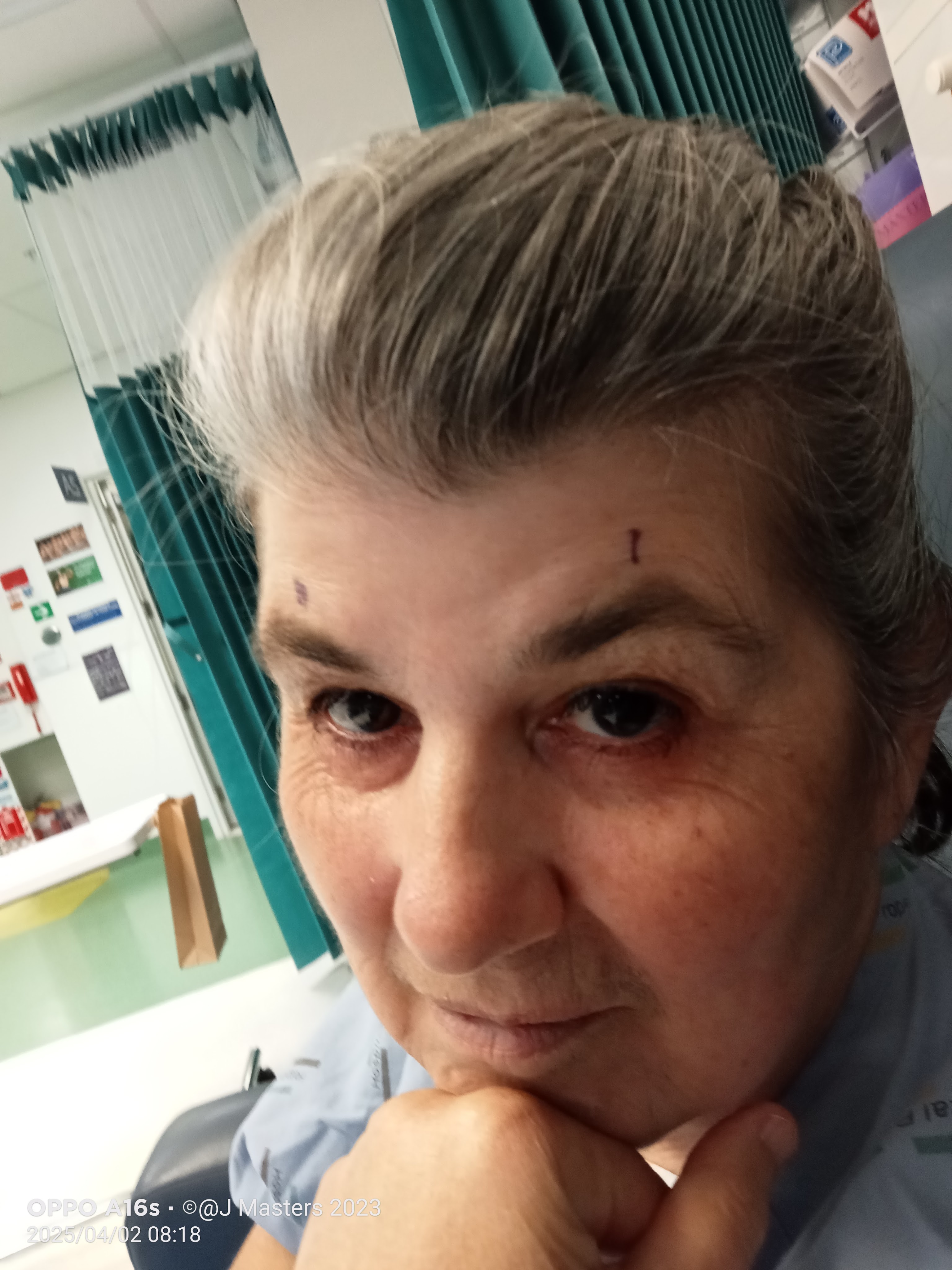
An anesthesia person, Niam, came to speak to us, and I found trouble lip-reading him. I told him to move toward me so I could lip-read, and out of the blue, he signed his name in fingerspelling and chatted over any issues I may have. He explained many good examples, warnings, tubes inserted through windpipe – urgh, drug side effects and many other problems. Niam put a long needle into the vein while Rusty was curious to see how it worked. The time was 1030am, and I waited for another half hour before going to the theatre.


When I entered the surgery room, nurses, a specialist, and an anesthesia team checked over me. There were a few issues the nurses wanted me to move up to the headrest – oh boy, a couple or three times shuffling upward. Then, one of the nurses placed an anesthesia mask over my mouth, and I was knocked out to sleep through the surgeries.
The nurse tapped my shoulder in the recovery room to wake me up. I began to wake up slowly and took a while to visualise the room and team. The nurse told me they had called Rusty to come in. Through blurred time, I noticed it was after 130 p.m., far out, which was why it was so long. The nurses asked several questions (one nurse is a third year’s training) if I would like something to eat – cheese and onion sandwiches and a cup of water. Rusty spoke to me and patiently asked if I was okay then. Just before an hour was up after the recovery time, the nurse asked me if I would like an ice block with lemonade flavour. I took the offer and ate the ice block until I was finally ready to go home. I changed from the hospital gown to my day clothes. We were waiting for the assistance person to take me in a wheelchair via the Hospital Pharmacy – four bottles of eye drops and one large tablet, Car Park Pay Machine, and then up to the car park building where Rusty parked his ute. I wore two transparent protective eye shields with tapes. These shields protected my eyes from potential harm during the initial recovery period. See Photo.


I was surprised how the surgeries went, and the implant lens in each eye helped me a lot better than before. I started to visualise the environment while going home. Yes, my eyes were tired after a long day, from morning through evening, each day and night. Gross bruised down the windpipe due to the tube inserted, and I took it easy while eating a dinner meal. I took a tablet plus other tablets before going to bed. Bearing in our thoughts, we have three dogs who were relieved to have us home, and they (dogs) knew something in me. The first night went without a hitch until Day Two in the morning. I remember feeling a mix of relief and apprehension during the first night; I was relieved that the surgeries were over but apprehensive about the recovery process.
Day Two: I did not remove the transparent protective shield until we went to the hospital first. Finally, I was allowed to wear shields without transparent protection during the day. I left several messages for my managers at two workplaces, close colleagues who trust and know my deaf and other disabilities, and one good and trusted neighbour who is a cousin to my mother’s side of the family. We went back to see the Soecalist at the Waikato Hospital for the follow-up. We spent another three hours from 10 am to around 1 pm. We found out more about the long hours through surgery, and it was about giving me another drug to continue the other eye surgery. The team had to wait about an hour. Usually, for anyone to have an extraction cataract surgery, it takes approximately 30 minutes and one hour of recovery time. The most important item you are required to wear is sunglasses, and I use sunglasses when going outside because the sunlight will be sensitive to implant lenses in the eyes.



Rusty got a mobile call from his boss, who gave him a week off after three days off to the weekend. That was very nice of his boss. I was still tired and took an easy around the house while the dogs sat beside me. In the afternoon, an unexpected delivery came at the gate and rang Rusty while he was napping. It was the florist delivery from my work – Social Service Trust. The mobile call/text to us from the gate is easier for anyone unfamiliar with or not bothered by our dogs without permission. Our dogs act like assisted dogs to raise the alarm, knowing someone is at the gate, someone is trying to do a home invasion/house break-in, and other methods are available to us. I hear nothing through nights in the large property – zero sounds/noises without dogs, and our dogs are alarmed many times by hearing someone trying to break in, come in without permission, here and in the neighbours. Recently, our dogs raised the alarm and came to me when I worked from home, and there was a serious three-car accident at the intersection that killed a young mother and a child. A young man (An apprentice carpenter) was responsible for the accidents.

Did you know there are five different assistance dogs and the cost of getting one in New Zealand? Let me tell you what type of assistance dogs are available here.
Guide Dogs – $173K for Low Vision, Blind and Blind with Disabilities people
Assistance Dogs – $75k for Neurological children, Teenagers, Youths and adults
Mobility Dogs – $50K for people with disabilities (difficulty mobile functioning around the house and in the garden, supermarket and other activities), D/deaf with Disabilities, seniors with poor mobility functions
Hearing Dogs – $30K for D/deaf people and Hard of Hearing people (most D/deaf with disabilities people depending on their disability)
Therapy Dogs – $5K outside Auckland for anxiety children, Youths, isolated seniors in the rest homes/their own homes, sensory recovery for people with invisible disabilities like Epilepsy and chronic asthma people/youths.
After eating a light meal in the late afternoon, I continued using eye drops four times daily. All went well, and I went to bed with the protection of transparent shields for the next four nights and slept on double pillows for both eye pressures throughout the night.
Day Three to Day Five
My usual routines: I take off a pair of transparent protective shields in the morning, ensure dogs are not jumping towards my face in bed, do not shower, wash my hair, walk around the house and a bit out in the garden with sunglasses. I watched TV, where there is captioning in the television programme, and it was better than before, except for reading minimal sentences (everyone has the same problem with this one). I am getting there to read fonts in the newspapers and emails on the computer, iPad and mobile. It has something to do with screen and display. I continue to use it four times a day eye drop for another three weeks. My right elbow, where the needle pucked into the vein, showed signs of an angry bruise scar.


Day Five to Day Eight
Finally, starting tonight, I will not be wearing a pair of transparent protective shields. Yes, it is a bother to tape the shields onto your face or mine each night, and I recommend you tie your long hair back, even the long fringe hair. I started doing this on day one, and I found it helpful. I continue to use normal routines while both my eyes are starting to improvise visually here and there, over there, and further away as much as I can without overusing my eyes.
On Day Eight, it was my birthday, and I was glad because I did not like having any surgery on my birthday. Another year added to my age of over 60 years.
In the morning, I planned the safety procedure for washing my hair after showering, which was the best thing to do. We have a handheld shower head that we can remove/lift out of the slider. Rusty helped me wash my hair, and I used a dry face cloth placed over both eyes and bent over the bath without a hitch. We went on a half-day trip to Raglan, where my mother, brother, and sister from Hamilton visited us for lunch on our birthday. Seeing the scenery of Raglan, beaches and shops was better than before, and Pirongia-o-Te Aroaro-ō-Kahu (Mount Pirongia) was brilliant.


I consider the Low Vision People and the Blind People I know and respect, for I understand it is tough for those with low vision or blindness to know what out there is like except to describe the background. There are several people I know whose disabilities are Deafblind; not everyone realised this except to learn about Helen Keller or Laura Bridgman. There is a Deafblind lady in Matamata, and she was involved with the Waikato Deaf Society Inc. before 1999; she went to the same Deaf Schools where I have several Deaf seniors through home visits, and lastly, she remembers or partially remembers seeing Helen Keller when Helen and Polly Thomson in 1948 at Sumner School for the Deaf (note the name of this school changed to van Asch then Ko Tahu Reo – Deaf Education New Zealand) in Christchurch.

 Life in Eureka