Recognition of National Sign Language
Legal recognition of national sign languages is not only necessary but essential to upholding the rights of D/deaf people. It’s a right enshrined in Article 21 of the UNCRPD, which mandates that governments must officially recognise the national sign language.
It’s the unequivocal responsibility of governments to secure the right to sign languages. By complying with Article 21 of the UN CRPD and legally recognising their national sign languages, governments can ensure the active participation of D/deaf individuals in all aspects of society. Extract from World Federation of the Deaf and wording amended by Jean.
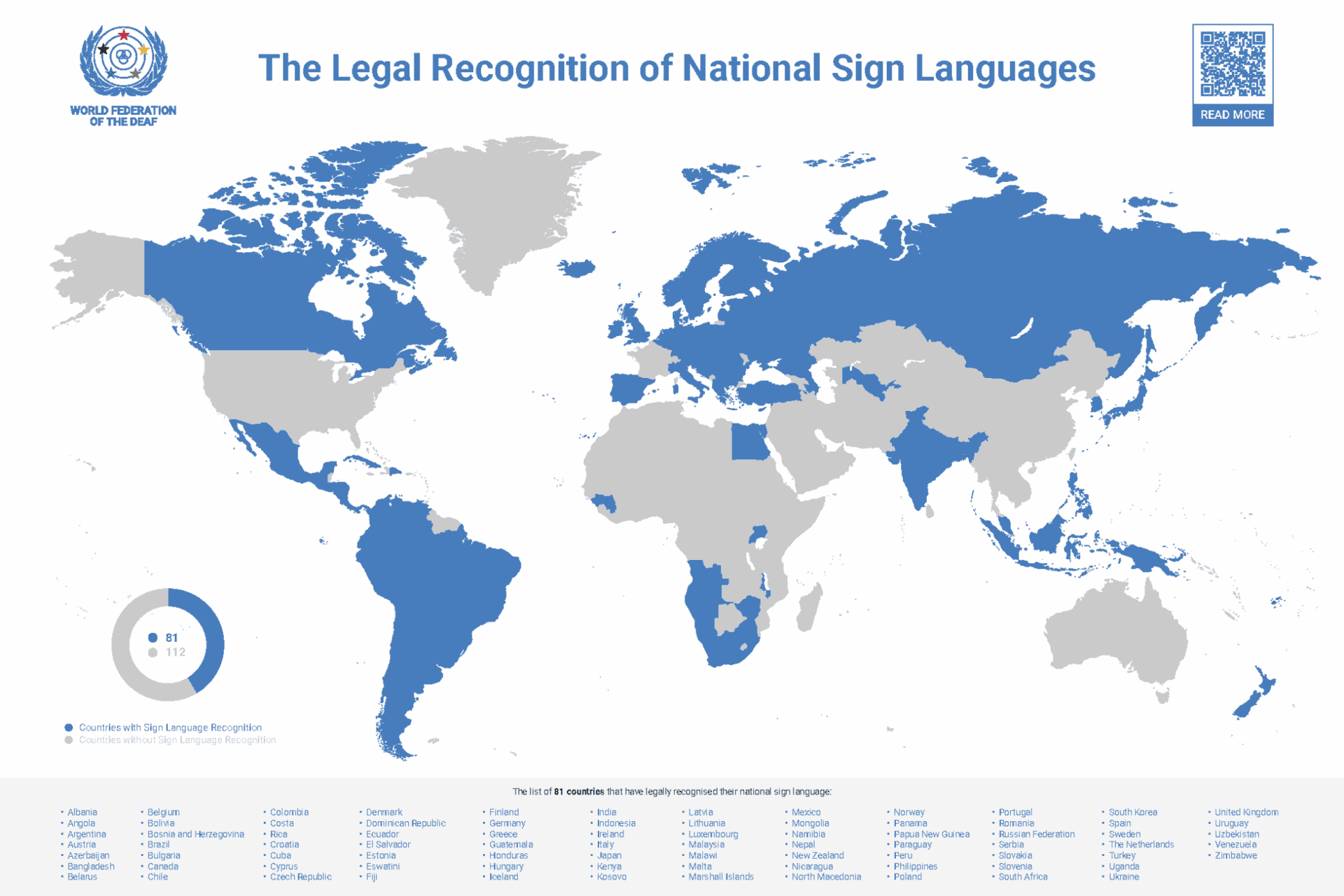
Out of 195 countries, only 81 have achieved Sign Language Legislation and officially recognise their sign language (41.5% of countries). New Zealand, a beacon of progress, recognised our significance and passed the third reading of the bills at the Parliament through the New Zealand Language Act in 2006, setting an inspiring example for the rest of the world. However, it’s concerning that 58.5% of countries do not recognise their national sign language (114 out of 195).
Empower yourself by checking out which countries have officially recognised sign language in this link. Your knowledge and awareness are not just passive contributions, but active steps towards the global movement for the recognition of sign language. Your involvement matters.
Consider this: there are over three hundred different sign languages in use worldwide, with more than seventy million D/deaf individuals and those with disabilities. These staggering numbers, reported by the United Nations, underscore the profound global impact of sign language recognition, making it a cause that transcends borders and affects millions.
Imagine a classroom where several D/deaf children are learning and communicating in sign language, just like other children in an ordinary school, like you.
How about in Australia, where many D/deaf Indigenous people perform dancing?
We know there are more D/deaf people, D/deaf with disabilities and Hard of Hearing Seniors living in countries where their countries have not acknowledged the sign language and the culture. It is vital to address the Government about their sign language, culture, and the need to be inclusive in the communities. Inclusivity is not just a buzzword, but a fundamental human right.

 Life in Eureka