Thursday, October 18, known as Taite 18 o Oketopa

Thursday, October 18, known as Taite 18 o Oketopa in Māori, we come together to celebrate the strength that comes from unity —a bond that connects us all.

“Ēhara tāku toa i te toa takatahi, engari he toa takitini.” 

Translation: My strength is not from one person, but from many. Meaning: We are stronger when we work together; strength comes from unity. 

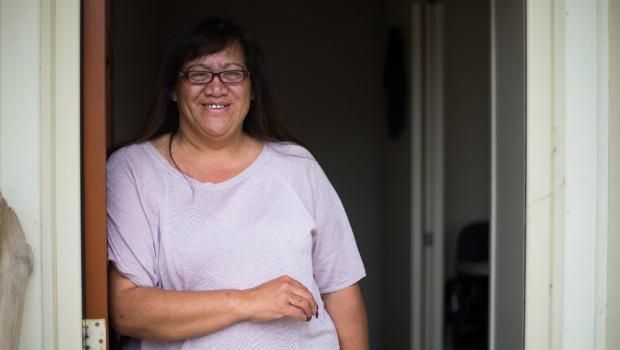
Stephanie Awheto

Ngaati Ruanui Taranaki

Iwi – Ngaa Ruahine

Haapu – Tamaahuroa titahi

Ko ngā hui pēnei i ēnei ngā wā kia tangi ki ngā mate. Gatherings like these are the times for remembering the dead. Stephanie – te kaiwhakamaori reo toru tuatahi mo te Tāngata turi i Aotearoa. (In English, Stephanie was the pioneering first trilingual interpreter for the Tāngata turi in New Zealand, a role of immense significance and impact.)

I was reflecting on the past when I first met her in Hamilton in the late 1980s and 1990s. A brief History of the Deaf Community in Hamilton: Back in the 1980s and 1990s, there was no Deaf service or organisation for the Deaf community and no interpreter for the D/deaf people/Tāngata (Māori Deaf people) when I was a BNZ Data Entry Officer. At Melville Intermediate School, the late Patrick W. Thompson was my classmate in the Deaf Units in the late 1970s. My sister studied in a Māori course and other classes at the Waikato Teacher College. Then, my mother learnt to study in a Māori course at Waikato University.

Patrick’s curiosity about his Māori background and Te Reo Māori at school led him to seek Stephanie’s help. Her unwavering dedication to helping him reconnect with his roots is a shining example of her commitment to the Deaf and Māori communities. This connection blossomed into a warm relationship, with Stephanie welcoming Patrick into her whānau over many years until his passing in 2014.

Stephanie completed her Interpreter course at AUT in 1996, and she and her young whānau moved to Hamilton in the early 1990s. The Deaf Association of NZ: Hamilton Branch (later changed to Deaf Aotearoa) opened in Hamilton in 1991.

No official languages existed for the D/deaf people and Tāngata Turi (Māori Deaf people) in Aotearoa until 2006. In 1987, Te reo Māori was made an official language, followed by NZSL (New Zealand Sign Language in 2006. The main problem was where the Te reo language is, as in sign language for the Tāngata Turi (Māori Deaf people). As you see, there was never an original sign language by the Tāngata Turi (Māori Deaf people) for over a hundred years. Proto-Polynesian, a language spoken about 2,000 years ago, is the ancestor of all Polynesian languages. Māori people arrived in Aotearoa a thousand years ago, and their language was Te Reo. Then, the English settlers/immigrants came to Aotearoa with their English-speaking language, but there were several minor languages spoken, such as Dutch, Norwegian, Danish, and even Polish. In 1867, the Government and Education banned all Māori children from speaking te reo in schools.

How does sign language come here? Who was/were the people who used sign language here? It is the D/deaf people themselves who brought sign language back as ‘loan sign language’ to Aotearoa/New Zealand from the boarding schools in Australia, the United Kingdom and the USA. They created sign language like Pidgin-Creole sign language when encountering other D/deaf people in different districts, businesses/trade around Aotearoa. NZSL is more or less closely related to AUSLAN (Australian Sign Language) than BSL (British Sign Language). We need to have actual records of Pidgin-Creole sign language here while linguists continue researching and understanding the past. Sign language was banned through schooling at Van Asch, Titirangi School for the Deaf, Kelston School for the Deaf and in different regions of the North Island Deaf Unit Schools in the past due to the Second International Congress on Education of the Deaf, an international conference of deaf educators held in Milan, Italy, in 1880. Today, it is known as the Milan Conference or Milan Congress to many D/deaf people worldwide.

Stephanie interpreted my paper course at Waikato Polytechnic, where I earned a certificate in Human Service: People with Disabilities.

Fast-forward: Stephanie was talking to Patrick by learning sign language. She was confused by one or more sign languages translated in English to Te reo—hang (in Sign Language as a hand grasped in front of the neck) vs. hangi (cooking foods on top of the heated rocks in the buried pit) in Te Reo without sign language. Patrick described what he was trying to explain from his sign language to Te Reo. Many of the D/deaf people who sign for ‘hang(i) were exploited or offended by any Tāngata Māori around Aotearoa.  

He waka eke noa

A canoe which we are all in, with no exception

Stephanie’s decision to become a trilingual interpreter for the Tāngata turi Māori was a significant step towards bridging cultures. Since Te Reo became an official language in 1987, there has been no trilingual interpreter for Tāngata turi Māori. The gap was particularly felt during critical cultural events such as the marae ātea, hui, and the significant landmark of the Te Tiriti o Waitangi. Stephanie’s role as a bridge between cultures not only facilitated communication but also fostered a deeper understanding and respect for the Māori Deaf community.

Ko taku reo taku ohooho, ko taku reo taku mapihi mauria

My language is my awakening, my language is the window to my soul.

Stephanie travelled around Aotearoa as a trilingual interpreter in hui, the marae ātea, Māori Deaf development activities at the marae ātea, and at the university where I took my BA in Arts and Stephanie mentored trilingual Māori interpreters/Te Reo Rotarota Māori interpreters. Stephanie was there to interpreted when I received my BA degree at the University of Waikato – the

Te Kohinga Mārama Marae

Te Kohinga Mārama Marae.

Whaiwhia te kete mātauranga

Fill the basket of knowledge.

Patrick told Stephanie that many Tāngata turi Māori lost their Māori identities, culture, Iwi and Hapu backgrounds, Te Reo, and, of course, Te Tiriti o Waitangi (known in English as the Treaty of Waitangi). This loss was a result of historical factors such as the suppression of Te Reo in schools and the influence of the Milan Conference. Patrick and Stephanie travelled around Aotearoa to meet many Tāngata turi Māori before setting up the first Tāngata turi Māori Hui in Orakei in 1993. I was overseas when Patrick and the organisers created the first National Māori Hui, introduced in 1993. Stephanie, her supported whānau and her colleagues supported those (Tāngata turi Māori) wanting to reconnect with their Māoritanga and reclaim matauranga Māori. It was critical and a challenge for everyone to work together as a team.

https://www.nfdhh.org.nz/post/te-reo-maori-and-new-zealand-sign-language

Rūaumoko Marae

The opening of the first Rūaumoko Marae on December 4 at Ko Taku Reo Deaf Education NZ (formerly Kelston Education for the Deaf), Auckland, thirty-two years ago, was a significant milestone. It brought many benefits to all Tāngata turi Māori students and communities, marking a proud moment in our history.

He aha te mea nui o te ao? He tangata! He tangata! He tangata!

What is the most important thing in the world? It is people! It is people! It is people!

This whakatauki talks about the importance of human connection and relationships. These are what create community and enable people to flourish. It values the human being in all of us and reminds us of what is most important—not money, not success, not a job or a thing—it is people.

Kua hinga te totara i te wao nui a Tane

The totara has fallen in the forest of Tane.
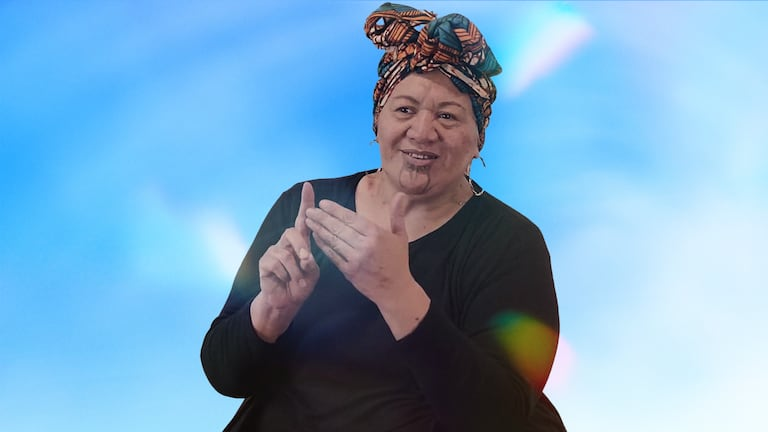
Ahakoa nga uaua, kia toa, kia kaha

Kia manawanui.

When you find things in life are difficult, be strong, stand tall and be of a great heart.

“Nā koutou i tangi nā tātou katoa.”. When you cry, your tears are shed by us all.

E aroha ana ki a koe me te whanua i te ngaronga o Stephanie.

Permission granted from Marshall to post this article along with his comments.

I know she had a strong working relationship with all involved at NZDAssociation and multiple times with the Māori Deaf as a Whole. Your wisdom is welcome tku Tautoko te reo Māori is what she would be signing atm. Tku. Yes, what a nice recall on her pathway to Trilingual Sign Language Interpretations

Yes, she did do all that to get it done.

I’m grateful you’ve taking me back beyond the earliest times, tku

Ae sad but we must continue to continue on. I know we have have a big whole left behind since Steph’s send off.
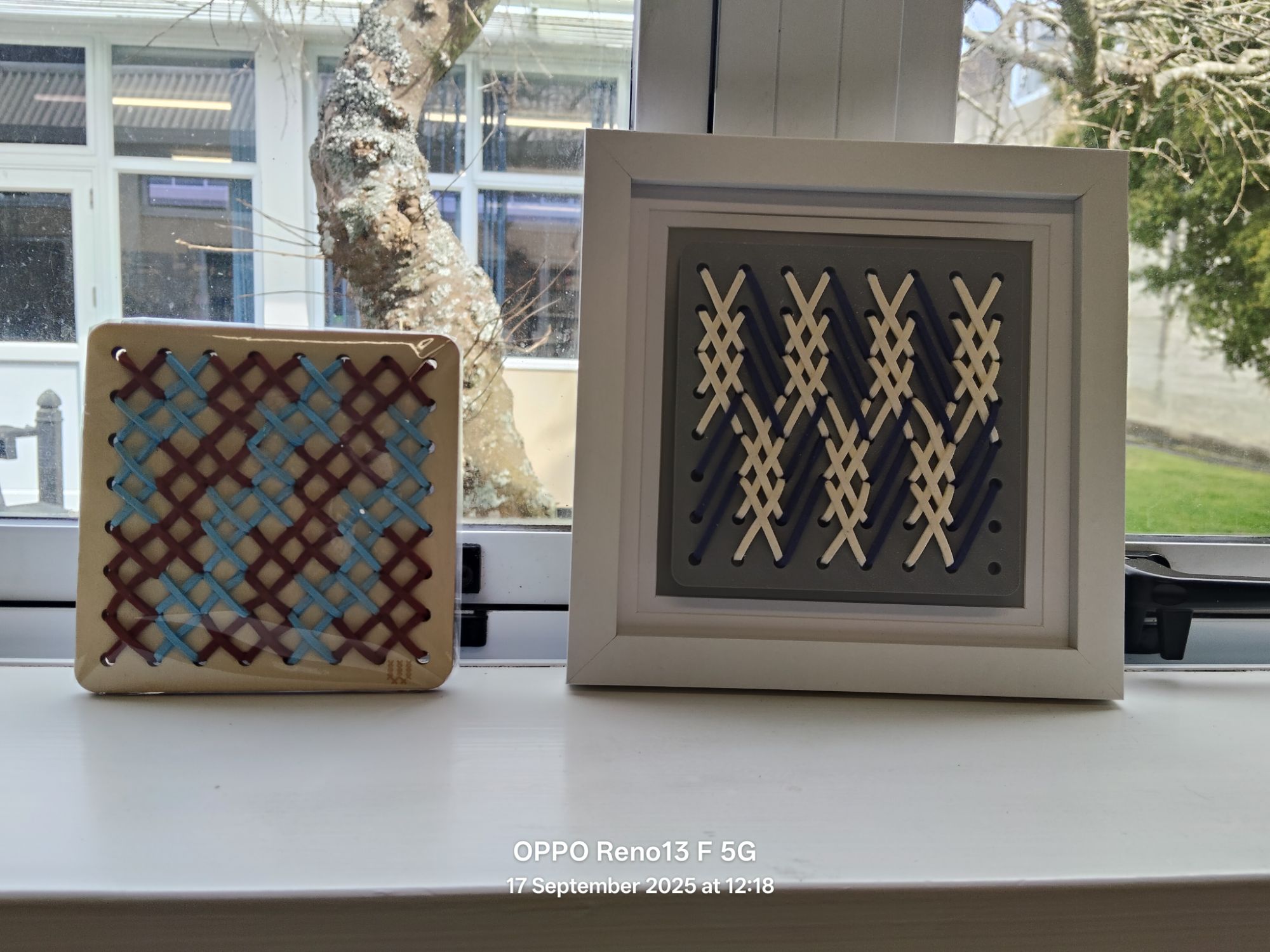
Weaving Patterns were given to me as gifts for my teaching for eighteen years to the public community. Gifts from the ACE.

He mihi nui ki a koe e Stephanie mo te tohutohu me te whakaako i a au mo te ao Maori, tikanga, me Te Reo i a au e ako tonu ana, e tuhi ana, e whakaako ana i nga wa e hiahia ana ahau ki te tangata Maori mai i taku waahi mahi me te Poari Kaitiaki ki a au.

In English – Thank you, Stephanie, for mentoring and teaching me about the Māori world, culture, and Te Reo as I continue to learn, write, and teach when I need a Māori person from my workplace and the Trust board with me.

Wenerei 17 o Oketopa (Wednesday 17th October)

Mā te kimi ka kite, Mā te kite ka mōhio, Mā te mōhio ka mārama

Seek and discover. Discover and know. Know and become enlightened.

Māori myths (pūrākau) 

In Aotearoa, Te Iwi Māori (people) speak of their traditional stories explaining the origins of the world and cultural practices. Often they speak of their ancestors in their marae.

https://eng.mataurangamaori.tki.org.nz/Support-materials/Te-Reo-Maori/Maori-Myths-Legends-and-Contemporary-Stories/Kupe-s-travels-around-Aotearoa

Our past Education has been enriched by the profound teachings of Māori myths (pūrākau). These stories, such as Maui and the Sun, Ranginui, the Sky Father, and Papatūānuku, the Earth Mother, are not just tales, but the very fabric of our cultural identity. They are the primal parents of the world, the Fish of Maui -Te ika a Māui: The creation of the North Island, Hinemoa and Tūtānekai, Paikea the Whale Rider, and many other Myths.

What about the stories of the te hunga hauā Māori (disabled Māori people)? Yes, there were several stories, for example, the blind god Tāwhirimātea; however, they were not widely taught in Primary Education until higher Education and universities. Who is Tāwhirimātea? In Māori legend, Tāwhirimātea is the god of weather, controlling winds, storms, thunder, and lightning.

“The way Māori view being disabled is tapu (sacred), and Matariki is a good example. Matariki is named after Tāwhirimātea, a blind god.”  

https://www.acc.co.nz/newsroom/stories/finding-the-meaning-of-matariki

Let’s go back to the Te hunga turi Māori (Māori Deaf people). I sourced any video in NZSL Māori concepts of the Myths for everyone to learn in Education, at the libraries, online resources and in the communities. The resources I have found are waiata (songs) and fun, entertaining waiata that incorporate Te Reo Māori sign language concepts.

https://www.nzsl.govt.nz/nzsl-community-grants/previous-nzsl-community-grant-rounds/2023-recipients/a-maori-legend-story-told-in-vr360

Regrettably, my search for YouTube videos about NZSL Te Reo sign language concepts in the myths has been in vain. This morning, I spoke to one of the iwi turi, and it became clear that there is currently no plan to create Māori myths in Te Reo sign language concepts. This underscores the urgent need to bring these stories to the communities, Education, and whanau (families) communities, and the only platform available for this is a Facebook Page.

Taangata/Iwi Turi needs to understand the myths of their generation as treasures, as depicted in murals on the marae walls and carvings, and traditions to pass on to the next generation over many years. Today, we have amazing technology, especially AI, that offers a beacon of hope. It allows tamariki turi Māori (Māori Deaf children) to utilise their skills and ensures that our myths are not only preserved but also made accessible to all.

Turei 16 o Oketopa (Tuesday 16th)

“manaaki whenua, manaaki tāngata, haere whakamua”. Which translates to “if we take care of the land and take care of the people, we will take care of the future.”

Many of you may know or be unaware that there are many ancient languages, like Manx Gaelic, that are nearly dying around the world. The last native speaker, 97-year-old fisherman Ned Maddrell of the Isle of Man, passed away in 1974. This language is a poignant example of the global issue of language endangerment.

What about Manchu – is the Chinese language native to Northeast China? From 1636 to 1911, the Chinese Qing Dynasty announced Manchu as an official language. Manchu is becoming endangered because its native speakers have been replacing it with Mandarin, primarily due to social and economic pressures. This is a common trend in many language endangerment cases.

Examples of Dying Languages

  • Ainu (Japan): Critically endangered, spoken by a few elderly individuals, and subject to long-standing assimilation policies. 
  • Nǀuu (South Africa): A critically endangered language with only about eight speakers remaining, although revitalisation efforts are underway. These efforts, which include language classes and cultural events, are a testament to the resilience of the Nǀuu community and the importance of preserving their language. Lengilu (Indonesia): Spoken by only four people in the northeastern region of Kalimantan. 
  • Tehuelche (Argentina): The language of nomadic hunters, now spoken by the last four speakers in Patagonia. 
  • Ainu (Japan): Critically endangered, with only a few fluent speakers remaining. 
  • Ter Sami (Russia): Spoken by only two older adults in the Kola Peninsula, a language that was once prohibited in schools. 
  • Kayardild (Australia): Flown by only four elderly Aboriginal people on Bentinck and Mornington Islands. 
  • Yarawi (Papua New Guinea): A language from the Morobe Province used by only one person, with most natives preferring the Binandere language. 

According to Ethnologue, 3,193 languages are endangered today. However, with concerted community efforts, we can work towards preserving these invaluable linguistic treasures.

“He iti te mokoroa, nāna i kati te kahikatea” (The caterpillar small, though it felled the kahikatea tree), which encourages persistence and significant achievements from small beginnings.

Today, we are learning to speak Te Reo through daily life, while many Tāngata Turi Māori are slowly learning to read and understand Te Reo before applying it to Te Reo Sign language concepts.

Here are two different Te Reo sign language concepts from two other organisations. Take a good look at the sign language differences between these two Karakia (Prayers) – Timatanga. Timatanga means ‘new beginning,’ a phrase that embodies life, introduction, commencement, and start.

In Ko Taku Reo Education for the Deaf Timatanga –

oplus_32

Te Reo sign language concept.

First line – sign for peace and widespread

Second line – sign for sea, glisten and a different sign for glisten (as greenstone in the bottom hand as a stone, while the top hand is glisten)

Third line – sign for the day and the pathway

Fourth line – sign for respect for each other

fifth line – sign for all together

Second Timatanga from Deaf Aotearoa

oplus_32

first line – sign for peace, wide and spread

second line – sign for whakapapa, precious/treasure/sacred/value/worth and sea

third line – sign for pathway, all and day

fourth line – sign for show, love (Aroha) and respect

Fifth line – sign for all, each other, and show instead of one hand toward outward, then the second hand toward outward, and finally both hands outward, as in pural.

“tātou” means “we” or “us” and katoa means all, we, completely

“With your contribution and mine, the people will thrive. “

Nā tō rourou, nā taku rourou, ka ora ai te iwi.

A proverb of shared abundance. It reminds us that a community thrives when each of us brings what we can.

Te Wiki o te Reo Māori (Māori Language Week)

Te Wiki o te Reo Māori (Māori Language Week) is a profound celebration that unveils the beauty and depth of the Māori language, inviting us to explore its richness and diversity.

As we approach the 50th anniversary of Te Wiki o te Reo Māori, a week that holds immense historical significance, 

Tēnā koutou/Tēnā koe e hoa

There are 15 distinct sounds within the Māori alphabet. They are:

  • five vowels: a, e, i, o, u
  • eight consonants: h, k, m, n, p, r, t, w
  • two digraphs (two letters that combine to form one sound): wh, ng.

Double long vowels (Macrons (tohutō or pōtae) and double vowels show where a vowel is lengthened, for example, in words like ‘rōpū’ and ‘roopuu’ (group).

Combinations of vowels (diphthongs) are common; examples of diphthongs are au, ao, ea, ia, ou, oa.

a, (short vowel) papa (earth)

ā, (long vowel) pāpā (father)

e, (short vowel) kete (kit)

ē, (long vowel) pēke (bag )

i, (short vowel) mihi (greeting)

ī, (long vowel) tītī (mutton bird)

o, (short vowel) oma (run)

ō, (long vowel) tō (your)

u, (short vowel) huruhuru (hair)

ū, (long vowel) tūrū (chair)

https://www.maorilanguage.net/how-to-pronounce-maori/

“Mā mua ka kite a muri, mā muri ka ora a mua,” which translates to “Those who lead give sight to those who follow; those who follow give life to those who lead”. 

Iti noa ana he pito mata.

From the withered tree, a flower blooms.

Understanding and learning Te Reo sign language for the Tangata turi Māori is not just a crucial step towards cultural understanding and inclusivity, but also a mark of respect and consideration.

The official language, Te Reo, was introduced into Parliament after a long campaign, protests, and protest marches. This protest marked a significant milestone in the language’s history, demanding the right to be taught in all schools and government agencies. Te Petihana – The Petition was handed in 1972 by two of these groups, which were student organisations: Auckland-based Ngā Tamatoa (The Young Warriors) and Victoria University’s Te Reo Māori Society. https://www.parliament.nz/mi/visit-and-learn/history-and-buildings/te-rima-tekau-tau-o-te-petihana-reo-maori-the-50th-anniversary-of-the-maori-language-petition/te-petihana-reo-maori-the-maori-language-petition/

Over thousands of years ago, Māori people originated from East Polynesia and began arriving in Aotearoa in several waves of waka voyages between approximately 1250 and 1300 CE. European people arrived later as explorers, traders, sealers, and church missionaries to Aotearoa. Over two hundred years ago, there was a brink of speaking Te Reo throughout Aotearoa, with ups and downs. Meanwhile, the Ministry of Education banned the use of Te Reo in schools across Aotearoa, leaving children speaking Te Reo at home and in their communities. Note that there was no officially recognised language in English since the Parliament opened here; everyone speaks English, along with other languages such as Dutch, Irish, and many other languages.

Te Reo Māori started to decline at a time when many Māori linguists, Māori MPs, and Kaumātua (Māori elders) noticed grave concerns and began to campaign for its revival in the 1980s.  Māori was made an official language of New Zealand under the Māori Language Act 1987. For more information on this history, please visit the following link.

History of the Māori language | NZ History

Let’s explore our official NZSL (New Zealand Sign Language), and note that there was no Te Reo sign language by the Taangata turi Māori from the 1980s. I was in London, UK during the OE in 2004, 2005 and 2006, and was requested by one of the MPs who is related to our family to visit the House of the Lord by seeking the document in Education and officially in the language there. The reason was that the official language, such as NZSL, was in English, omitting Te Reo sign language at the time for the Deaf community. NZSL became official on April 11, 2006, under the NZ Sign Language Act, and I recall that day because it coincided with my late cousin’s birthday during the third reading of the bill in Parliament.

Today, many Taangata turi Māori are learning to understand and use Te Reo to fit into Māori Sign Language concepts by using English words, such as elder vs Kaumātua, in a different sign or similar. It is a long journey for them to learn to understand how to sign the correct meaning to fit into Te Reo, meaning, how to break down the clusters of meaning from Te Reo. For example, my childhood memory is of Ruakura, outside Kirikiriroa (“long stretch of gravel”) in Hamilton, and the Ruakura Agriculture Research Centre. Waikato Agricultural College and Model Farm was established in 1888 in Ruakura, where our family had been farming for many years. The sign language for Ruakura is tapping double ‘r’ as a crooked finger on the palm. This sign language is okay, and I prefer to sign ‘pit’ and ‘red’ colour, connecting to the meaning of Ruakura.

‘RUAKURA IS NAMED AFTER A PIT IN THE AREA THAT WAS USED TO BURN IRON OXIDE’. Traditionally, large pieces of iron oxide found in swamps were heated by burning in a fire to produce a powdery red pigment. Māori people mixed water with the sacred red Kokowai (ochre), which was used for painting tapu ceremonial objects, koiwi and carvings. Burning the red oxide stained the pit red, thereby giving rise to the name Rua (hole or pit) kura (red)’. Source: An Assessment of the Potential Impact that any expansion and development of the Ruakura Estate might have on Cultural Values and Mana Whenua by NaMTOK Consultancy Ltd (November 2011) https://ngatihauaiwitrust.co.nz/wp-content/uploads/2018/12/Final-Presentation-to-Hui-a-Iwi-28-October-2018.pdf

Yes, there is another meaning, which is feather plumes or treasures. Taangata turi Māori and the Deaf people in the community need to learn to understand the meaning of Te Reo, the history and how to sign correctly. It is not about the right or wrong way to sign for anyone in the community.

On Facebook, there is one page that I enjoy watching the most, from a person who helps anyone pronounce words correctly. Paaka Davis – Māori Content Creator, and one of his videos was about how to pronounce Aotearoa. Here is the link

https://www.facebook.com/paakadavis/

http://www.youtube.com/@paakadavis