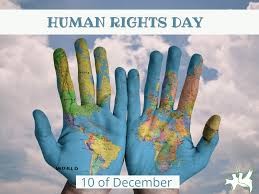
Human Rights Day is observed every year on 10 December

About Human Rights, Our Everyday Essentials

Human Rights Day on 10 December reminds us of our collective responsibility to uphold the rights in the Universal Declaration of Human Rights (UDHR), adopted in 1948, inspiring us all to protect the inalienable rights everyone is entitled to, regardless of race, religion, or social status, including people with disability.
Human rights are at the core of the Sustainable Development Goals (SDGs) set out by the 2030 Agenda for Sustainable Development, which aims to inspire us all to work together to leave no one behind and ensure everyone’s rights are respected and protected.

Related links

Key hashtags

  • #HumanRightsDay
  • #GlobalGoals

UNCRPD – Article 10

“Every human being has an inherent right to life.”

Everyone born in this world has human rights that the law must protect. Recognising the 30 fundamental human rights can help the public and advocates feel empathetic and compassionate towards vulnerable populations. 

https://www.ohchr.org/en/get-involved/campaign/everyday-essentials

Here is the thirty basic Human Rights List –

  1. All human beings are free and equal
  2. No discrimination
  3. Right to life
  4. No slavery
  5. No torture and inhuman treatment
  6. Same right to use law
  7. Equal before the law
  8. Right to be treated fair by court
  9. No unfair detainment
  10. Right to trial
  11. Innocent until proven guilty
  12. Right to prvacy
  13. Freedom to movement and residence
  14. Right to asylum
  15. Right to nationality
  16. Rights to marry and have family
  17. Right to own things
  18. Freedom of thought and religion
  19. Freedom of opinion and expression
  20. Right to assemble
  21. Right to democracy
  22. Right to social security
  23. Right to work
  24. Right to rest and holiday
  25. Right of social services
  26. Right to education
  27. Right of cultural and art
  28. Freedom around the world
  29. Subject to law
  30. Human rights can not be taken away

These are the 30 fundamental human rights listed by the United Nations General Assembly in the Universal Declaration of Human Rights, which serve as a foundation for laws that protect all individuals and promote societal support for vulnerable populations.

Fiji Women’s Rights Movement – Facebook Reel

https://www.facebook.com/reel/1246393090679510

On Wednesday, 3 December, I attended a Zoom meeting titled “From Hardship to Equity: Ensuring disabled people have a decent standard of living.” As someone working in Social Services, I felt a need to highlight that the panel and the New Zealand Disability Rights Commissioner did not address the struggles faced by homeless disabled, mentally ill, or other vulnerable people living on the streets across New Zealand. Their focus on reports to the Government and MSD misses the urgent reality of hundreds of thousands of vulnerable individuals living on the streets with disabilities and mental illness, which demands our broader concern and action. I suggested it is straightforward to find out what the main problems and issues are that have not been resolved for hundreds of thousands of disabled homeless people for the MSD, MPs, Organisations, Health sectors and many more.

Repeat: we are all human, no matter who we are, where we live, or our social class, whether in poverty, the lower middle class, or the upper middle class. We are all one human in the world. I understand the safety and security risks involved in questioning and collecting information for Government agencies such as MSD and other organisations, including DPA. People living in households, businesses, and agencies also face their own fears about safety and security, and acknowledging this can help us build trust and solidarity.

When I was a young deaf girl, I was without a father as a six-year-old, and living with my mother as a single mother with four children. We were fortunate to have a wider number of people through the Church, communities, the farming sector, and families. Many of the friends through our grandparents, such as Charlie F., late Rev. Moke Couch, late Rev. Tony Clark, taught me a great example of living a meaningful life from the ex-gangs in the workforce programme, the farming life, and the depression years they experienced in their own families. Yes, I do have several cousins who work in the Government and the Member of Parliament, and one particular cousin I never met was Norman Kirk, the Prime Minister of New Zealand. I met his wife down in Christchurch with my great-grandma at the Rest home. I do not recall Dame Lucy (Dame Lucy Ruth Kirk) much during my visits. My family are related to Norman’s mother’s family in Wairarapa and his father’s family in Waimate, Canterbury. They came from low-income families and had firsthand experience of life in the 1900s and 1970s.  
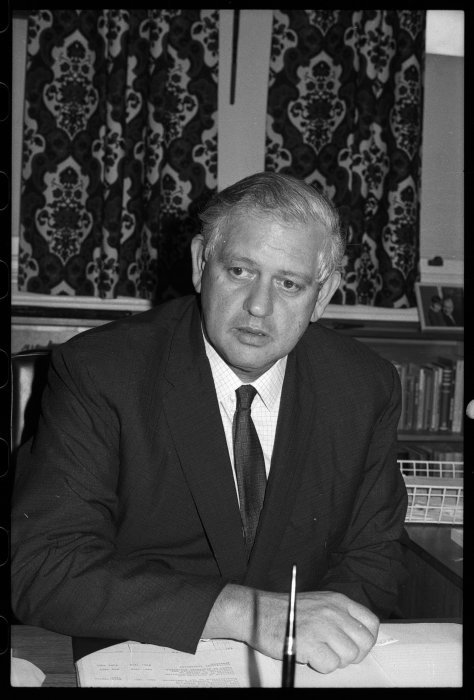
https://my.christchurchcitylibraries.com/blogs/post/remembering-norman-kirk/

Check out Norman Kirk’s comments – he most formidable debater of his time and once famously said that “there are four things that matter to people: they have to have somewhere to live, they have to have food to eat, they have to have clothing to wear, and they have to have something to hope for”,[7] often misquoted as “somewhere to live, someone to love, somewhere to work and something to hope for”.[8] 
International Day of Persons with Disabilities

In 2025, the theme of the International Day of Persons with Disabilities is “Amplifying the Leadership of Persons with Disabilities for an Inclusive and Sustainable Future,” highlighting the collective power to inspire pride and motivate action among the audience.

Make a Pledge

It is impossible to solve the world’s inequalities in a single day, so commit to meaningful actions like valuing Accessibility, supporting disabled staff, and joining local or national disability initiatives this World Disability Day. Consider setting measurable goals to track your progress and see how your efforts can lead to real change, empowering your organisation to make tangible impacts.  

5 Meaningful Pledges You Can Make-each one a step to create real change, helping the audience feel empowered and capable of supporting disability inclusion. 

  1. Donate to Disability Charities 
  2. Strengthen Your Discrimination Policies 
  3. Improve Accessibility, e.g., Wheelchair Ramps, providing Interpreters for D/deaf people, deafblind people, D/deaf with disabilities, and seniors, and braille. Seek out local or national resources, training, and expert advice to help you implement these changes effectively. Assess Your Employees’ Diversity 
  4. Make a Public Statement of Support 

https://diversity-inclusion-speakers.com/news/general-news/how-to-celebrate-international-day-of-disabled-persons/

Under the UNCRPD, Article 10: “Every Human being has an inherent right to life.”

In New Zealand, we are behind the rest of the world in the disability community; however, we Disabled people have worked hard in our sector, not together as a team/leadership/advocates (DPOs – Disabled People Organisations) for the communities, such as Government agencies, Health Sectors, Non-Government agencies, Education, and other agencies. Note that there are seven organisations linked to the DPOs: Association of Blind Citizens New Zealand (Blind Citizens NZ), Balance Aotearoa, Deaf Aotearoa, Disabled Persons Assembly NZ (DPA), Mana Pasefika, Muscular Dystrophy Association of New Zealand Inc., and People First New Zealand. How can community members and allies support these efforts and strengthen collective advocacy?

Ngā Tāngata Tuatahi. There is one more: Kāpo Māori Aotearoa, which is not currently a member of the DPO Coalition. DPOs are affiliated with international bodies such as the World Blind Union and the International Disability Alliance, thereby strengthening their global influence and advocacy efforts and inspiring the audience to feel part of a larger movement.

EGL (Enabling Good Lives) was created in 2012 and 2013, and I have been in the Waikato EGL Leadership from 2013 to the present. Let’s look at the eight principles: Self-Determination, Beginning Early, Person-Centred, Ordinary Life Outcomes, Mainstream First, Mana-Enhancing, Easy to Use, and Relationship Building. EGL gives people with disabilities and their families the choice to choose any equipment, home help, a personal carer, pay for an interpreter’s costs without using the Isign service, live in a flat, and control over their lives and the supports available to them. They can plan for the lives they want.

Thank you, Waikato Museum staff, for making a special day for everyone to enjoy tours around the museum – Explore Te Whare Taonga o Waikato in a welcoming and inclusive environment. A relaxed session in the open-air playground designed for our neurodiverse community, NZSL Interpreters tour, Drop-in Touch, and Braille and Audio-described tour, plus tea on December 3rd. There will be a guest speaker, Rodney Bell, an internationally renowned disabled dancer and co-director of Touch Compass. Rodney will share stories from his life as a dancer and community leader, what Accessibility means to him, and will lead an accessible movement workshop to follow in your seat.

https://tewharetaonga.nz/whats-on/events/open-house-at-te-whare-taonga-o-waikato

Take a look at the Nippon-Japan newsletter about friendly accessible technology for all people with disabilities, D/deaf people, and people with mobility difficulties as independents. The Japanese are becoming more friendly and accessible to everyone, not just the highly respected, demonstrating how inclusive design can benefit entire communities and encourage others to follow suit.

My sister sent me a photo showing an excellent idea for mobility scooter parking off the road, due to NZ Law. She took a picture at the Cirque Eatery in Leamington, Cambridge. There was another photo of a person-designed wheelchair in each car park lot on the road. The person mentioned a protest in England. Each wheelchair has a piece of paper on it saying “Sorry, will be back in a minutes, Just had to run an pick something up.”

Are you one of the people who park their car in the mobility car park without displaying a Mobility Car Park sticker inside the car and say you will be back in a minute?

The United Nations estimates that there are approximately 70 to 72 million deaf people worldwide. Sign Language Use: This population collectively uses over 300 different sign languages. Sign languages are recognised as fully-fledged natural languages, structurally distinct from spoken languages.

What about this one? The hearing person and a Deaf person in the noisy bar have a social evening. Everyone in the same room, talking and shouting at their friends while loud music played, leaving a Deaf person out, unable to lip-read and a lack of sign language understanding for our communication. Then another Deaf friend entered the room and communicated in sign language without hesitation, and they understood each other. The hearing people are struggling to hear what their friends are saying, even the staff at the bar/restaurant. Why not learn our sign language with us! Organisations can offer sign language classes or resources to foster inclusive social environments.

Another example: making more things more friendly and accessible for many Deafblind people by using sensory/tactile approaches. Check out Haben Girma, a Deafblind lawyer who graduated from Harvard Law School as the first Deafblind person/American Disability Rights advocate in the USA. Haben has visited Edinburgh Castle yet and is checking whether the information is easily accessible for everyone and herself. Check out YouTube for yourself.

What makes a good leadership skill to help thousands of disabled persons, D/deaf persons, and D/deaf with disabilities people to achieve their goals by working in team groups/keynote speakers?? Perhaps look at one of the popular keynote speakers, Chris Ruden and Dustin Giannelli.

A good leader has qualities like integrity, vision, accountability, and empathy, combined with strong communication, problem-solving, and decision-making skills. Effective leaders also demonstrate resilience, self-awareness, and the ability to inspire and motivate their team through confidence, passion, and a willingness to delegate and collaborate. 

Foundational and personal qualities

  • Integrity: Acting with honesty and having strong moral principles.
  • Vision: Creating a clear picture of the future and a sense of purpose for the team.
  • Accountability: Taking ownership of one’s actions and decisions.
  • Empathy: Understanding and sharing the feelings of others.
  • Resilience: Bouncing back from setbacks and handling pressure effectively.
  • Self-awareness: Understanding one’s own strengths, weaknesses, and emotions.
  • Confidence: Believing in one’s own abilities to inspire trust in others.
  • Humility: Recognising one’s own limitations and valuing the contributions of others.
  • Passion: Having a strong enthusiasm for the work and the team’s goals.
  • Adaptability: Adjusting to new situations and challenges with flexibility. 

Interpersonal and communication skills

  • Communication: Clearly conveying ideas, both verbally and non-verbally.
  • Active Listening: Giving full attention to what others are saying and responding thoughtfully.
  • Emotional Intelligence: The ability to understand and manage one’s own emotions, and those of others.
  • Delegation: Assigning tasks to the most suitable team members to empower them and focus on key areas.
  • Collaboration: Fostering teamwork and encouraging cooperation among team members.
  • Respect: Treating others with dignity and fostering a respectful environment.
  • Influence: The ability to guide and persuade others toward a common goal. 

Strategic and problem-solving abilities

  • Problem-solving: Identifying problems and developing practical solutions.
  • Decision-making: Making timely and sound judgments, even under pressure.
  • Courage: Having the bravery to make difficult decisions and take necessary risks. 

Sigh! Today, the Beehive released the update to the New Zealand Strategy with the Whaikaha. It is not an excellent strategy for everyone in New Zealand.

https://www.beehive.govt.nz/release/new-disability-strategy-drives-change

https://www.nzdoctor.co.nz/article/undoctored/refreshed-new-zealand-disability-strategy-launched

If you wish to read the NZ Disability Strategy, here is the link, available in the format that best meets your needs.

https://www.whaikaha.govt.nz/about-us/our-work/new-zealand-disability-strategy-2026-2030

https://www.disabilitysupport.govt.nz/disabled-people/learn-about-enabling-good-lives

https://www.disabilitysupport.govt.nz/about-us/taskforce/independent-review

https://www.disabilitysupport.govt.nz/disabled-people/changes-to-disability-support-services/summary-findings-from-community-consultation-on-assessment-tools-processes-and-flexible-funding

Purple Tuesday 4th November 2025

Purple Tuesday, an annual event, is a robust platform that champions accessibility and inclusivity for disabled consumers. This day, observed on the second Tuesday of November, not only serves as a reminder of the importance of making businesses and public spaces more accessible, but also significantly enhances their operations and customer base. It offers hope for a more inclusive future and encourages businesses to make their services more accessible, thereby increasing their customer base.

Related links

Key hashtags

  • #PurpleTuesday
  • #IAmYourCustomer

https://purpletuesday.co/

Did you know that 70% of disabled people will NOT return to a business after receiving poor customer service? This staggering statistic underscores the urgent need for companies to prioritise accessibility and inclusivity immediately. It’s not a problem we can afford to ignore or delay.

With 1.8 billion disabled people in the world, representing 17% of the population, the need for accessibility is a global issue that unites us all in a shared responsibility. It’s a cause that transcends borders and unites us around a common goal.

https://purpletuesday.co/

Removing barriers, such as ableism, across the infrastructure, improving signage in the Public Gardens, workplaces, and technologies. The lack of communication barriers, such as no interpreters for D/deaf people, D/deaf blind and D/deaf with disabilities and captioning on social media. It is not about financial funding to improve the quality of life, or about more accessible, friendly signage, or ‘visual’ signage such as flashing fire alarm, doorbell, or boarding time, which is expensive to make or adapt.

Let’s take a moment to reflect: are our services—businesses, the Health Sector, Airport services, and many others—accessible to everyone? Do they cater to the needs of all, including D/deaf people, D/deaf with disabilities and seniors with poor mobility/disabilities? For instance, businesses can install ramps and elevators, provide Braille signage, and offer online booking systems with accessibility features. These are just a few steps towards a more inclusive society.

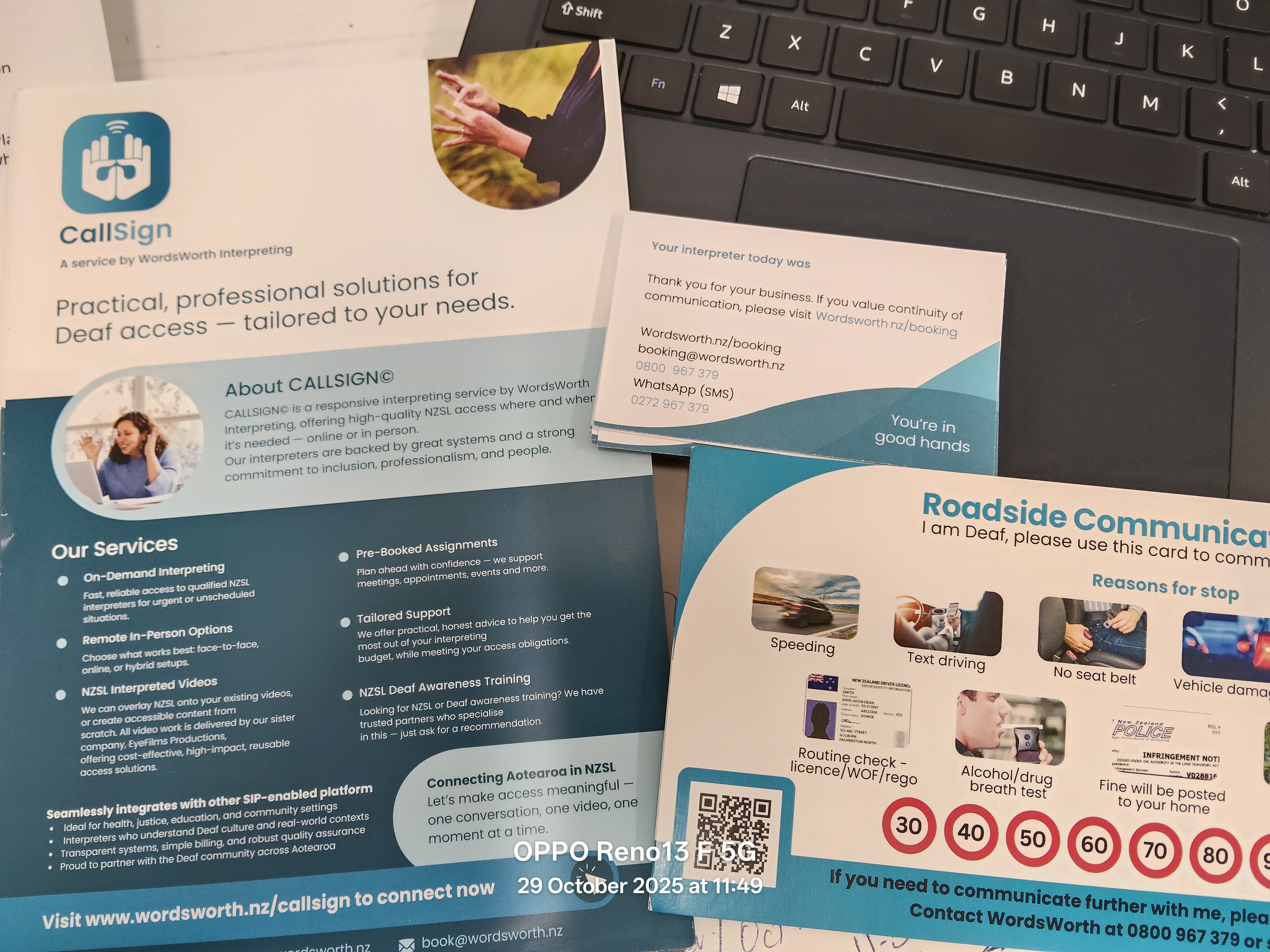
In Waikato, New Zealand, there is an updated additional service for Deaf People who need interpreter services from any business or Health Sector Service. Interpreter Services is Wordsworth Sign Language Interpreting, based in Hamilton. The system is called “CallSign”, a responsive interpreting service by Wordsworth Interpreting. This Interpretering Service wants to improve the quality of service for all people in the communities to reach many of their D/deaf clients and patients—this service benefits the health sectors, justice, education and community settings. There is an option for all Deaf Drivers when using a Roadside Communication Card. This Roadside Communication Card is beneficial for all Police Officers when stopping any Deaf Drivers. Inside the communication card are tips on various topics, such as speeding, texting while driving, and driving a red light as a reason for a stop. On the other side of the communication card, there are quick communication tips for Police Officers to understand our D/deaf needs of verbal commands. The card is similar to the USA and Vancouver cards, and here is the link—note it was four years ago. https://youtu.be/lLuzjS3HaYY?si=hE4jqJ4Rs5QjOBDj

oplus_0

Did you know about Universal Design for all people? Here is the link for you to look at or to read information – https://www.branz.co.nz/universal-design/

I suggest not ignoring this Universal design because you will be one of us at a stage of life you never know or expect, where there are health issues or you are involved in an accident.

https://www.nsai.ie/standards/sectors/universal-design-and-inclusion/

https://universaldesign.ie/about-universal-design/the-7-principles

https://universaldesign.ie/about-universal-design/policy-and-legislation/policy-and-legislation-in-ireland

This universal design link is from New Zealand, and it is weak. This link provides guidelines for anyone who does housing, office buildings, and/or school buildings. We, people with disabilities, advocate that this guideline should be placed under the Law and Regulations Act through the Parliament here. We do not want to hear about the financial cost of building the building by the contractors, the architects, or the Council’s decision-making on the Building consents. https://www.gpg.govt.nz/workplace-design/universal-design-approach/

Here is another link from the Building Performance website: Complying with the Building Code. The Building Code is contained in regulations under the Building Act 2004.

https://www.building.govt.nz/building-code-compliance/d-access/accessible-buildings/about/practical-application-of-universal-design

For example, look at Kāinga Ora and the housing across Aotearoa-New Zealand, which does not meet the needs of thousands of people with disabilities and seniors with poor mobility/disabilities to live in and make their lives better quality in the communities. There are 851,000 people (17 per cent) in households in Aotearoa/New Zealand who are disabled. Extract from AI – There is no single global figure for the number of disabled people living without a home. The number varies significantly by country, and data on disability and homelessness are often incomplete or inconsistent. However, data from New Zealand can provide a detailed example of the disparity disabled people face in housing. 

In New Zealand:

  • Higher rates of severe housing deprivation: The 2023 Census found that disabled people were more than twice as likely as non-disabled people to experience severe housing deprivation. For every 10,000 disabled people aged five and over, 414.5 were severely housing-deprived, compared to 203.7 per 10,000 non-disabled people.
  • Increased risks across all categories: The disparity holds across types of housing deprivation, including living without shelter, in uninhabitable housing, or in temporary accommodations.
  • Specific issues with inaccessible housing: Beyond homelessness, a significant problem is a lack of accessible and affordable housing. A 2022 survey found that as few as 2% of homes for sale in New Zealand were accessible to people with disabilities. 

Factors that contribute to homelessness among disabled people include:

  • Income inequality: Disabled people often have lower incomes, making it harder to afford housing.
  • Discrimination: Many disabled people face discrimination in the housing market and are denied rental applications.
  • Accessibility challenges: The lack of accessible homes forces many to live in unsuitable conditions or without housing. 

The search results for this query focus exclusively on New Zealand. However, the data highlights a broader global problem, as disabled people worldwide are more likely to experience housing insecurity and poverty. 

It is not about a bad example; it is the main problem of a lack of awareness, and their response costs too much money to repair or adapt for people with disabilities/seniors with mobility/issues. Honestly, tenants pay rent to them. There is not enough accessible housing for people with disabilities/seniors with disabilities; for example, one accessible house vs four fully accessible houses are not accessible—what is Kāinga Ora’s problem?

Have you considered our neighbour islands—the Pacific Islands? Extract from AI – There is no single, precise figure for the number of deaf people across all Pacific islands, but they constitute a significant portion of the population. Estimates suggest that over one in ten people in the Pacific region live with a disability, many of whom are deaf or hard of hearing. In the Western Pacific, the World Health Organisation (WHO) reports over 546 million people with hearing loss, and a local estimate suggests about 1.5 million people with disabilities live across the Pacific Island countries and territories, which includes those with hearing impairments.

Pacific Region: Over one in ten people live with a disability, many of whom are deaf or hard of hearing.

Western Pacific: The World Health Organisation (WHO) estimates more than 546 million people live with hearing loss in this region.

Pacific Island Countries: An estimate from the Pacific Disability Forum suggests that about 1.5 million people with disabilities live in the Pacific Island countries and territories, which includes the deaf and hard-of-hearing population.

Extract from the RNZ in 2012. https://www.rnz.co.nz/international/pacific-news/206244/deaf-people-the-most-neglected-of-solomon-islands’-disabled

from the Guardian Newspaper – 2022

https://www.theguardian.com/world/2022/dec/05/left-out-of-society-vanuatus-deaf-community-push-for-national-sign-language

From Australian Media 2024

https://www.abc.net.au/pacific/what-is-it-like-growing-up-deaf-in-solomon-islands-/104563884

There are six core partners: Australian Aid, New Zealand Foreign Affairs and Trade, CBM (I know this one —we keep in touch), Centre for Inclusive Policy, United Nations, and International Disability Alliances.

Invisible Disabilities Week, October 19 – 25, 2025.

#invisibledisabilitiesweek

#seetheinvisible

Let’s come together to celebrate our Invisible Disabilities Week, a time to raise awareness and understanding about the millions of invisible disabilities that many may not realise exist. This week is an opportunity to learn, share, and most importantly, support those living with invisible disabilities. By understanding their challenges and offering our empathy and support, we can make a significant difference in their lives. Let’s strive for inclusivity, acceptance, and understanding, as advocated by the Hidden Disabilities Sunflower. Our understanding and empathy can be a powerful force for change.

As a person living with invisible disabilities, I navigate daily life in a rural community outside Hamilton City, New Zealand. My invisible disabilities include deafness, Cervical Disc-Spine degeneration and radioculopathy of my right side from the neck, the shoulder and arm, Rheumatoid Arthritis, Endometriosis, migraine, hypertension, thyroid gland-T4 (thyroxine), glaucoma/cataract implant lens, chronic sinus and asthma conditions. These are the many symptoms I live with, but I don’t dwell on my severity. However, I often find that people, including my D/deaf friends, struggle to understand my experiences. I share these experiences to foster a sense of community and understanding among those living with invisible disabilities.

I write various types of blogs, including Deaf History, Dogs’ Tales, Life in Eureka, Waikato Deaf Society/Waikato Deaf Units, and a few more domains on WordPress. I enjoy writing, thinking, exploring, researching, and mentoring, all while enhancing the experiences of diverse audiences worldwide, because everyone is unique. By writing blogs across several domains, I help myself improve my writing in English and other languages and gain more confidence to share with you and others, such as in cognition, reasoning, reflection, pondering, contemplation, and ideation. In other words, philosophical thinking is a critical, reflective, abstract, and logical process aimed at pursuing truth and knowledge, examining values, and developing personal worldviews. It involves questioning assumptions, connecting ideas logically, and critically evaluating information to understand fundamental concepts, ethics, and the nature of existence itself. Please note that I am not a paid writer/historian/researcher at present, and I am seeking funding grants and donations to support my ongoing work.  

Let’s explore the diverse spectrum of invisible disabilities you may have come across – Crohn’s disease, MS (Multiple Sclerosis), ME (Myalgic Encephalomyelitis, also known as Chronic Fatigue Syndrome – CFS), Fibromyalgia Syndrome (FMS), ADHD (Attention Deficit Hyperactivity Disorder), Aphasia, autism, chronic obstructive pulmonary disease (COPD), Coeliac Disease, dementia, dyslexia, Ehlers-Danios Syndrome, and Endometriosis. What about two different types of diabetes, Dysautonomia, asthma, epilepsy, Foetal Alcohol Spectrum Disorder (FASD), Functional Neurological Disorder (FND), Haemophilia, Long COVID, Lupus, Migraine, Narcolepsy, Ostomy, Pancreatic Cancer, Parkinson’s, Peri/menopause, poTS, Scleroderma, stuttering, Tourette’s Syndrome and Ulcerative Colitis? Yes, these are all invisible disabilities, each with its unique challenges and experiences.

Societies around the world are not immune to ableism and disablism in the workplace and in communities. The disadvantage of these problems is that they are often perceived by other ‘able-bodied’ people, even without knowledge of disabilities, such as wearing glasses, dentures, and the main problem is a lack of understanding of our invisible disabilities out in the communities.

I want to highlight these problems. I used AI copy and paste here for you –ableism refers to the systemic valuing of able-bodiedness, which creates barriers and disadvantages for disabled people. In contrast, disablism is the specific, direct discrimination and oppressive behaviours that result from this underlying ableist ideology. 

Ableism

  • What it is: A system that values and prioritises the abilities of non-disabled people, also known as able-bodied privilege.
  • How it works: It shapes society to fit the needs of non-disabled individuals, creating physical and attitudinal barriers for people with disabilities.
  • Examples:
    • Buildings without ramps or elevators make them inaccessible to wheelchair users.
    • Lack of captions in online videos excludes deaf and hard-of-hearing individuals.
    • Workplaces are failing to make reasonable adjustments for employees with disabilities. 
    • Lack of Sign Language Interpreters in public meetings, events, staff training/meetings and media

Disablism

  • What it is: The discrimination, prejudice, and abusive actions or behaviours directed at disabled people. It stems from the belief that disabled people are inferior.
  • How it works: It can involve conscious discriminatory actions or behaviours, as well as less obvious prejudices.
  • Examples:
    • Using offensive or patronising language when speaking to a disabled person.
    • Ignoring or excluding someone with a disability.
    • Making assumptions about what a disabled person can or cannot do. 

The Relationship Between Ableism and Disablism

  • Ableism can be viewed as the underlying societal ideology that fosters an environment where disablism thrives.
  • Disablism is often the direct manifestation of ableist beliefs and practices.
  • Both concepts are crucial for understanding and dismantling discrimination against people with disabilities and for promoting a more accessible and inclusive society. 

I know a large group of people with invisible disabilities here, and they do not have full-time work like me; a small number of them are on part-time work under 25 hours a week. We are advocates for human rights to various agencies, Government agencies, and businesses. We, along with other groups such as low-income families, homeless people, seniors with disabilities and poverty groups, are unable to afford the cost of living, such as rent, mortgages, food prices, and power/wifi. The critically important thing is to remove ableism and disablism from laws, policies, acts, and other types of legislation by making our lives equal in society as one whole world. This slogan is our mission – ‘Nothing about us without us‘. Let’s work together to bring about this change.

In New Zealand, we have a small organisation called the Hidden Disabilities Sunflower to encourage inclusivity, acceptance, and understanding. Not just in New Zealand, there are global networks, such as The Hidden Disabilities Sunflower.

https://hdsunflower.com/au/about-hidden-disabilities-sunflower

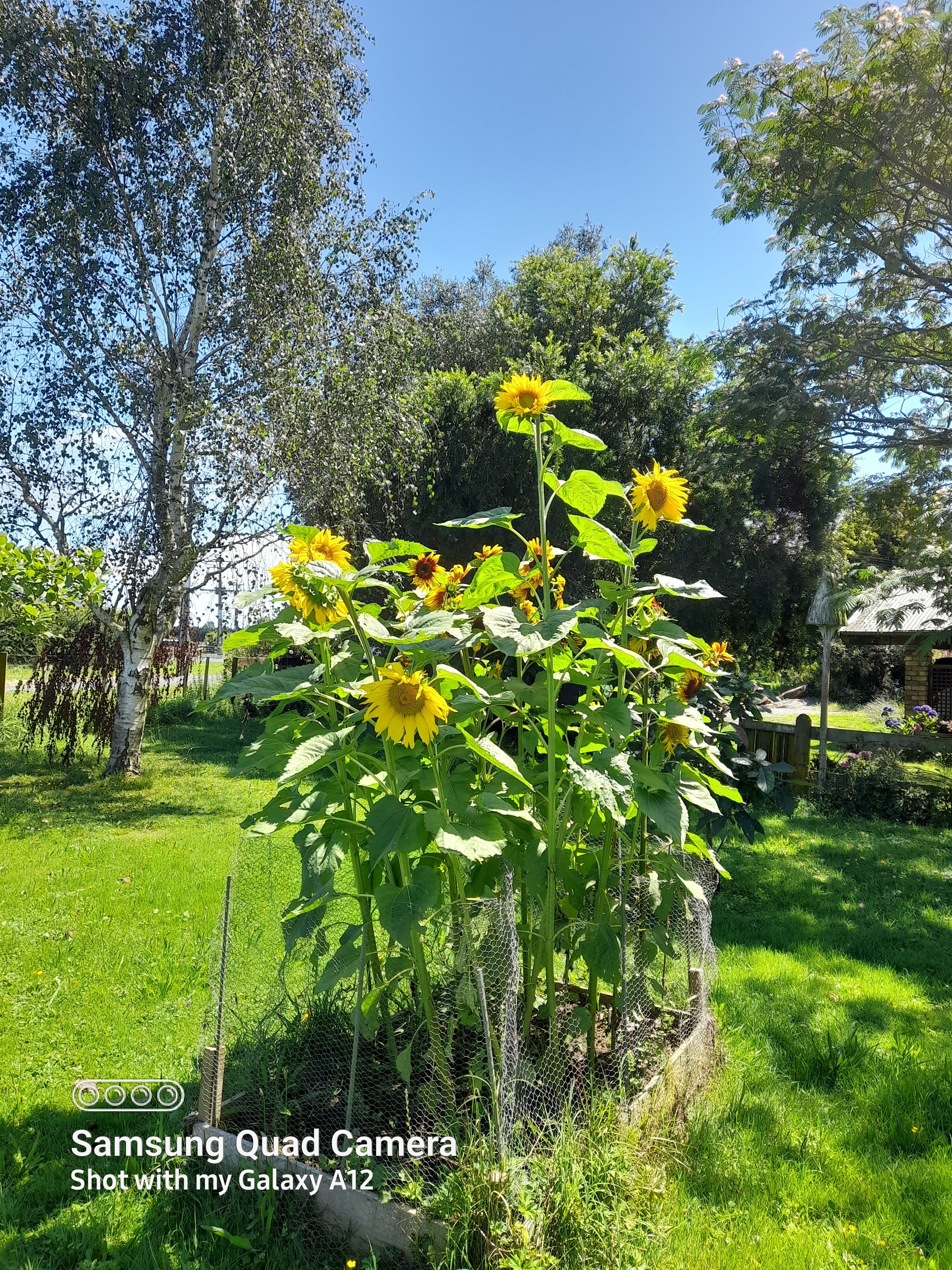
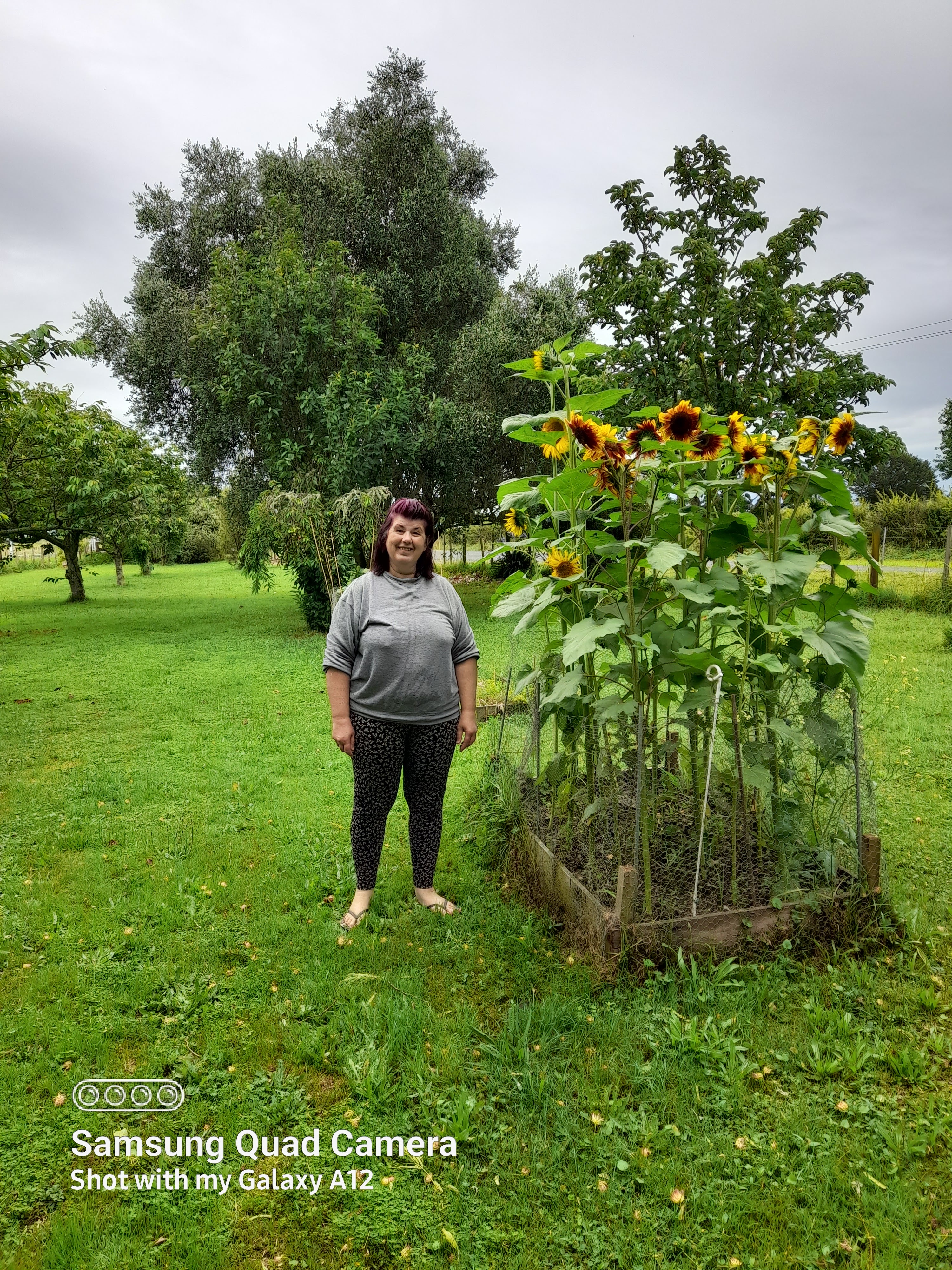
What was the reason it was called the Sunflower? Happiness, positivity, strength, growth, and confidence are universally known. 

One of the famous quotes I’ve known for many years came from Helen Keller – “Keep your face to the sunshine and you cannot see the shadows. It’s what sunflowers do.” 

Sunflowers are also seen as symbols of hope and optimism. Their ability to grow tall and strong, reaching toward the sky, represents personal growth and the pursuit of one’s aspirations.

Sunflowers symbolise joy, positivity, and hope during difficult times. They inspire resilience and perseverance. As gifts, they convey warmth, love, and admiration without words.

Essential keys for your audience/readers: consider starting learning about invisible disabilities through workshops, one of your colleagues, organisations near your business, and society. We would appreciate it if you and your company could amend or adapt the infrastructure and open environment gardens to allow children, seniors, and families to enjoy them.

https://www.hamiltonairport.co.nz/hiddendisabilitiessunflower/

Mental Health Awareness Week – Top Up Together

October 6th to 12th 2025

The Five Ways to Wellbeing is not just a set of five simple, evidence-based actions, but a powerful tool that can significantly improve wellbeing in everyday life.

There are five key points, along with other considerations, to consider each day. Firstly, I will explain why it is essential to engage in activities, take time out, and stay in touch with your family, friends, and colleagues.

The Five Ways to Wellbeing-Give, Be Active, Keep Learning, Take Notice, and Connect-are inclusive actions that can be adopted by anyone, regardless of their circumstances or abilities.

sharing the concept

Variety is significant, and communicating the message

These strategies are adaptable and can be incorporated into daily life at one’s own pace, empowering individuals to take control of their wellbeing.

The better to emphasise that people with disabilities, mental health and seniors represent a range of options that can be tried by anyone, friends, support persons and suited to an individual’s needs throughout daily life. The key essential tools are holistic wellbeing and a balance of activities that encourage and help everyone in their everyday lives.

Communicating the message

One researcher, Lynne Friedli, outlines the key principles for the effective social marketing of mental health messages. Five Ways framework and the best practice from using them in mental health promotion settings:

  • Start where people are
  • Focus on building emotional connections with the target audience
  • Be positive, upbeat and aspirational – selling healthy, satisfying lives as opposed to ‘do not do’ messages
  • Exchange – people must perceive a clear benefit if change is to occur.

Lynne pointed out the evidence in her findings that people are not related to the term ‘mental health’, and the target aspirations that underpin the messages were chosen as ‘wellbeing’ or ‘flourishing’. Other evidence she found is that people perceive health promotion messages as portraying something too distant from their own lives, and they will be resistant. Modelling behaviours from those communicating the message is effective in making the message seem attainable.