A time to sit down for a moment to think how shall I type tonight! Another night and night put me aside until today!
There has been a sad time in the Deaf community as they lost one Deaf chap who he passed away peacefully this Monday 16th November 2020.. He was a widow for 32 years and had a daughter with her husband and two grandchildren. The daughter wished to have a family time of their own – a father, father in law and grandfather but it was not working due to her Deaf uncle sent out the messages which were not clear information the last few days. Never mind!
Spending time doing gardening helped me to wind down and forget the moment of the works yesterday. What did I plant in the vegetable garden? Sweet corns, capsicum seedling, peas and relocation the pumpkin from the greenhouse to outside. Gardening helps many people who have gone through grieving times, a break from stressful work or having mental issues such as depression, feeling anger building up inside and unable to let your anger go. I called this a ‘Garden Therapy’, which I found it very useful to get me through a stressful time when I have chronic pain syndrome from the right side of my body. The symptom I have is a Cervical Degenerative disc disease and Cervical radiculopathy, and I am learning to live with this symptom since I was diagnosed two years ago.
I knew an excellent verse from the Bible (Ecclesiastes 3. 1-13 in the Old Testament),and a viral song by the Byrds. Here are the video song clip and the lyrics.
Reflecting my memories about whether to do the garden or not, when I was a very young deaf girl lived in Hillcrest, Hamilton. My mother – Joan, was a solo mother with four children, and she does all the works around the house and in the garden. We spent our time with our grandparents over the school holidays for many years. Joan said to me, whether I help her to do the weeding in the garden and my reply was no, but I helped her from time to time with the housework and less gardening. Joan said when I am older enough to move out and do the garden one day. I said that I am definitely doing the weeding, planting shrubs, growing vegetables and other jobs around the garden. Let wait and see what happened when I move out in the future!
Fast forward to my first home in Barrie Cres, a first-timer own a two-bedroom house with the blackberries and gorse shrubs gully down to the creek run through from the State Highway 26 1992. My home was tucked away at the end of the street just like a private home with a gully I never thought to own this part of the gully section. I drew up the plan to attacked blackberries and gorse shrubs as to extracted and replaced with native shrubs and trees. I remember getting a sizeable old goat, and his name was Jeremiah. It was a friendly goat and often got loose when I was working afternoon-evening job at the BNZ as a data entry/Bank Officer. My Dutch neighbour got a fright to see Jeremiah eating the grass off my lawn, and she managed to tie him to the clothesline until I get home. Jeremiah lived another two years until one morning I woke up to check on him, sadly he passed away. I spoke to my two neighbours – one worked at the Ruakura Research Institute Centre and the second one was a University student for I know his future wife and the family through church. Their response was left to them when I go to work, and Jeremiah won’t be there when I get home. When I got home and found a collar left on the doorstep for me as a memory of Jeremiah.
Jeremiah 1992
The first garden project in Barrie Cres, was a long term and formidable challenge to make it successful in 1994.
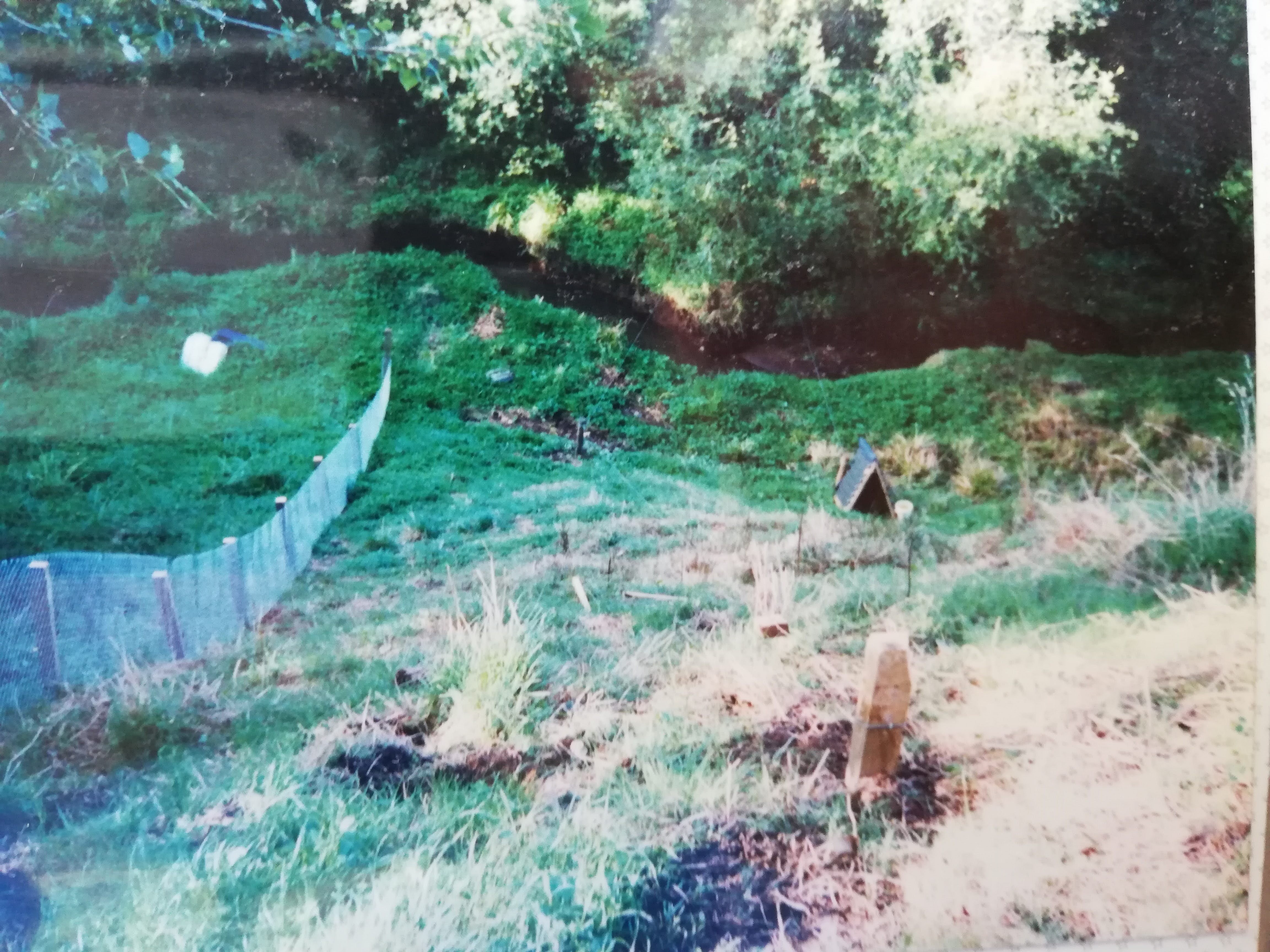
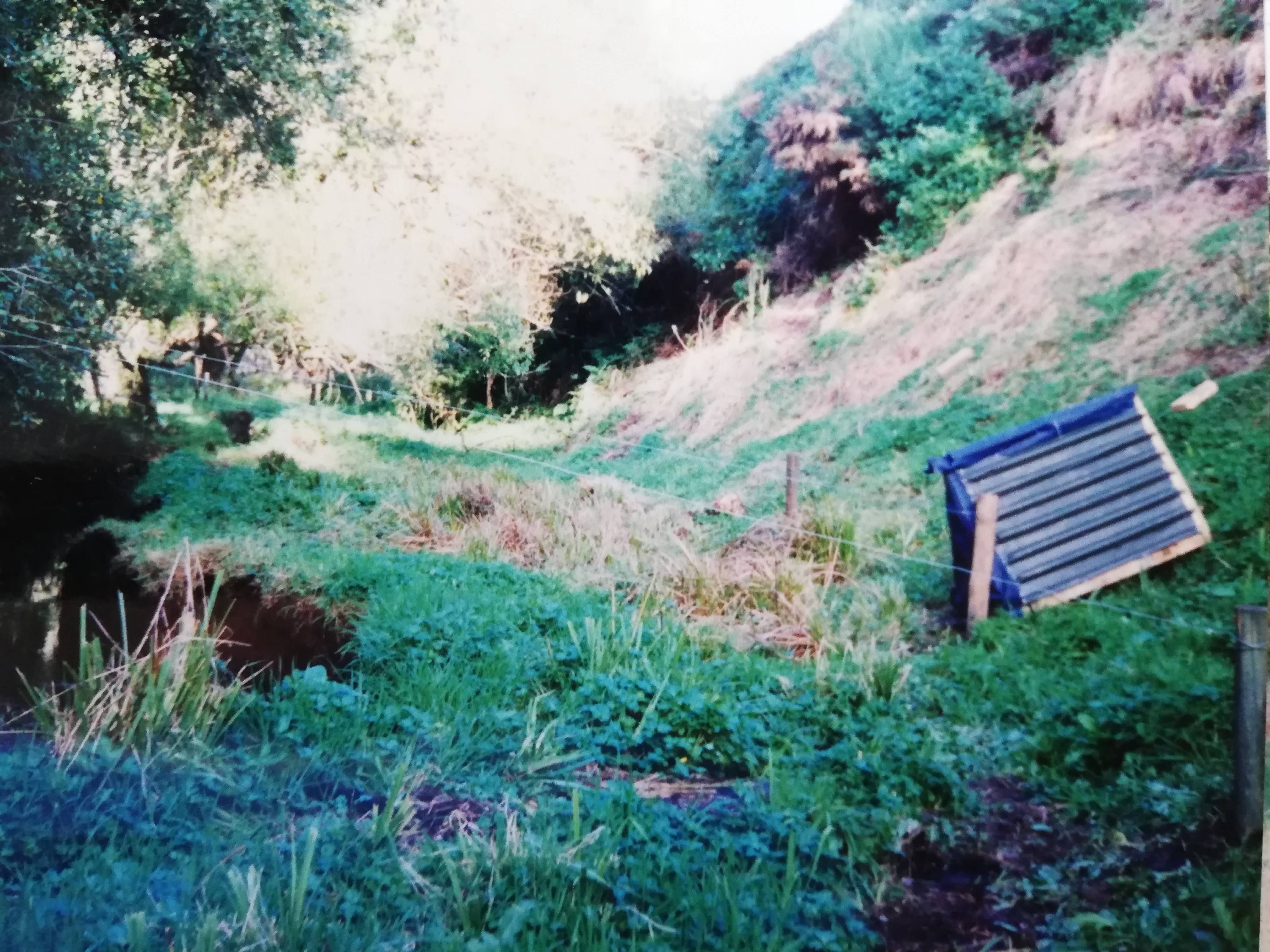
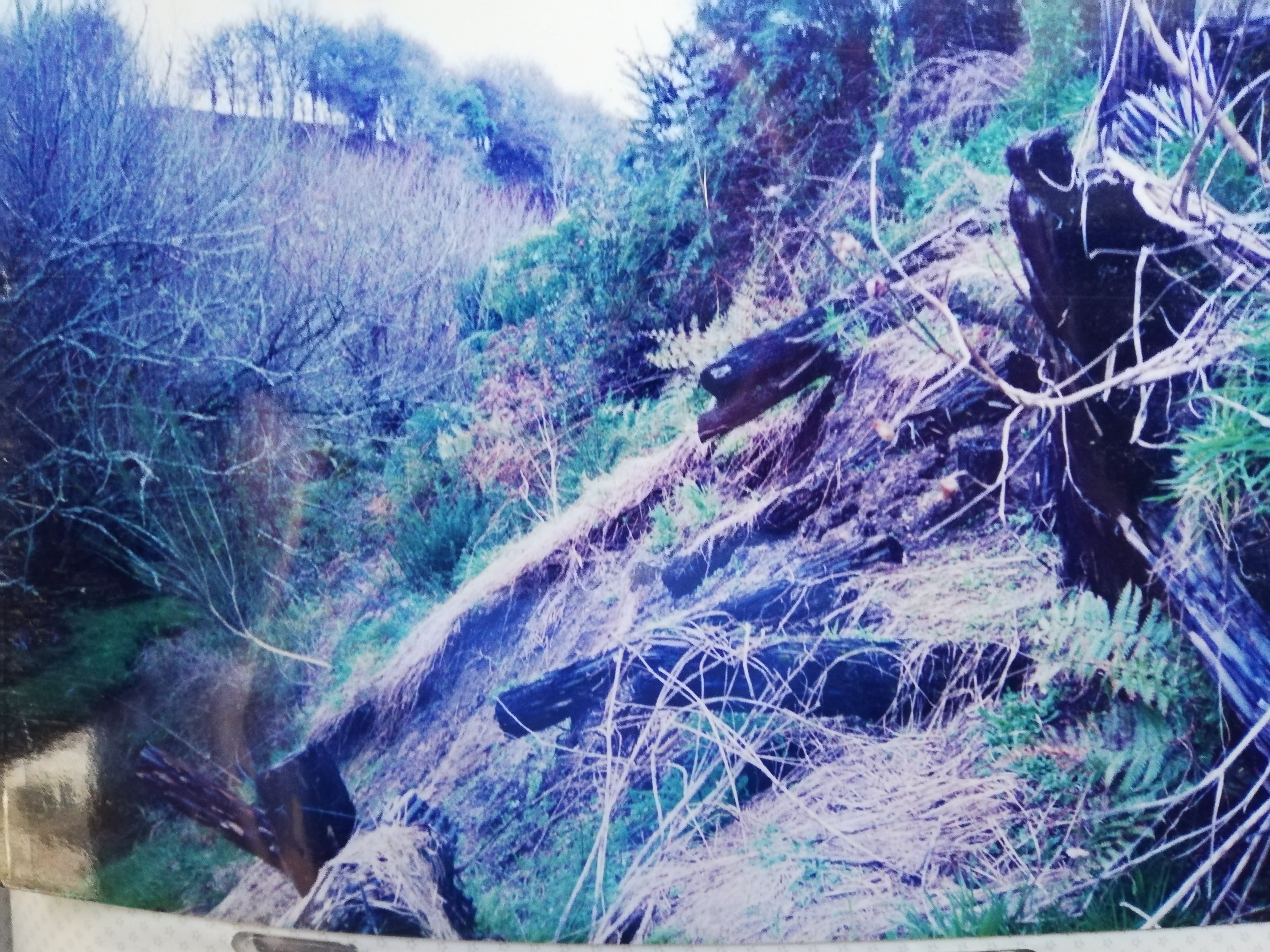
There was a landscaping layout from the top to the bottom where to meet the stream. It was laid out with ponga logs, topdecking platform with a stairway and weeding mats. I bought fast-growing trees and slow-growing trees, flaxes, bottlebrush trees, low growing native shrubs and hebes bushes.
Oh, I remember one moment four days before Christmas Eve, I was doing planting trees then I climbed back to the top. I lost my footing, somehow I rolled myself down approximately 30 metres before the totara tree stopping me. I received bruised from the neck area to feet, even arms and wrists, and there were no bones broken. I managed to climb back and rest for a bit before driving to my GP, which was not far from my home. Unfortunately, I have 2 weeks leave from work, and the manager was desperate to have me because of my high skill in data entry and the ability to target the deadline frames.
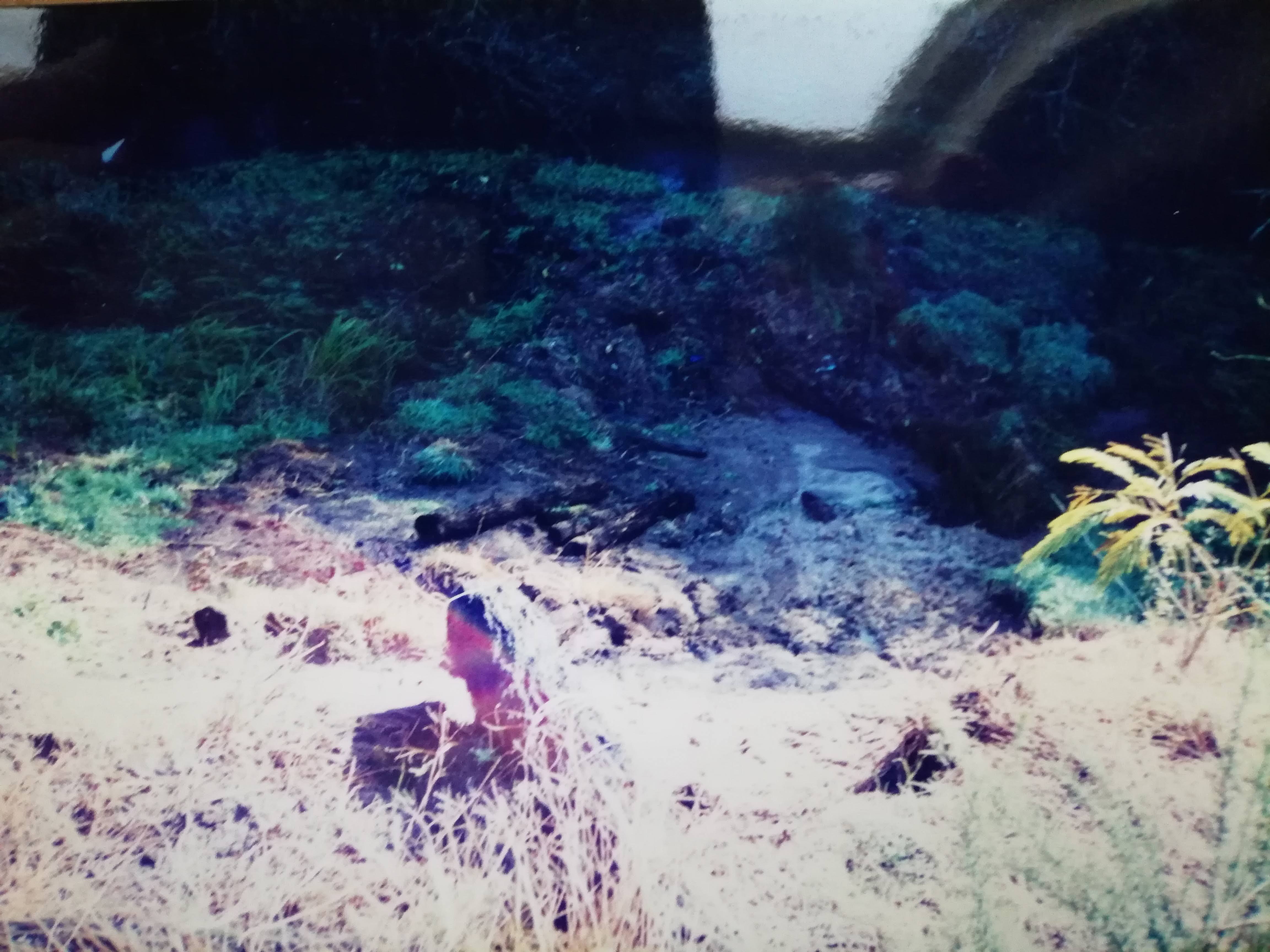
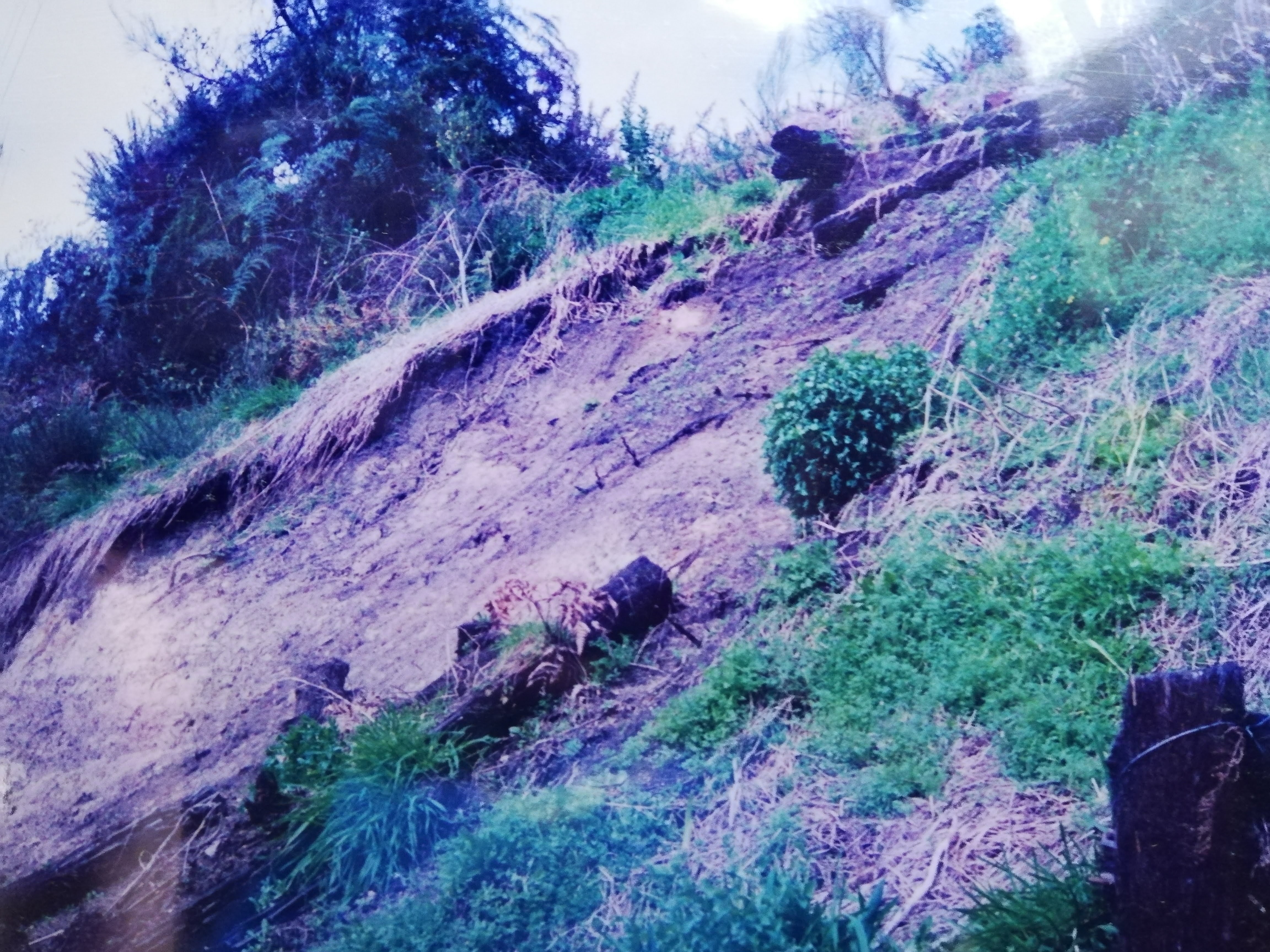
The ‘mother nature’ weather disaster struck with a violent wild wet weather. It happened overnight for I did not hear the slip or rumbling down in the gully. I checked in the early hours of the morning to find the landslip on the right side where I planted freshly new shrubs and trees recently (a couple months ago). I faxed the Environment Waikato and The Earthquake Commission for the advice, and they told me to contact Hamilton City Council for we pay our rates to them. The year was 1996 during May as it was an autumn season. I was lucky to have more shrubs and trees free from the Hamilton City Council and the task team – Force 2000 team did the planting for me. Thank you Hamilton CityCouncil.
The learning key is to plan wisely and to prevent the damage by mother nature weather. Do not start a big plan than a small plan; otherwise, you will lose the high cost of financial on garden projects. I was lucky to have several family members and a couple neighbours who have long experience with plants, landscaping and plant cuttings. I took their advice on growing seeds, plants and vegetables throughout the years. I learnt how to do plant cuttings even failed several times, but I keep trying until I have succeeded in growing.
Today (2020), I am living with my hearing partner and three dogs in the large property, and it is four times bigger than the first home. Yes, back in 2014, I first starting refresh plan on landscaping to match our lifestyle and my physical injury, which allow me to maintain less weeding, pruning, trimming and growing seedlings in the green house.
Not everyone even family members have not been to our property for years, just to look at the photos or video over Facebook. Our dogs are OK for now. The tradesmen and neighbours visited here and walk pass to their homes down at the end of the road. .
We love living here and enjoying regularly doing garden and landscaping from year to year. I am hopeful of completing the final push of the garden project next year.
Next month, there is a special day to remind you all. Have a look at the photo here.
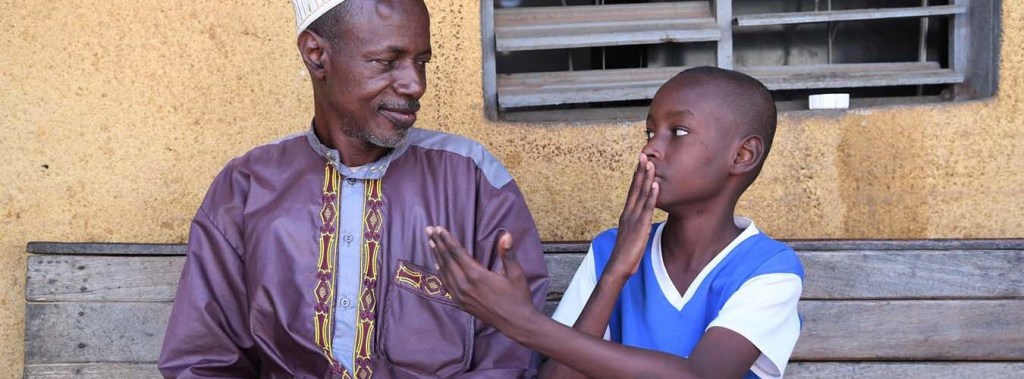
Modibo Sall, 10, teaches his 52-year-old father, Amadou, sign language. Modibo was born deaf. He lives in the village of Bouaké, in the centre of Côte d’Ivoire. UNICEF/Frank Dejongh
It is on the 3rd of December and the theme is “NOT ALL DISABILITIES ARE VISIBLE”. Nothing about us, without us.
The quote from UN –
According to the WHO World Report on Disability, 15 per cent of the world’s population, or more than 1 billion people, are living with disability. Of this number, it’s estimated 450 million are living with a mental or neurological condition— and two-thirds of these people will not seek professional medical help, largely due to stigma, discrimination and neglect.
Another 69 million individuals are estimated to sustain Traumatic Brain Injuries each year worldwide, while one in 160 children are identified as on the autism spectrum.
These are just some examples of the millions of people currently living with a disability that is not immediately apparent, and a reminder of the importance of removing barriers for all people living with disability, both visible and invisible.
During the COVID-19 pandemic, isolation, disconnect, disrupted routines and diminished services have greatly impacted the lives and mental well-being of people with disabilities right around the world. Spreading awareness of invisible disabilities, as well as these potentially detrimental— and not always immediately apparent— impacts to mental health, is crucial as the world continues to fight against the virus.
What we, Persons with disAbilities want you to remember and to be sure that we ARE part of the society same as you anywhere in the world. The key messages are inclusive, accessible, sustainable society, and the future IS ACCESSIBLE.
Over many years, we, persons with disAbilities are list almost at the bottom of the colonialism (Anthropology – Social, Cultural, socioeconomic) but above indigenous people. We are not equal to societies around the world such as receive little income/funding, stop us from working in the businesses, from living in a home where there are a friendly accessible environment and accessible communication like internet, video chat.
Today there are many high rise apartments without lifts in the communities, fast-growing technologies, high cost of equipment as as iPhones, power wheelchairs, large mobility vehicles, the lack of resources about people with disAbilities even Deaf people/children’s first language – Sign Language for home, work and educations, cochlear implants, stem cells or designers babies in medical areas. Who are the countries miss out and a long delay of catching up with our disAbilities in the world? Here is the quote from UN Enable – disAbilities in developing countries.
“The problems of disability in developing countries need to be specially highlighted. As many as 80 per cent of all disabled persons live in isolated rural areas in the developing countries. In some of these countries, the percentage of the disabled population is estimated to be as high as 20 and, thus, if families and relatives are included, 50 per cent of the population could be adversely affected by disability. The problem is made more complex by the fact that, for the most part, disabled persons are also usually extremely poor people. They often live in areas where medical and other related services are scarce, or even totally absent, and where disabilities are not and cannot be detected in time. When they do receive medical attention, if they receive it at all, the impairment may have become irreversible. In many countries, resources are not sufficient to detect and prevent disability and to meet the need for the rehabilitation and supportive services of the disabled population. Trained personnel, research into newer and more effective strategies and approaches to rehabilitation and the manufacturing and provision of aids and equipment for disabled persons are quite inadequate. In such countries, the disability problem is further compounded by the population explosion, which inexorably pushes up the number of disabled persons in both proportional and absolute terms. There is, thus, an urgent need, as the first priority, to help such countries to develop demographic policies to prevent an increase in the disabled population and to rehabilitate and provide services to the already disabled.” https://www.un.org/esa/socdev/enable/diswpa04.htm#Disabilities%20developing%20countries
Let anyone who works in the Architecture businesses, technologies, ITs, property developers, and many more, stop for a moment and start to think about us as people/children with disAbilities/Deaf people/children first. Is design plans are friendly accessible for EVERYONE in the societies or not? Financial is no big deal if anyone who is a property developer, businessperson, want a cheaper and fast buck plan goal then turn into a quick investment financial in return profit.
It is a time to stop and start learning from people/children with disAbilities, Deaf people/children, even many elderly disabled people as well. We, D/deaf people and people with disAbilties are advocators for many years. We have the right to speak/sign louder in the societies in every country until we achieve to be inclusive and equal and won the battle. Nevertheless, the battle is not over yet for there is plenty of times to come. We are (must) not to be ignored by anyone in the Governments, City Councils, businesses, and in the societies.
As a deaf distributor to one of the businesses – Drink my Coffee in New Zealand, and I thought I would take up the opportunity to deliver and sell Drink my Coffee anywhere in New Zealand or overseas.
Currently, I am starting a small business and see how I go by marketing and promoting through media websites, even Facebook. Why not!
What kind of place – Drink my Coffee, and can this company help anyone as distributors to achieve? You can check out through this link here – https://www.drinkmycoffee.co.nz
You can find their mission from the link above or in here as in quote block –
“Our Mission — Enabling people with disabilities to create their own business, whilst at the same time creating employment opportunities for other disabled people.
The Market Problem
Many people with disabilities strive for nothing less than being normal, which includes being employed and financially independent. However, employers do not see their value and capability and this potential is wasted.
The alternative is to create a business opportunity for the disabled person so that they are not reliant upon an employer.
We are going to supply premium quality, freshly roasted coffee in a distribution type arrangement. The disabled person can utilise their local networks, and with training and guidance, create a loyal clientele of customers to appreciate a great coffee.”
Here is an example we have been experiment using the beans into the plunger and tasting coffee. The taste of drinking coffee was smooth, not bitter or sour burnt taste and the smell of smokey malt biscuit scent. We did not use milk as we love drinking black coffee straight. We kept the leftover plunger in the paper bag and put in the fridge so it will stay fresh until we run out of the plunger coffee grinds. The tip is to try to limit to 1 cup or one and a half cup of coffee beans for two people.
What a coffee cake, muffin even a loaf or a coffee ice cream even iced coffee? The other day I made a delicious coffee cake along with icing sugar, and it was a sharp taste than a ‘supermarket product’ coffee. Did you know that you can make any baking foods or drinks by using a ‘real coffee’?
Do not hesitate to order or ask any questions through my Facebook page or the link above. Note we do not have decaff coffee yet. However, it is on the bucket list for the future. Please spread and share “Drink my Coffee” with your families, friends, and your staff even ask the barista.
The most highlight for this Deaf with CP and speech impaired elderly chap enjoyed his half-day outing at the Hamilton Gardens today.
It had been a long time since this chap visited the Hamilton Gardens and his name is Jacek, who is over 67 years old. In New Zealand, we people faced the lockdown – COVID19 back in March 25th 2020. No one was allowed to visit the Hamilton Gardens in fear of catching and spreading the nasty grimes – COVID19. This year is the worst history of COVID19 around the world since the outbreak in Wuhan, China between October and December 2019. The WHO (World Health Organisation) announced the outbreak COVID19, was declared a Public Health Emergency of International Concern in January 2020, and a pandemic in March 2020. Now in New Zealand, we are in Level One two weeks ago where we go anywhere as long as we make sure to wash our hands, keep the distance within 1 metre and if anyone is not well or feeling ill then must stay home.
Hamilton Gardens is one of the popular attractions in Hamilton City. There is much history about this gardens back to 1960s where there was a bleak city rubbish dump near the Hamilton East Cemetery. The rubbish dump covered blackberries with seagull flying circle around looking for foods and berries. Hamilton City Council owned and managed the Hamilton Gardens along with the local support and community groups such as Roses Club and Hamilton Friends Garden over many years. Today this Hamilton Gardens receive popular visitor attraction of nearly 1.5 million visitors each year and become an award-winning public garden. I want to say these Hamilton Gardens are accessibility for all people with disabilities like Jacek, for example, you can hire a wheelchair or a mobility scooter if you have elderly parents or a disabled person finding challenging to walk along the way. My suggestion is to book to hire a wheelchair or a mobility scooter advance for the weekend outing. There is an accessible toilet facility along with public toilets, public bus transport and plenty of car parks. For your information about accessibility, there is a map of the Hamilton Gardens can be found on the website here –https://hamiltongardens.co.nz/visit/
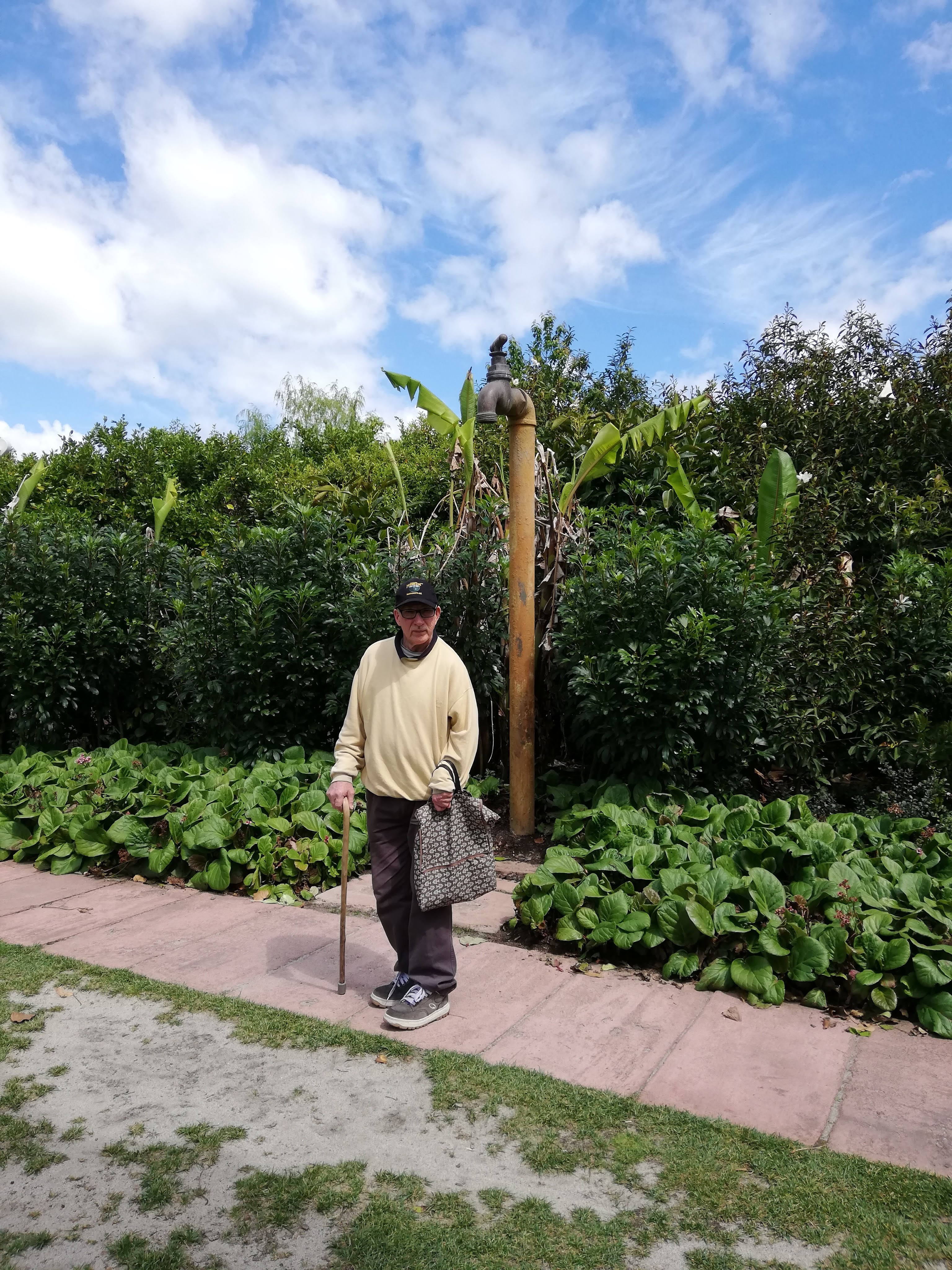
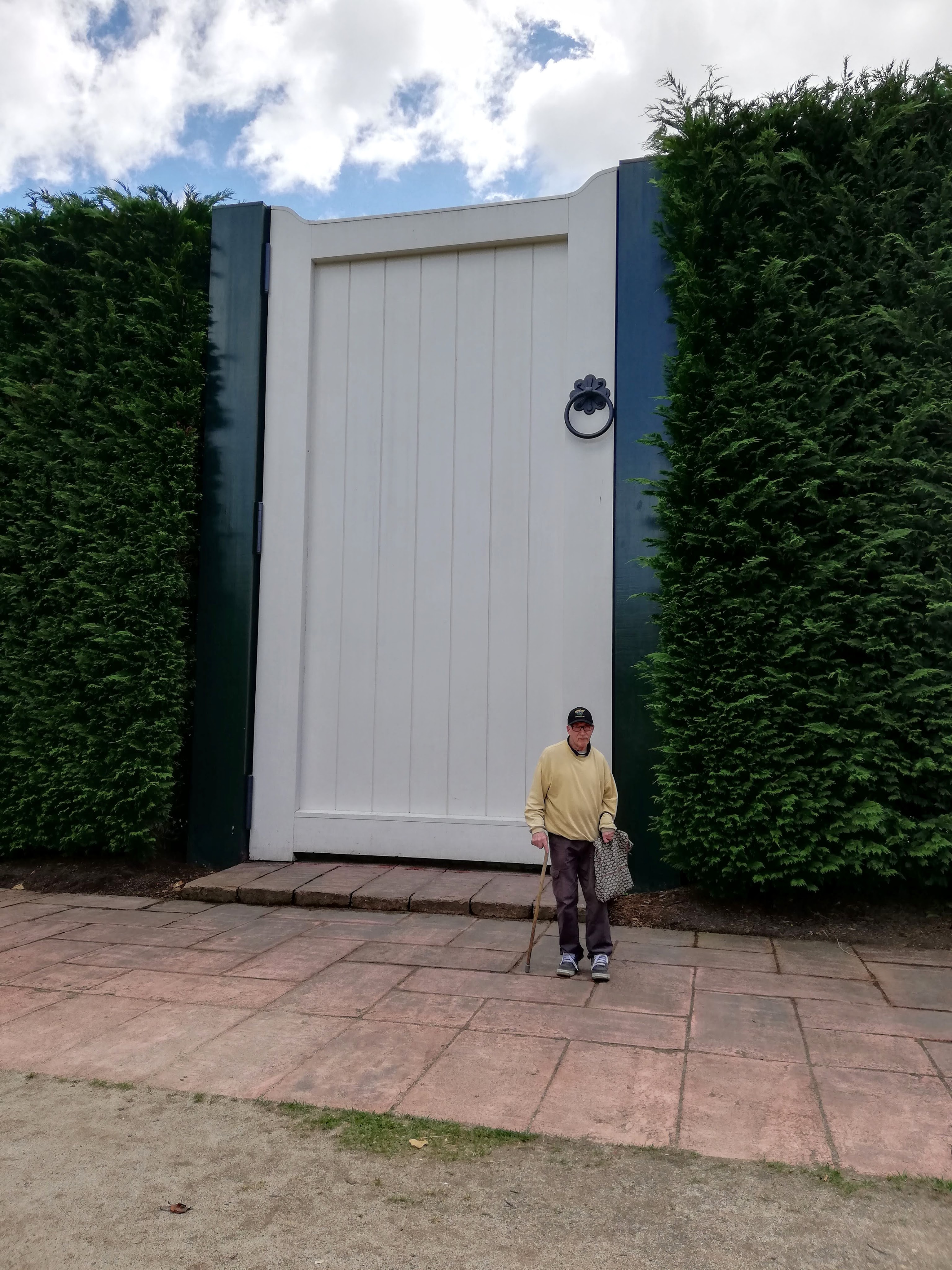
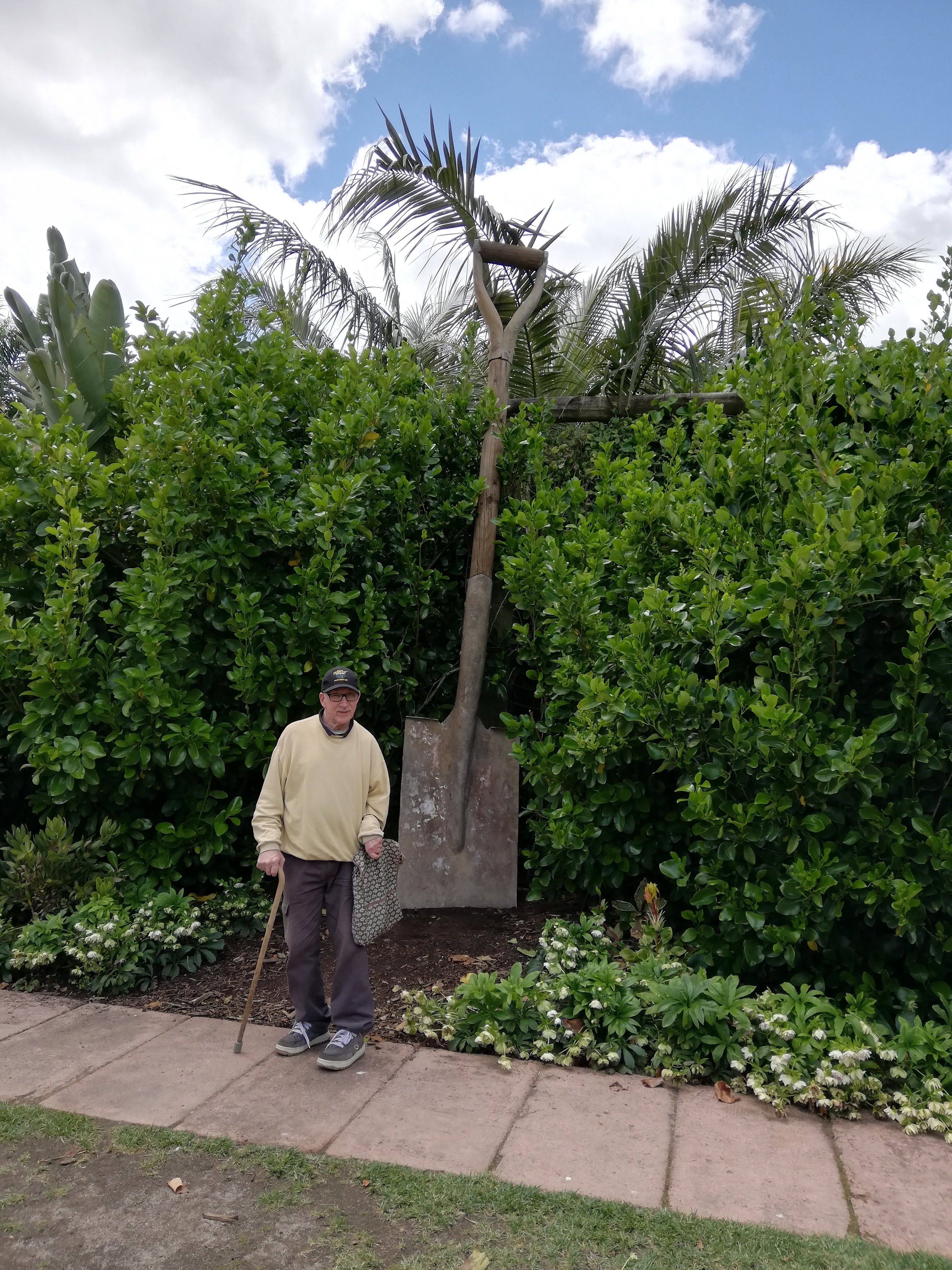
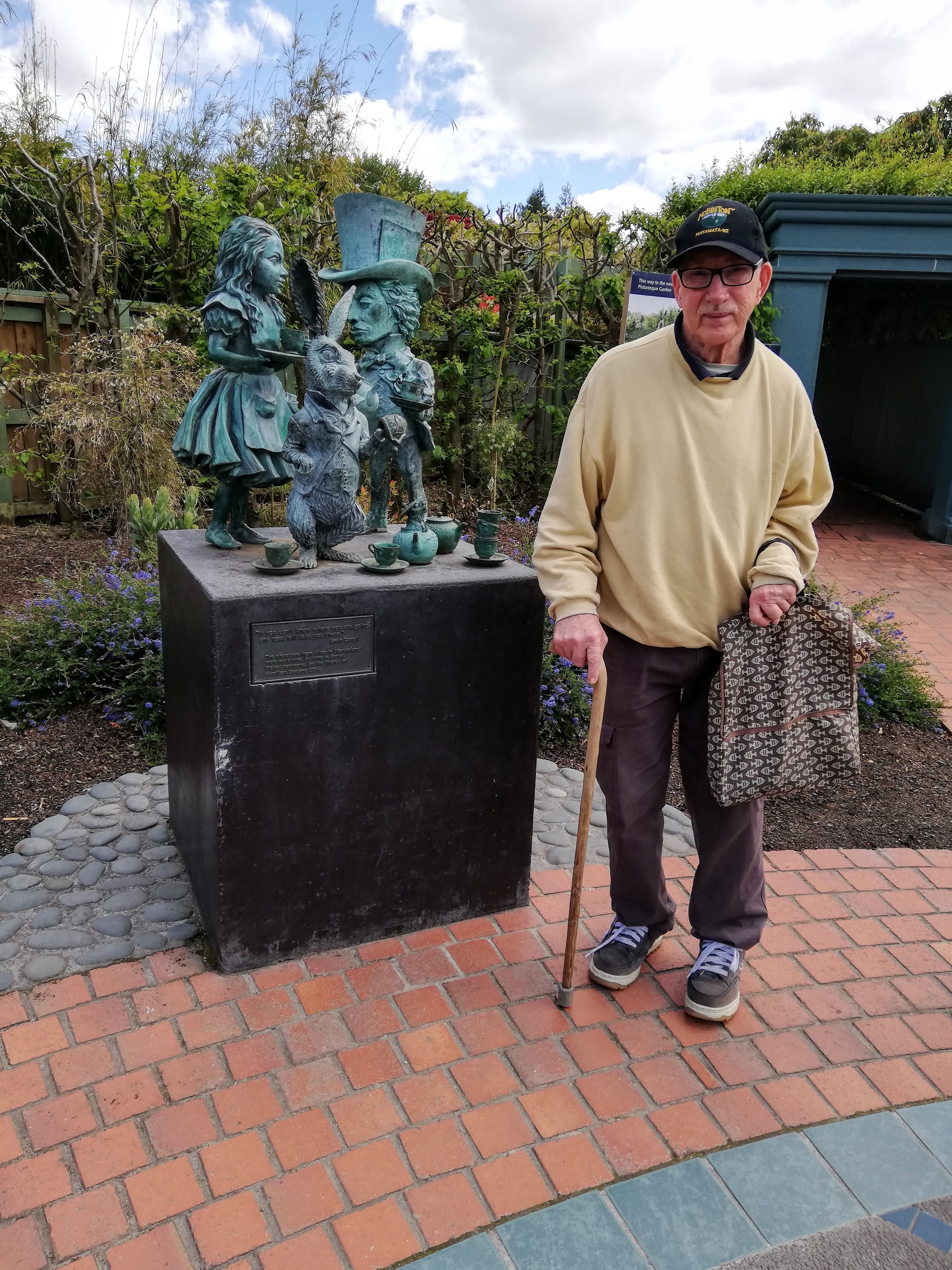
Jacek at the Surrealist Garden
Today I took Jacek to one or two of the newest gardens in one of the Fantasy Garden Collection. It is called the Surrealist Garden and the Tudor Garden. Here are a few more photos to show.
Oh and awe what remarkable picturesque of the plants and enormous figures display and delighted to many people and children. As you can see the photos, there were many people with children entertained and ran around the gardens with awe, gladly and amusing with laughter and fun. How about the video here?
Video by Jean M. The Surrealist Garden
Indeed, what a beautiful day to attend the gardens and enjoy having lunch at the cafe near Turtle Lake. Mind you, at the cafe, it was hectic, and the cafe business will reap for the loss of the profit during the lockdown. We were grateful for one of the staff managed to find a table for us to sit down due to Jacek’s disability.
Another day to revisit the other garden collections on a beautiful sunny day in the future or before Christmas time. Why not? It would be best if you visited this Hamilton Gardens and enjoy your time walking around, relax on the grass and to play bocce, even go to the cafe and have a meal there.
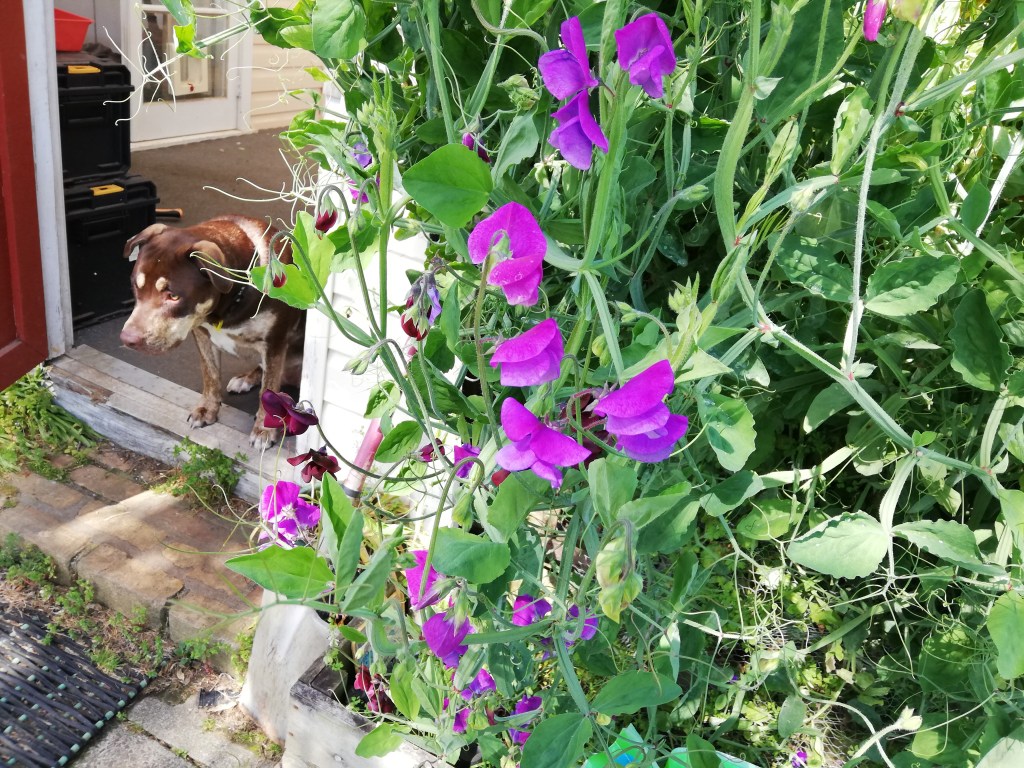
Sweet peas flowering by the side door and young pup
How sweet smelling floating through the side door,
Sweet peas flowers dancing in the breezeway while young pup guarding at the door,
Sweet pea flowers
Colour of mauve and purple sweet peas display majesty in the air of the sunshine day. The day before it was raining and gloomy day. How great full today the sun broke through the gloomy and cold day.
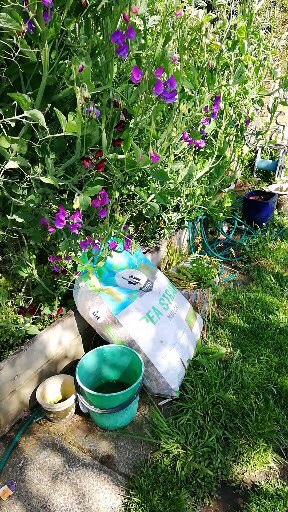
What a sight to see the sweet peas climbing up and up toward the blue skies above, brand new leaves keep growing, and we keep sprinkling water day-to-day, the more merry delightful flowering sweet peas, the more will flowering through Spring into Summer days,
For the blind people smell and try to picture the sweet peas look like while the Deaf people watch flowers dancing gracefully for can not hear the sound of fluttering and patting each leaves and flowers,
Sweet peas bring many happiness and memories of our lives, and yours lives from childhood days on the farm, living in the cottages or from the gardener’s books.
The work on the garden project must go on and it will be never-ending throughout day to day of our lives out on the rural home.
Every year, October 10th it is called a Mental Health Day.
Psychology is the sciences of mind and behaviour. We including people with disAbilities, even Deaf people, do ourselves differently from other people, BUT our mind and behaviour are not the same to other people.
Did anyone know this word ‘psychology’ came from and what is mean? This word psychology derives from the Greek roots meaning the study of psyche, or soul (ψυχήpsychē, “breath, spirit, soul” and -λογία -logia, “study of” or “research”). The Latin word psychologia was first used by the Croatianhumanist and LatinistMarko Marulić in his book, Psichiologia de ratione animae humanae in the late 15th century or early 16th century.[9] The earliest known reference to the word psychology in English was by Steven Blankaart in 1694 in The Physical Dictionary which refers to “Anatomy, which treats the Body, and Psychology, which treats of the Soul.”[10]
In 1890, William James defined psychology as “the science of mental life, both of its phenomena and their conditions”. This definition enjoyed widespread currency for decades. However, this meaning was contested, notably by radical behaviourists such as John B. Watson, who in his 1913 manifesto defined the discipline of psychology as the acquisition of information useful to the control of behaviour. Also, since James defined it, the term more strongly connotes techniques of scientific experimentation.[11][12]Folk psychology refers to the understanding of ordinary people, as contrasted with that of psychology professionals.[13]This quote was from Wikipedia.
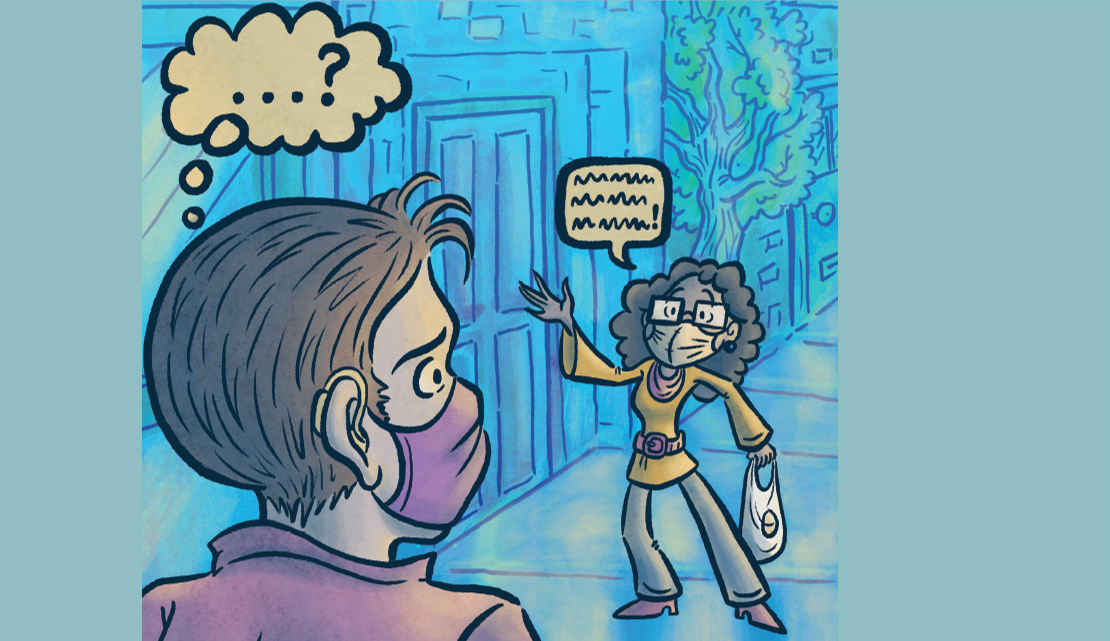
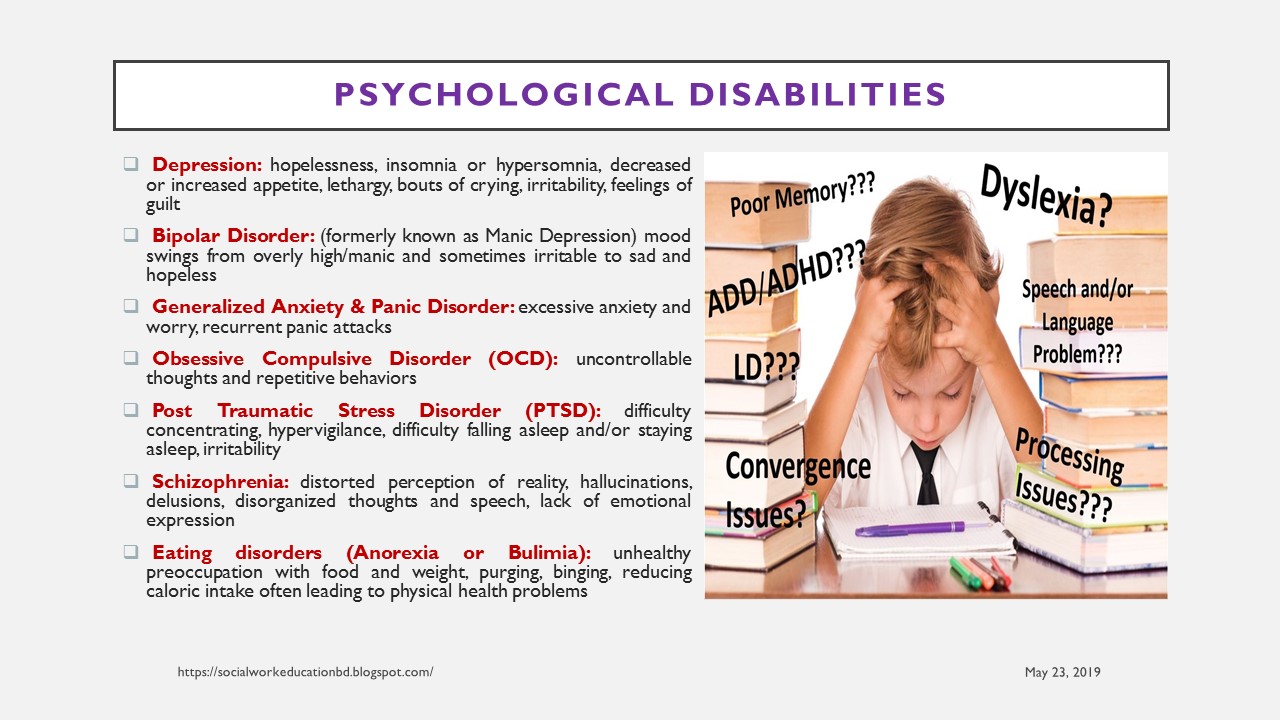
There are so many different types of psychology in all human, but what about people with disAbilities, even D/deaf people/children? Yes, there are many underlying or hidden issues or cognitive psychology in every human. Here is the first picture of what is the disability to everyone for example, the blogger here is deaf since birth and with cervical radiculopathy and chronic disc disease degeneration several years ago.
Then there is another picture called psychological disabilities. Yes, it is more than anyone who can think or do not realise that they have or may have more problems. What about grieving, behaviour problem, druggie, living isolated from their family, no family surrounding, stressing, hunger for more alcohols and drugs to make themselves feel better, emotional issues?
The critical role of recovering and managing the mental healths must go through counselling, peer support groups, time out groups such as camping, quiet time by tramping. Alternatively, let do the gardening, finding a place where there is a relaxing and calming room at the beach sides, a change of dietary, conservative approaches for rehabilitation are ideal or Therapeutic exercises. The best option is to write a diary and do a recording video by talking to the camera. Daily, the deaf blogger does gardening as a time out from work in the city and at the home office as a favourite past time hobby.
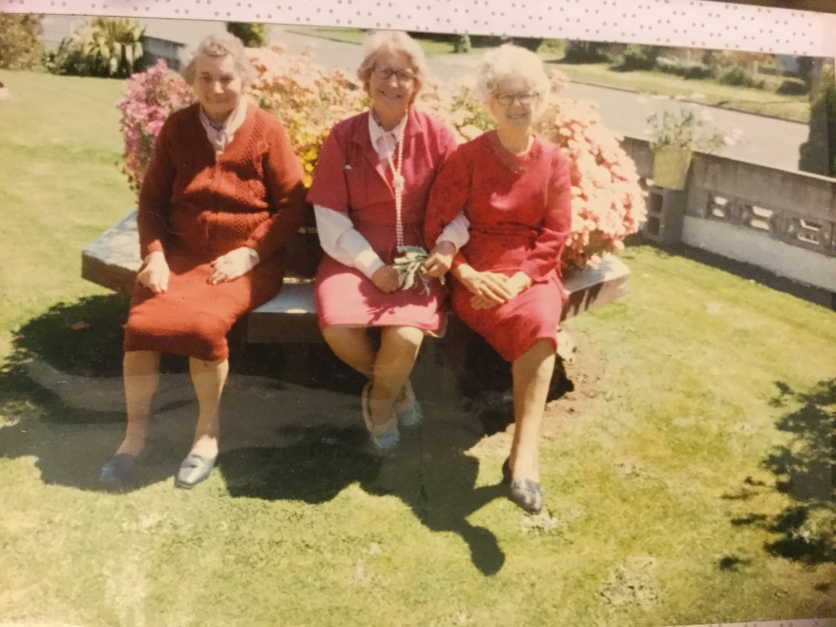
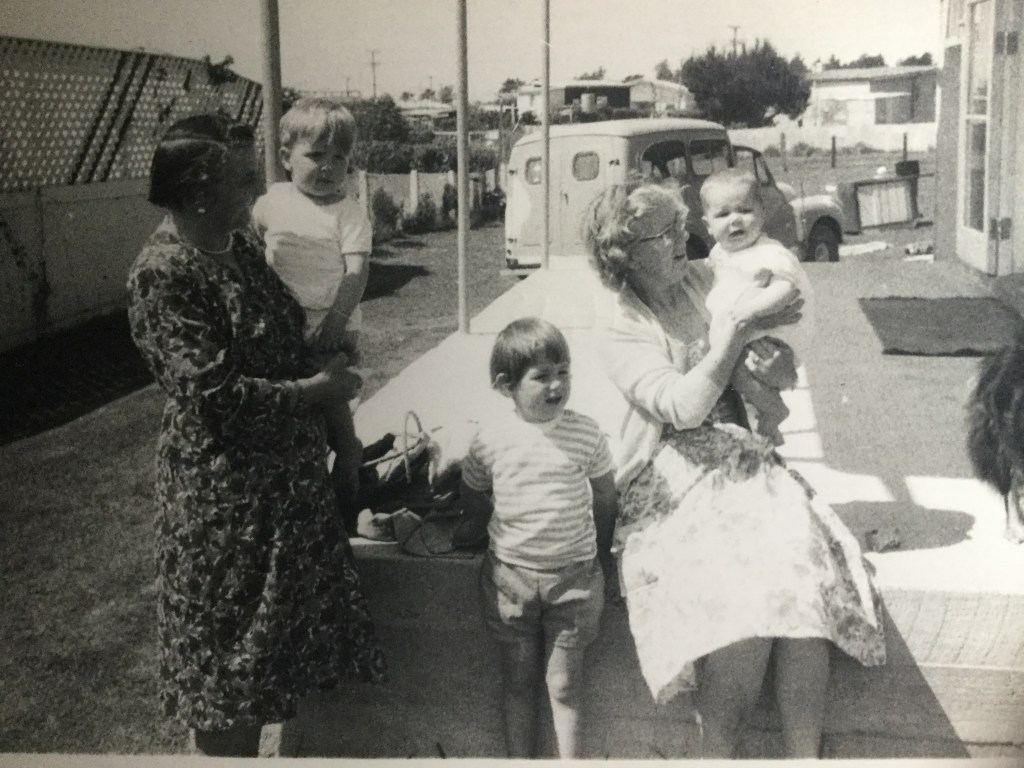
My childhood with Great-grandma Rose, when she travelled up to Hamilton City, Waikato and Bay of Plenty where she visited her son – Alan (Shorty as everyone called him), grandsons and great grandchildren.
Left Photo: Hilda with Rose holding Raymond. Middle photo: Harry holding Norman, Ray on the bike and John on the right, Right photo: Rose with HIlda and grandsons
After my grandmother – Hilda (Biddy as everyone named her) passed away with breast cancer, I continued to see great grandma Rose down in Christchurch, New Zealand until a year before her death in 1986, the day before our late father – Raymond’s birthday.
Left to right: Rose holding Craig, Jean (the deaf blogger) with Hilda (Biddy) holding Kerry at Tauranga.
Rose’s life was instead a mystery to everyone before I was born, and I grew up to get to know her through her daughter Jessie and Keith (senior) down in Christchurch. Between 1982 and 1985, I told Rose that I am doing genealogy, and in the first year, she refused to tell me about her family lineage. I went ahead to do tracing Osborne’s families, and they came out to Christchurch and settled in Oxford, Eyreton, Kaiapoi, and several other small farming areas. As I mentioned in the previous blog, her father was Thomas Osborne, and her mother was Mary Jane Cherry of Oxford. Thomas and Mary had ten children (including Rose) in the second marriage of Thomas. Thomas had married previous and had five children in the first marriage. Mary Jane Cherry had two children from a different father for I don’t have the record yet.
One day I was stopping at Oxford and visited the town Hall there 1983. A gentleman noticed me several times, and I thought it was odd for him to saw me without saying anything. Then he approached to me if I know any Osborne and Cherry even Rose, and to my reply to him, yes Rose is my great-grandma through my father’s side family. This gentleman was Havery, and he invited me to the cafe for a genealogy chat. Harvey came from the Cherry family, and his family lived near Rose, brothers, sisters and Thomas’s home. Harvey asked me if I know what happened to Thomas or the children after moving out to the Christchurch Receiving Home. This Christchurch Receiving Home was a temporary housing to many orphans, female children under 16 years, waiting on foster homes or sent to a service. My reply to Harvey, yes, I understood, BUT I was not clear on why this has happened because Rose refused to answer me. From time to before Rose’s death, Rose mention the name of the family, where they were living, the reason why she tried hard to get all of her brothers and sisters in one house along with her other older family member, the pact from Rose to her brothers and sisters on to stay in touch until they died etc. I recalled Rose refused to stay in any Rest Home if anyone who was from Oxford, because of the bad past, shame and family spat.
My question was why Rose and her brothers and sisters were sent away to somewhere after their father – Thomas’ mystery ending of his life. The answer was Thomas took his life by committing suicide in the home where the children sleeping and Rose was in the other room. Thomas could not cope and manage with a large number of children and no income in 1912. Mary Jane died in 1911, and the previous year young Martha was born. I revisited Rose and mention to her about Thomas. Rose spoke that their father was a good man but went depressed and found life unbearable. Rose and I visited rarely visited to a special person at the home – Norman Eric Kirk’s wife – Lucy Ruth Kirk BUT I did not realised that Norman Eric was related to the female Cherry family as well. Because Norman Eric’s father was a Norman Kirk and he married to a Vera Janet Jury of the Jury-Cherry family. Note Norman Eric Kirk was a New Zealand Prime Minister between 1972 and 1974. His death made a huge impact on every New Zealanders. Rose does not speak highly of Ruth (Lucy) for some reason because of the past in Oxford, New Zealand.
As you Oxford is a small town with a population of 600 people before 1900. The earliest population in 1861 was only barely 25 people, and in 1881 there were 513 or more people. There was a disaster – the Great Fire in Oxford on January 14th, 1898.
Mary Jane Cherry
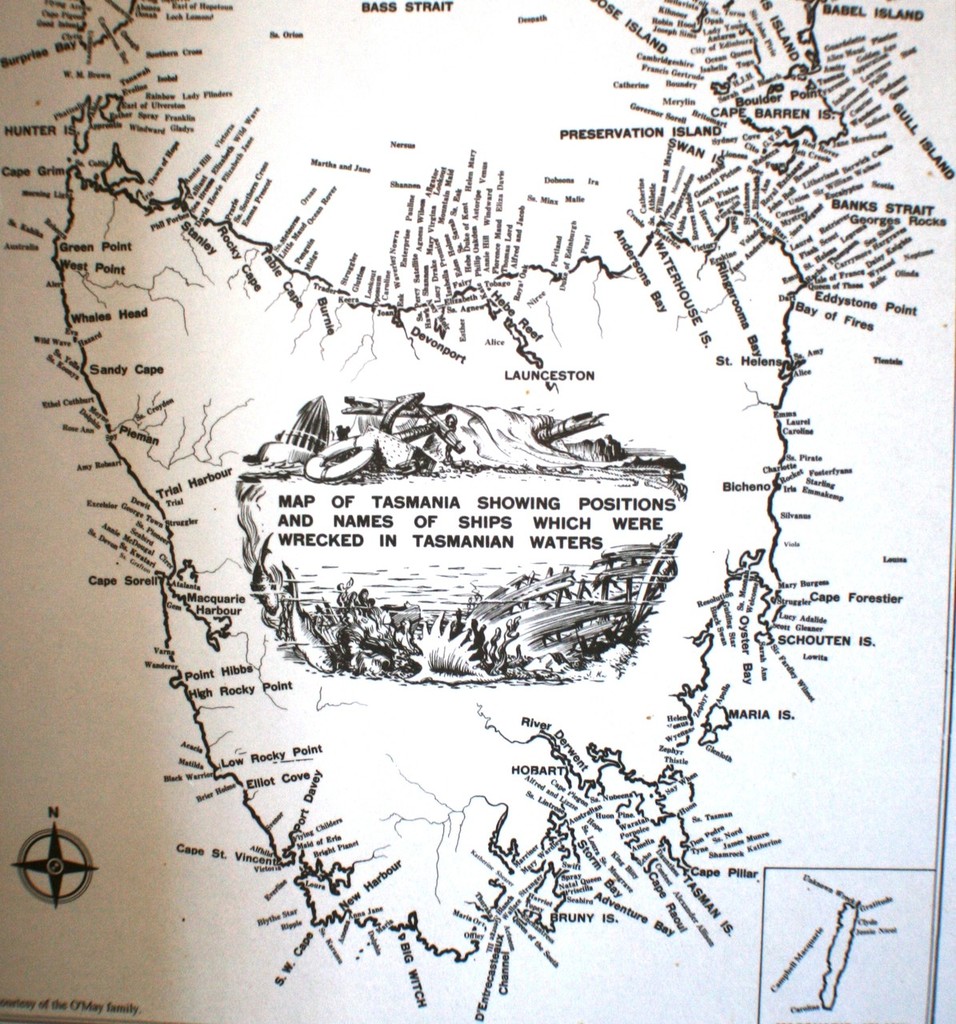
Let recap the Cherry’s sisters – Mary Jane and Emily Alice Cherry. Their parents were James Cherry and Sarah Jane Jones. Sarah Jane Jones was born in Tasmania in 1846 to Samuel Jones and Mary Ann McGilligan. Samuel Jones and Mary McGilligan were convicts as well. I must explore the records under the convicts in Tasmania when I can do in my own times.
Going through genealogy to update my ancestry for the last few days. I am a deaf genealogist for more than 28 years, and I came across many dark secrets, shocking revelations, newfound cousins for we did not realise through friends instead of cousins. Of course, I just found out there were two more links from the Deaf community, which I never thoughts until they mention the name of their ancestors through Facebook. Even discovering that we have several famous cousins dating back to England, Ireland and Europe. Blimey wow!
Let me tell you something exciting stories which fall one of the new cousins of their fifth/sixth male generation back which link to my fifth/sixth female generation back as a brother and a sister of the same line to one of my ancestors – Cherry family. Emily Alice Cherry married her husband of Canterbury, New Zealand and this husband’s families had the most fascinated lives such as convicts, a famous couple of the well-known city in the South Island, several sad stories, a con man, a whaler, and a captain.
Well, let start with a woman born and raised in England. She was a good woman but for one little problem was she stole a pecking apron. The staff reported the constable as it was called in these old days. From there, she was arrested and went on a trial. The court charged her on transportation to Norfolk Island for seven years. Her name was Sarah G. Fast forward, she had three daughters, and a son with different fathers for no one was sure over the actual parentage lineage. It sounds like tramping over the muddy water. Her daughter – Mary married the chap in Tasmania for his father was a convict back in Ireland and sailed to Tasmanian for seven years. He was also a conman, exclusive character with many misdemeanors because the surname was difficult to track down where he was in trouble with the law. Mary’s husband Charles was a criminal over stealing woods, a barrel of salt, money, drunken and fighting in Tasmania, and his life was not a good experience due to his criminal for a long time. Mary died while being separated and John remarried to another woman on a permitted through the court, so he received a grant to married the woman who was a widow from her previous marriage. Now John’s father – Charles was also fraud fellow with many disguised names, and he came from Bologna, Italy. We, genealogists, have trouble tracing his surname for there were too many to track and find the clues together.
Right, here is another mystery and discovering of Charles and Mary’s children. Let focus one male child called Joseph C, F.and he became a captain with a wife and four children in Australia. One day, Captain Joseph C. F became a captain after several months as a … and he took his men on the ship – Creole along with the cargo. They sailed out for Dunedin, New Zealand by leaving Launceston, Tasmania but the fateful day/night the vessel went aground near Tasmania. There were no survivors as all. Captain J lost his life and left a wife with four children. https://www.fishingboating-world.com/n/photo/176493
Now, Captain J had a brother called John J. F, and he was a whaler/timber cutter along with his best mate – George Mason. Both of them decide to travel to one of the whaling stations, New Zealand on a vessel – “Vansittart”. John J. F and George Mason decided to settle down in Canterbury, near Christchurch. One of the whaling stations is Peraki Bay and here is a picture of the bay.
Each of these men got the land purchased by one of the Māori iwi and John J. F married to a Māori woman. Anyway, there was something fishing about John J. F. and his background back in Tasmania if he had done a crime or something else. Mutu’s hapu (a group of the family clan) related to the Māori chief – Tutemakohu, and KokerePokoriri, who fought the war in the South Island.
Under John. F and Mutu, had got a large number of children. In this family, there were so many tragedies over the years, such as drowning, missing, crimes. One of their children married to our Osborne/Cherry’s side family – Emily Alice Cherry. Emily had got a sister called Mary Jane Cherry who married to the Osborne family of Oxford, near Christchurch, New Zealand. With our Osborne and Cherry family, Mary Ann’s husband Thomas committed suicide because he can not cope with over 10 children. After all, Mary Ann died passed away and leaving our great-grandma Rose the eldest child in Thomas’s second marriage. The Osborne children were sent to the State Home (Orphan Home in Christchurch, New Zealand). Rose was under 18 years old, and she kept in touch with her brothers and sisters but nothing to do with the other children from Thomas’s first marriage but often ran into them.
Waking up in the early hours of this morning by seeing the sun peeping through the windows while our dogs waiting for their daily run. What a joy to have a blessing day after working with a person who is deaf, speech impaired and CP yesterday.
A quick check on the plan list as there are so much to do before the Summer arrives and I will get too busy. A couple fruit trees need to be planting before flower buddings out in the field and several blueberries shrubs will be planting near the old vegetable garden. A small group of shrubs requires to be planting in the large central garden.
An hour break came and have a cuppa while watching a Deaf Bible group over Zoom. A delightful break gave me a well deserved while Rusty managed to do the bricklaying down the edge runner by the driveway for he did not tell me as his battered hip will have to wait for the surgery. Our dogs ran around and keep coming back to me while I watched the Deaf Bible group.
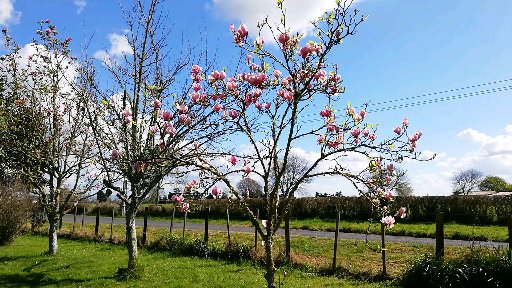
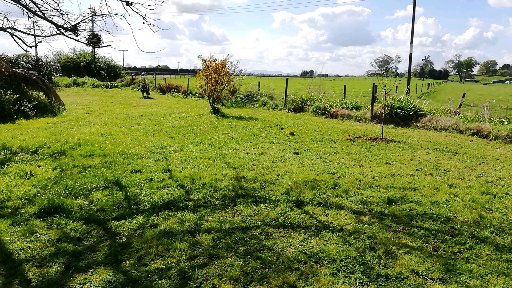
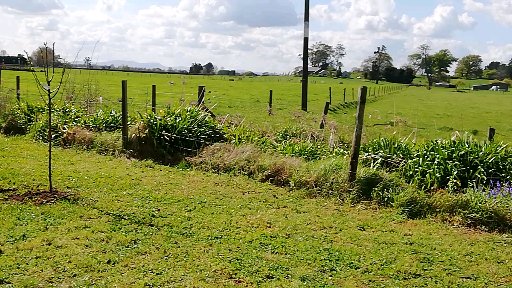
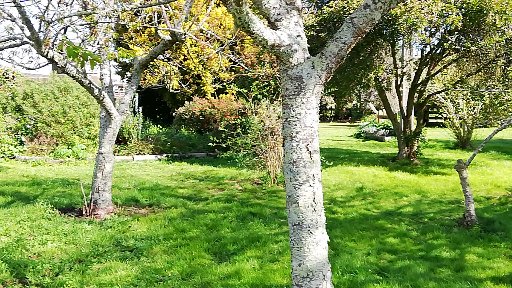
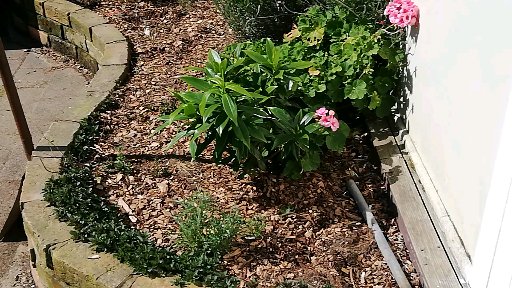
A quick to hang the last load of washing on the line. Plus a colossal bedspread hanging on the line and over the ladder outside. Head over to the plot where I marked the area for the apricot tree in the old house area and next to the current apricot tree. Viola an apricot tree planted has done with a little help from Rusty for he was doing well BUT not a massive job. We rested through lunch for there was nothing much on television because there were too many rubbish shows. I head over to another plot further out in the field for the plum Hawea tree, so this tree can be a companion to our current plum tree for I forgot the name of the plum tree. Sigh! Hours fly out, and I stopped for now until another day to complete the tasks. Here are the several photos I took today. I can look back how much we have done so far since we moved here 2014 November. The video was taking too long to upload.
Just before I finish off and I would like to acknowledge that tomorrow it is our NZSL (New Zealand Sign Language) Week which postponed from the first week of May 2020 due to COVID19. BUT WAIT – there is another awareness week. This awareness week is the International Week of the Deaf. From tomorrow I will post daily blogs/themes so you can learn from us – D/deaf people.
















![brogdonwiki [licensed for non-commercial use only] / Vocab ...](https://external-content.duckduckgo.com/iu/?u=http%3A%2F%2Fbrogdonwiki.pbworks.com%2Ff%2Fpsychology%2520wordle.jpg&f=1&nofb=1)









 Life in Eureka
You must be logged in to post a comment.