Hooray for a Labour Weekend!

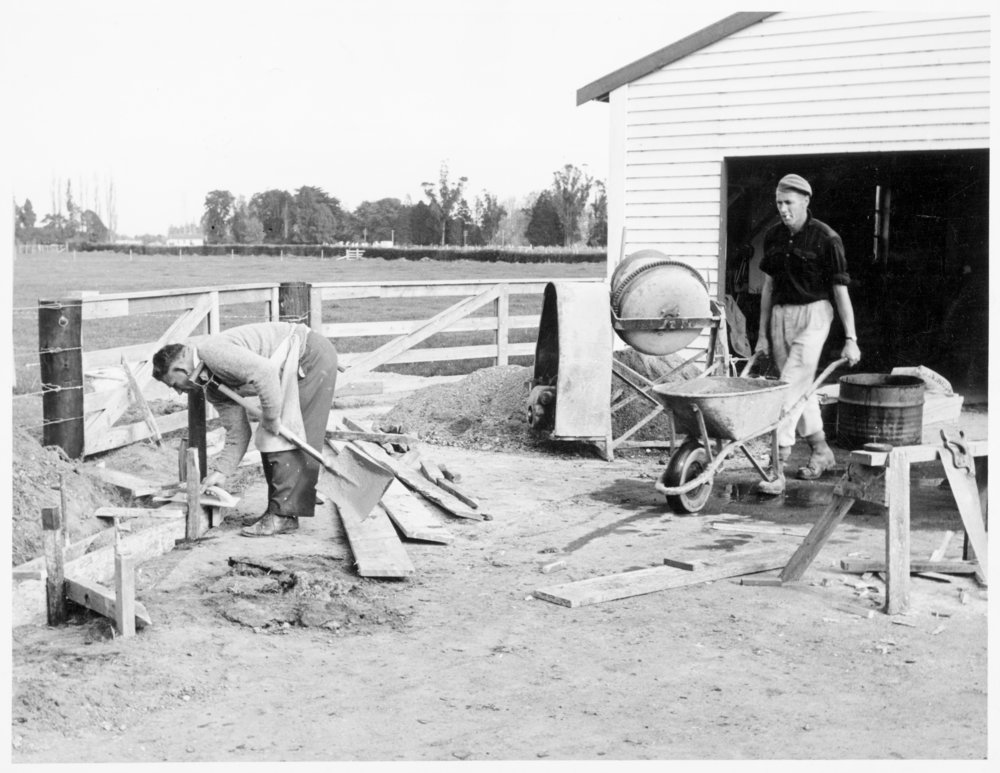
Samuel Parnell – Noted copyright.. https://nzhistory.govt.nz/media/photo/samuel-parnell

noted from NZ History – Samuel Parnell achieved fame as the founder of the eight-hour working day in New Zealand, a right he had fought for a carpenter at Petone in early 1840. Today his name is often linked with Labour Day, which has celebrated as a holiday since 1900.

Who is he? Where did he come from? Why is he doing this? What is his occupation?

A matter of the discovery in our mother’s father’s side family, his name was linked to my late grandfather’s ancestor. Wow, and I did not expect that. Whenever I do the genealogy and our family have hidden surprise or sad history, for example, one of our ancestor linked to Norman Kirk who he was a Prime Minister or John Follett whom he was researching in growing ginger in Waikato and the USA.

Samual Duncan Parnell born on February 19, 1810, and raised in London, England. He trained as carpenter’s apprentice until 1834 at joinery on Theobold’s Road in London. The Grand National Consolidated Trades Union formed in 1834 and carpenters worked long hours including Samuel. Samuel asked the union if they can support the shortening of the working day, but the union did not agree, and Samuel refused to join the union.
One day, Samuel met his first wife – Mary Ann Canham in 1839, and 11 days after they got married, they left for Wellington, New Zealand. Mary Ann was widowed when she met Samuel, and they bought a large property of the land in Wellington. One of their areas, it was Port Nicholson, later today it is a city of Wellington. The amount of their land was 40 ha of a country land plus 1-acre of the property as a Port Nicholson in the old days.

Before arriving in Wellington, Samuel met a shipping agent – George Hunter and Samuel said that the condition of working 8 hours per day is a must, no overtime. Hunter found it difficult, and later, he agreed with Samual. The quote that Samuel gave out “Eight hours’ labour, Eight hours’ recreation, Eight hours’ rest.” and this quote was from Robert Owen in 1817. Every day Samuel greet new migrants and told them to work 8 hours per day if anyone who has work overtime and anyone would be thrown into the harbour. That quote was the moment to everyone in 1841 and the 8 hours day cemented from 1841. 

Mary Ann died in 1842, and there were no children. Samuel sold the land in Hutt Valley and moved to Karoi where he runs an animal farm as a farmer in 1843. In 1851, Samuel met one of our ancestors – Sarah Sophia Brunger, another widow for she married Robert Brunger and had several children.

Samuel and Sarah returned to Wellington in 1873, and they lived in Cambridge Terrace, Wellington. Unfortunately, Sarah died in 1888 and Parnell have no natural children through Sarah while Sarah’s children came from James Brunger. Samuel died on December 17, 1890, and there was a significant public funeral three days after he died. There were a thousand of people respected Samuel and his idea – 8 hours per day.
Note: the first annual Labour Day was October 28 1890, and you can see the drawing below where many employers and merchants campaign to force the Government to restrict the working hours. Then the Labour Day Act 1899 established and became a statutory holiday. https://nzhistory.govt.nz/first-labour-day-celebrations

In our family – Sarah has got three children before married Samuel Parnell. One of her children was Elizabeth, who later married Robert Signal and they have a large number of children in Marton, Wanganui, New Zealand. Their eldest daughter – Agnes Signal married to my late great, great grandfather – Charles James Follett.
Facing new challenge each day!

When someone is facing bad news, a piece of good news, starting over again, a new challenge and the list go on.
Everyone is different, and their life could be similar such as learning to overcome the pain in their body, finding the strength of courage to face up their experience from darkness, trying to move on and start a new life.

Yesterday I went to the Waikato hospital for a couple of new Xray because of my body is changing from the past where I did lots of physical works such as doing the gardening, DIY, driving, walking and repairing the jobs. One funny thing and it does amuse me for I am a deaf person without a support person or my hearing partner. I arrived at the hospital early because of the car park, it was challenging to find a car park, and it has been difficult for other people to find a car park over many years. I went to the reception – the Radiology Department and I reminded the receptionist that I am deaf. They let me through into the waiting area. I waited and noticed the nurse walked around the corridor several times, looking for a patient plus calling out the name of the patient. It was only five minutes later, she came to me and asked me if I am the person who is Jean. My reply to this nurse, Yes, I am Jean for I am deaf. I was the only patient in the sub waiting area while the rest of the patients were in the CT waiting area on the other end of the room. The nurse was embarrassed, and she did read the note “Jean is deaf’ in highlight earlier but not sure if a Jean can lip read or looking at somewhere else. I was texting to someone and waited for the nurse to called out the name, but I could not see her face.

I ran into a friend from University along with staff/friends from the Hospital Department on my way out. We were chatting, and one of the team spoke to me by saying if I realise that I am a deaf bilingual rather a person with two or more than one languages. My reply was I often thought I could put down a deaf bilingual on any application form or not. Their response was to go for it. These staff and a friend encouraged me to go forward by putting down a deaf bilingual (with using the word deaf or not) from now to the future. It is called motivated to other people to do something they can do or to change the way they do in their life.

I stopped at the Punnet Cafe on my way home from the hospital for a lunch snack. I looked around people and families with young children, and they were either busy, restless, chatting away and trying to find a peaceful space in the room. I know it was noisy and I can feel vibrated where the children dropped and banging even crying loud. I noticed several people were looking at the young child who was screaming out loud and the mother of this child apologised. She spoke to me by saying sorry, and my reply was simple, I am deaf. The mother was astounded to my response.

Some days I visited many Deaf people, and they struggle to get through their daily life because they could not read formal letters from WINZ, GPs, Insurance company and to watch the breaking news by reading the captions on the television. Their first language is NZSL (New Zealand Sign Language) than any other language. Why there is no NZSL Interpreter on TV except the Parliament Channel? BUT not everyone watches the Parliament Channel every Tuesday and Thursday. For example, this week there was a fire outbreak in Auckland and the bulletin new popped up through social media BUT no caption or NZSL interpreters on TV. I received a text message via the National Civil Hazard app, which was great. The fire outbreak happened at the Auckland SkyCity Convention a couple of days ago. Many of the Deaf people were very disappointed for the lack of breaking news message because it was not getting through many Deaf people when they were working in the CBA or travelling to the CBA in Auckland. It is a massive challenging for these Deaf people to face into a dangerous area due to the lack of communication by other business, company and social media networks without using NZSL Interpreter available. Please consider thinking about how can you approach or send an emergency message to Deaf people even to add a new communication system by having an NZSL Interpreter in the social media and on TV. It is valuable input for the communication system and making Deaf people’s lives better where they are in the community. Better without using radio, a phone call, voice mail/message, face to face or watching any programme on tv without NZSL interpreter. Captioning is okay BUT their second language in English is not so great for them.

From Food waste scraps to compost..

Many different options of throwing food waster scrap, is to throw directly in the old tired vegetable garden plot. Leave there to rot and start turning over by making a long or long trench and covering up with old soil from time to time. I won’t worry about birds, rats, mice or rabbits come along and pick it for meals. You may see lupin plants in the old garden, and they are an excellent fertiliser, even mustard seed/flowers too. The Lupin and Mustard Seeds are high for Green Crop Nitrogen Fixing. Somewhere there were comfrey leaves as well. I grow comfrey plants for flowering and making fertiliser.

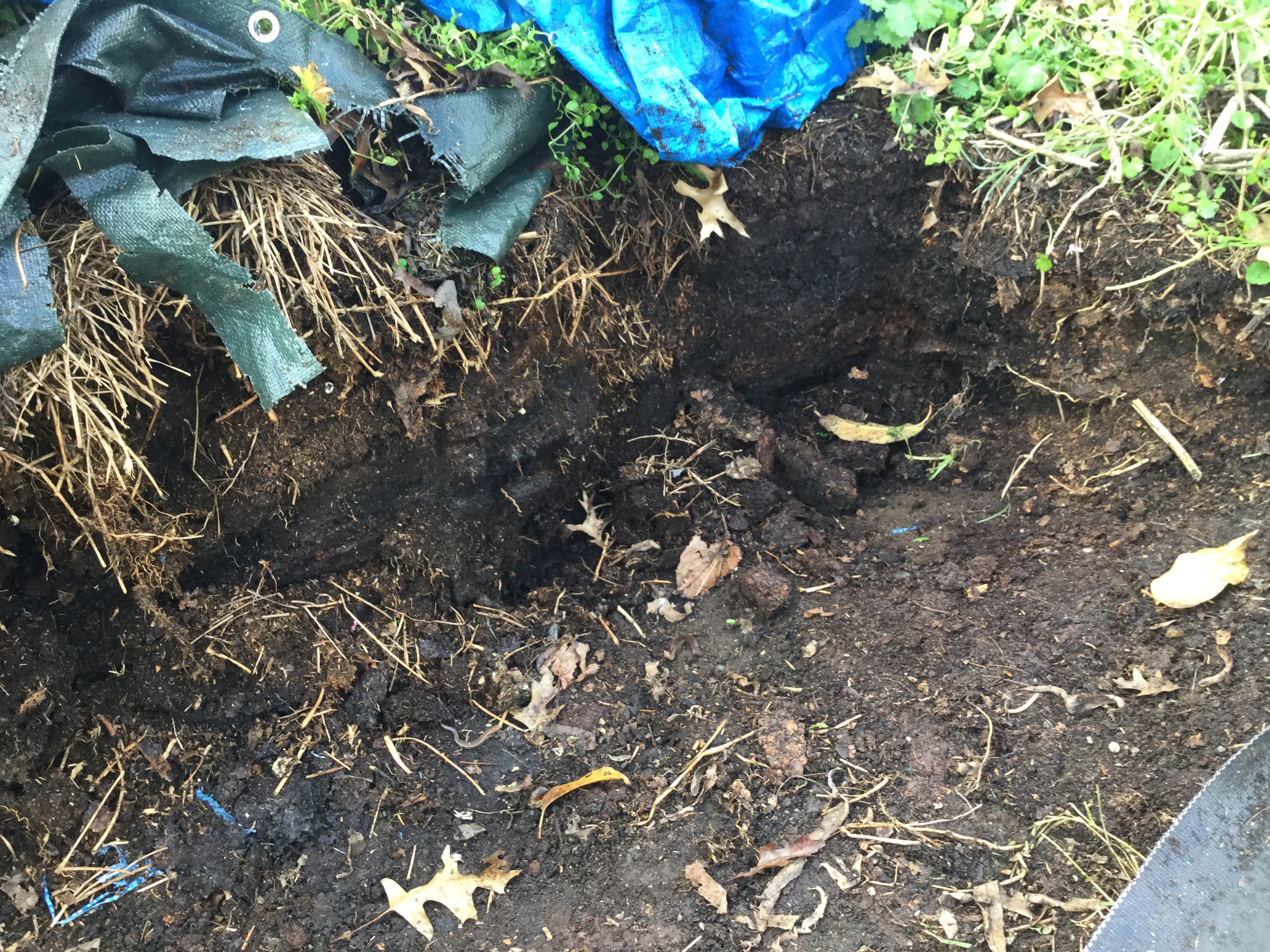
In the third photo, the other food waste scraps came out directly from the white drum as in the previous blog into the section for making compost throughout the year. I covered this one with large tarp sheet, before this work I laid down cardboard on the ground first, then food scrape on top and finally covered with tarp sheet. Check regularly and turn over, see the layer of compost colours and break down mulching in the fourth photo.

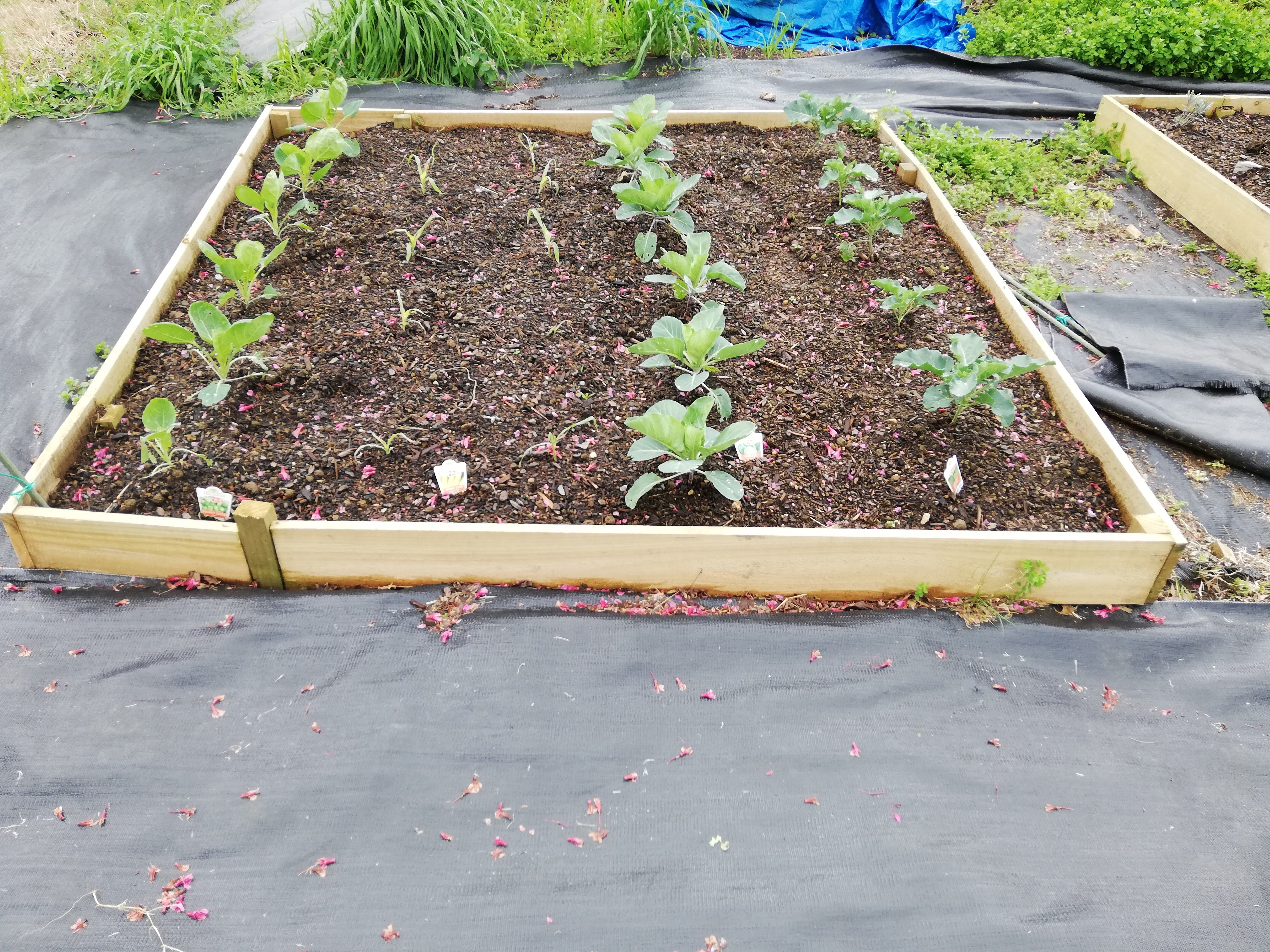
Then shift freshly compost to the garden plot, dig in and turn over for a few days.

It is ready for new vegetable seedlings to plant in.

Jacek’s vegetable section. He is one of the persons with disabilities and I am growing for his request on the choices of the selection vegetables.

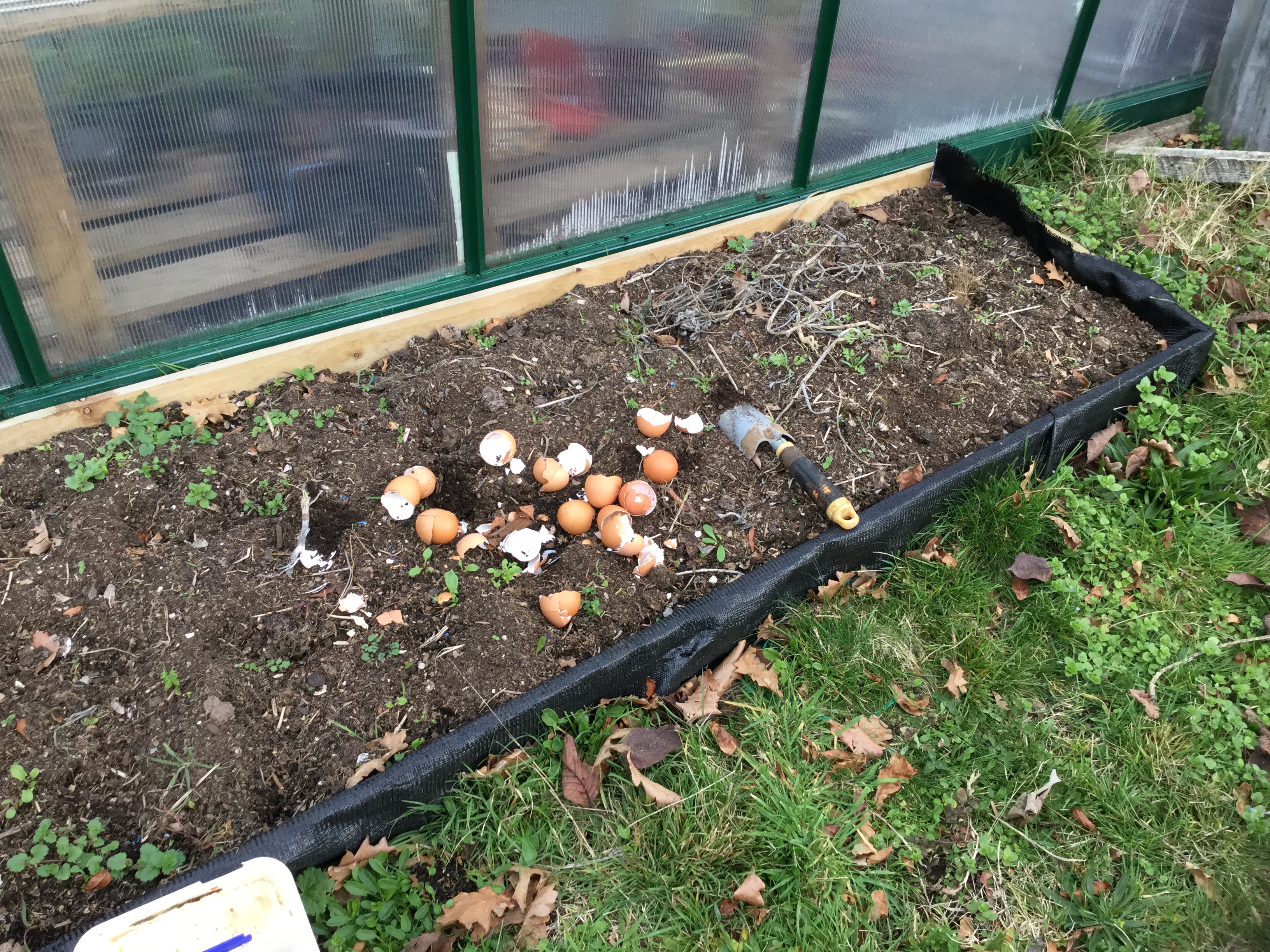
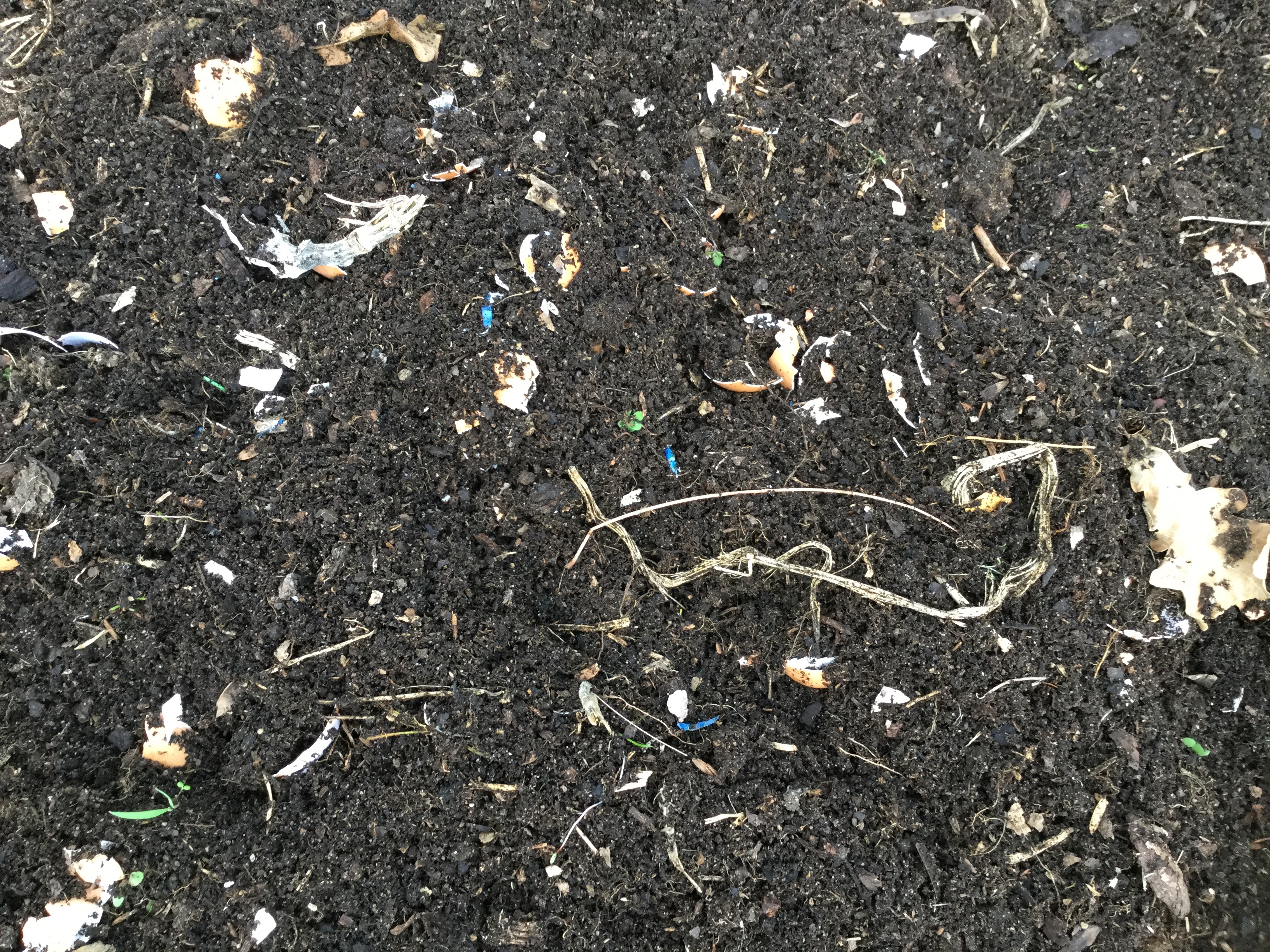
Another tip for making fertiliser, use broken clean eggshells and put straight into the soil and turn over. Why eggshells?? These eggshells provide calcium deficiency. While this deficiency rarely caused by improper watering, there’s no harm in making sure your plants have a steady source of calcium.

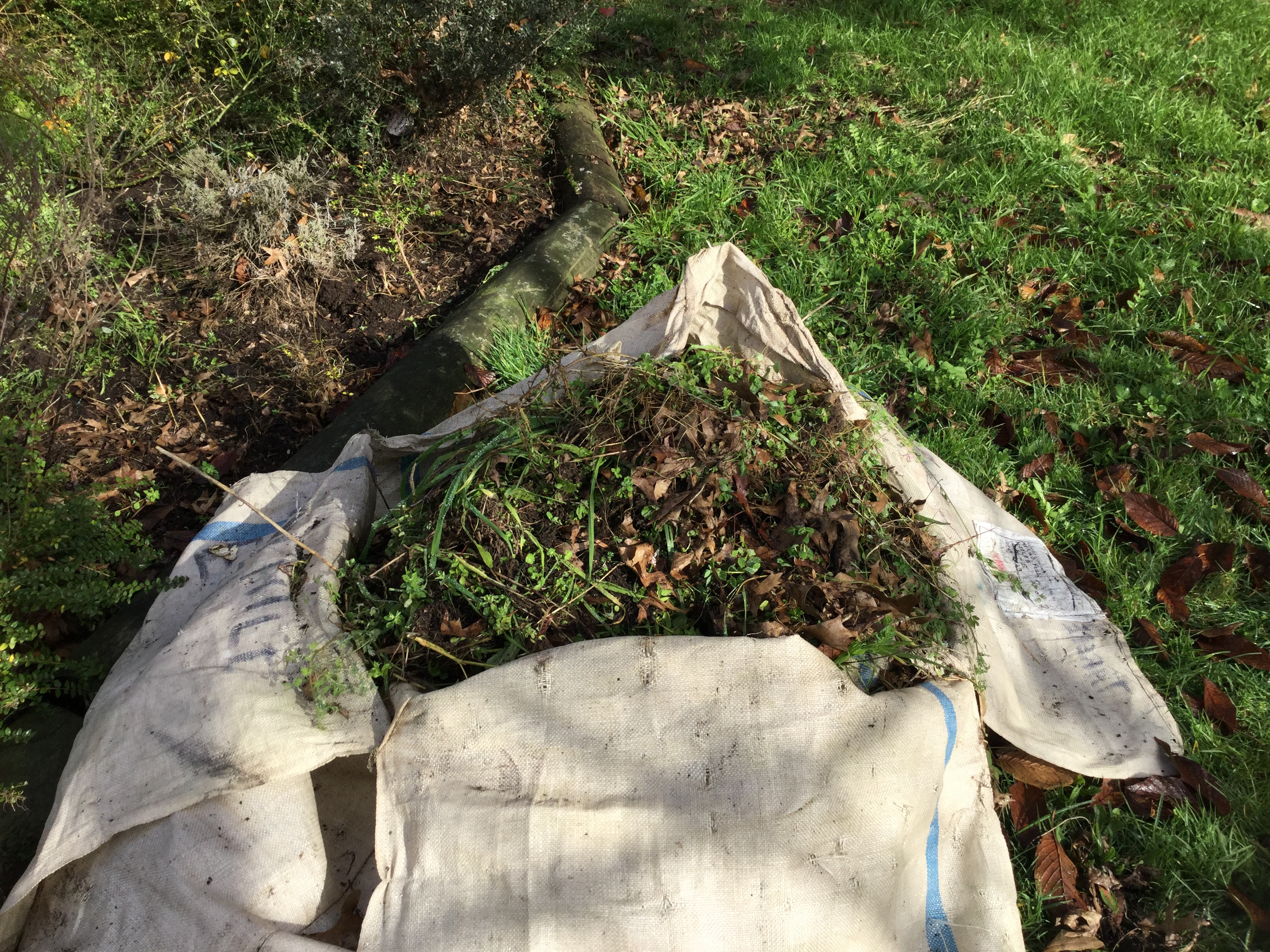
Leaves, grass and weeds are also high for quick composting if you can pile up into moulds and leave there until it is ready to put back in the garden after several weeks.

Discovering more about the history of our home

This photo was from the book which gave to this author of this blog by a chap – Ace. The author – Jean will update the detail by putting the name of the book and who took the photo.

Our home in Eureka is full of history, and there are a few numbers of people still living in Eureka over many years. The people who live/lived here in Eureka, are the Hinton, Duncan, Henwood, Inglis, Insoll, Masters (no related to us), Morrow, Clarkin, Ross, Gordon and the list go on.
Jean’s great-granduncle of the Yates family (her dad’s side family) married to a Hinton lady who her father was James Jasper Hinton. James’s brother Thomas’s present generation are still living here.
Our home is sited between Hinton Road and State Highway 26 – Morrinsville Road.

Ace came over for his request on any woods from the old house where the Jean and her partner pulled down. Yes, Jean’s partner stored many old woods such as pine, rimu, Mahogany or black wattle in the barn or somewhere.

What a small world! Ace has got a small number of Deaf members in his family, and Jean knows his Deaf cousins and uncle well. Jean asked Ace if he recalls his childhood in Eureka, and he responded that he lives here over many years. What our home was like or is it changed over many years. There was a depot called Eureka Transport Depot, but there was no picture of the place.

Now, Jean got a photo of the Eureka Transport Depot at last, and this business ran by the Hopper family who lived in Hopper Road, not far from here. Mr John Hooper ran the home business on their farm in Hooper road in 1920 then the Eureka Transport Depot became more expanding in 1949. It became too big to run the business, and they bought another land in Hinton Road before 1970. Mr Charles Edwards married to a Milly Hooper while John Hooper moved to Hamilton. Charles continues to run the business until the business sold and folded in 1980.

Jean tried to remember the place during her childhood when her late grandparent – Mama and Poppa took Jean out to our uncle’s farm near Te Aroha, Morrinsville. No, she was too young, but perhaps her aunties or uncles may remember for they live too far away.

Wow, the depot and previous homes looked like in the past. It had made a big difference today. In the photo above, there were three houses along with abundant storage shed for hays and other supplies, barn, garage and three driveways plus turnabout driveway. A palm tree was in the front of the main highway road and not much gardens and trees. The roads – Hinton Road and State Highway 26 – Morrinsville Road was different from current roads today.

Today there is one house and the second house pulled down to the ground. There are two garages – one is a double carport next to the house and the second one is a double garage next to the large old barn which still standing there. There is a remaining water pump hut near the house. The previous two driveway facing the main State highway 26 blocked off and leaving the third driveway in Hinton Road. Both roads have changed a bit while the garden grew bigger, including more trees in the fields.

Jean and her partner continue to improve the current house and try to restore the large barn in shape. The gardens, including the vegetable gardens, will continue to expand. The dogs love the home, and every day they run around the fields by chasing rabbits, birds, mice even possums.

Seeds for growing

There are many ways of collecting seeds instead of buying seeds from the Plant Shops, Garden Centre or King’s Seeds (NZ), by saving your money. Each time I grow vegetables, cut up for our meal preparing, and I collected seeds to keep for future use of growing in the following season. Sometimes I want to get something different kind of vegetables or fruits where the Fruits & vegetable shop does not have one. I ordered the seeds through King’s Seeds (NZ).

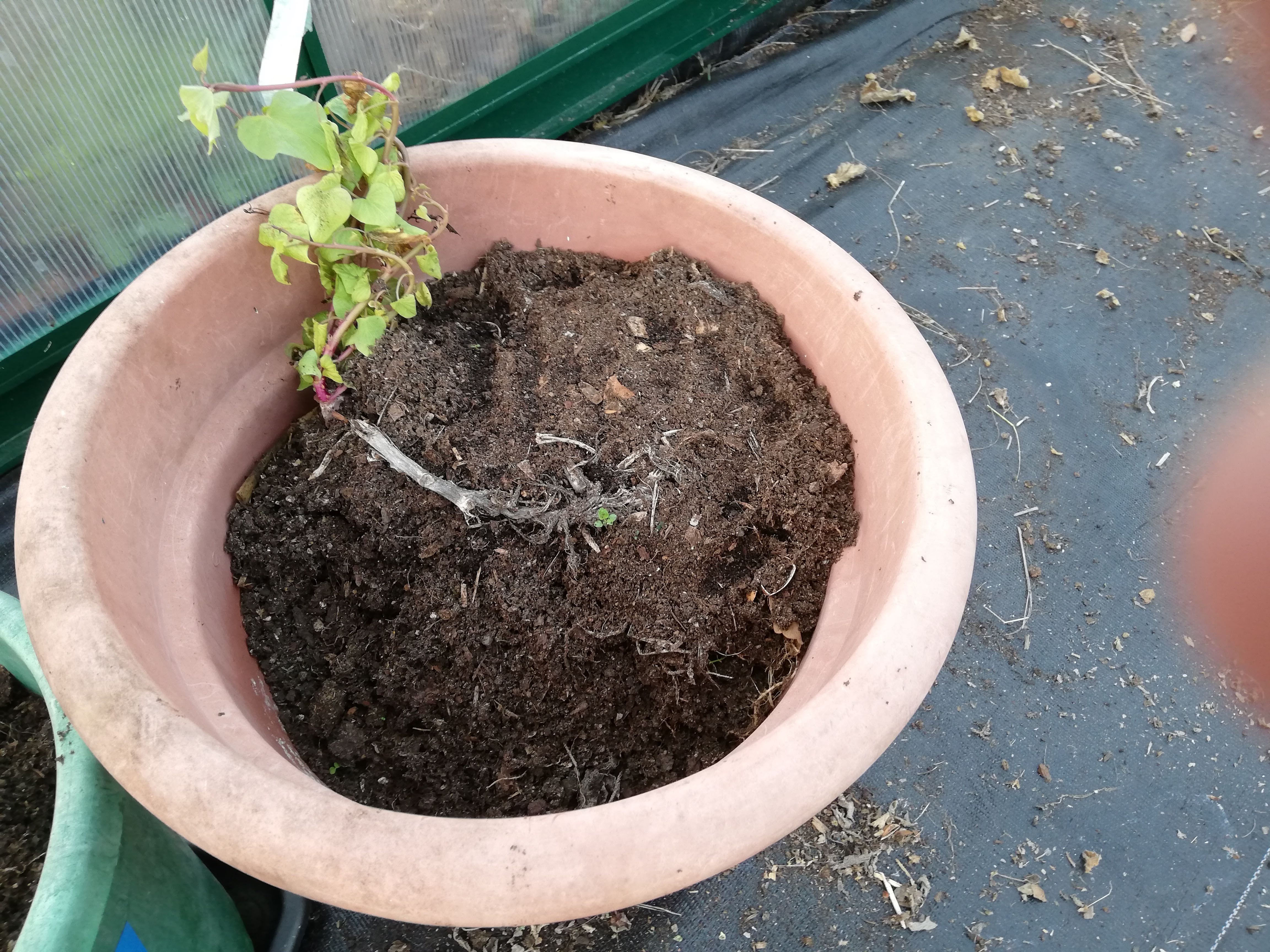
First of all, to dry the seeds onto the paper towel or plant straight into an empty eggshell or egg carton filled with dirt and grow inside. An eggshell or egg carton is useful for recycling back into the ground quickly. Currently, I am growing kumara slips and planted out in the large pots inside the greenhouse last weekend. Kumara slips do not like frost, they prefer full sun and warmth, just like pumpkins.

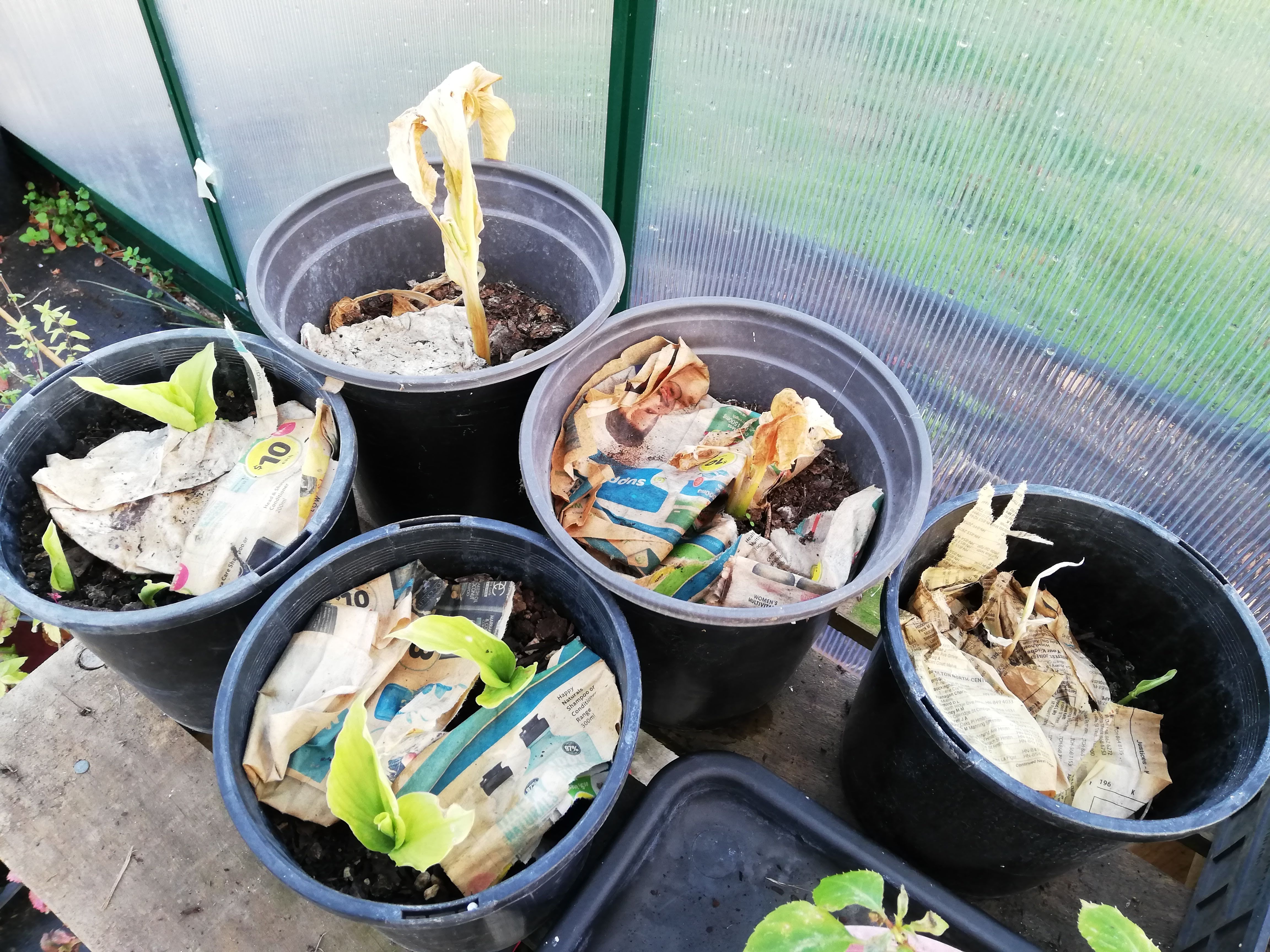
Inside the greenhouse, there are several ginger shoots and turmeric shoots growing in the pots. Note I put scrape newspapers over the soils and this helps the earth in the containers to retain moisture and warmth through winter inside the greenhouse.

From Food waste scraps to compost..

Many different options of throwing food waster scrap, is to throw directly in the old tired vegetable garden plot. Leave there to rot and start turning over by making a long or long trench and covering up with old soil from time to time. I won’t worry about birds, rats, mice or rabbits come along and pick it for meals. You may see lupin plants in the old garden, and they are an excellent fertiliser, even mustard seed/flowers too. The Lupin and Mustard Seeds are high for Green Crop Nitrogen Fixing. Somewhere there were comfrey leaves as well. I grow comfrey plants for flowering and making fertiliser.

In the third photo, the other food waste scraps came out directly from the white drum as in the previous blog into the section for making compost throughout the year. I covered this one with large tarp sheet, before this work I laid down cardboard on the ground first, then food scrape on top and finally covered with tarp sheet. Check regularly and turn over, see the layer of compost colours and break down mulching in the fourth photo.

Then shift freshly compost to the garden plot, dig in and turn over for a few days.

It is ready for new vegetable seedlings to plant in.

Another tip for making fertiliser, use broken clean eggshells and put straight into the soil and turn over. Why eggshells?? These eggshells provide calcium deficiency. While this deficiency rarely caused by improper watering, there’s no harm in making sure your plants have a steady source of calcium.

Leaves, grass and weeds are also high for quick composting if you can pile up into moulds and leave there until it is ready to put back in the garden after several weeks.

Waste it or reuse​/recycle it​??

Recycle Food

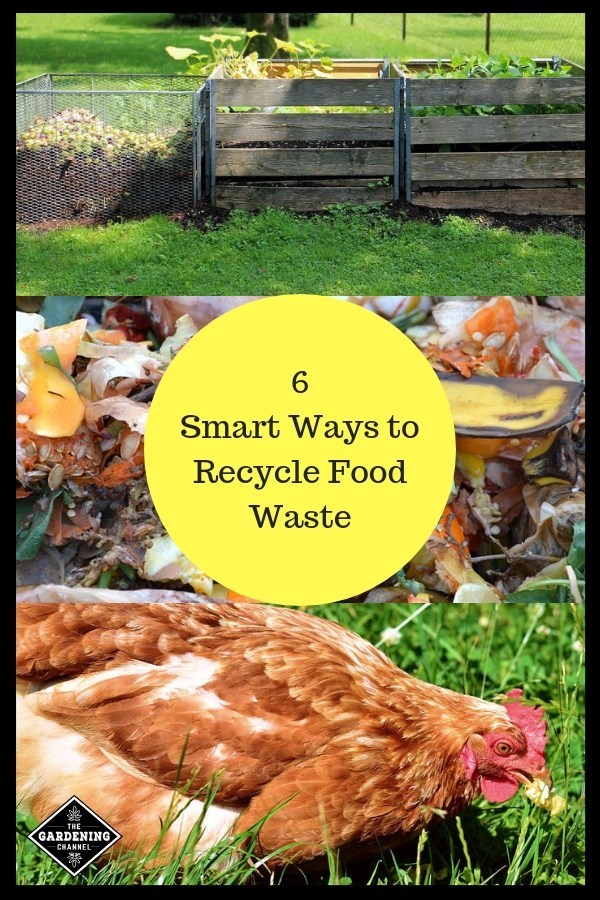
From https://www.gardeningchannel.com/six-smart-ways-to-recycle-food-waste/

People keep throwing food out of the kitchen daily and wasting money…

If you ever thought about recycling food waste into the garden. It can be used as compost or soil back in the ground again.

Another way of saving money on buying vegetables, even fruits from the supermarket. Did you know that any vegetable seed produces more vegetable in the garden even fruit seeds?

IMG_0466
The first crops grew by a disabled man who I am supporting him as a deaf community support worker and ourselves. This crops was taken in 2014-2015 Summer time.

Is it easy or hard to do this by putting food waste back in the garden?

No, it is not hard, and you can try to learn from a novice deaf gardener.

First of all, I learnt how to do gardening even I hated weeding, doing the garden when I was a little deaf girl. My mother said to me when I am older enough, and I will have to do gardening. My reply was yes, I am going to achieve this and show our garden when anyone can visit us here. My mother was dismayed when she came over to our new home in Eureka nearly five years ago. The garden has changed a lot and grow bigger since my sister and mother visited here less than a couple years ago. Rarely our friends visited here from time to time and wonder how much more I will be doing the garden project. It will be one and a half years to go until I am satisfied with the garden project and the outcome results in all seasons throughout the years to come.  

Well, first of all, STOP THROWING FOOD WASTES in the rubbish bins!!

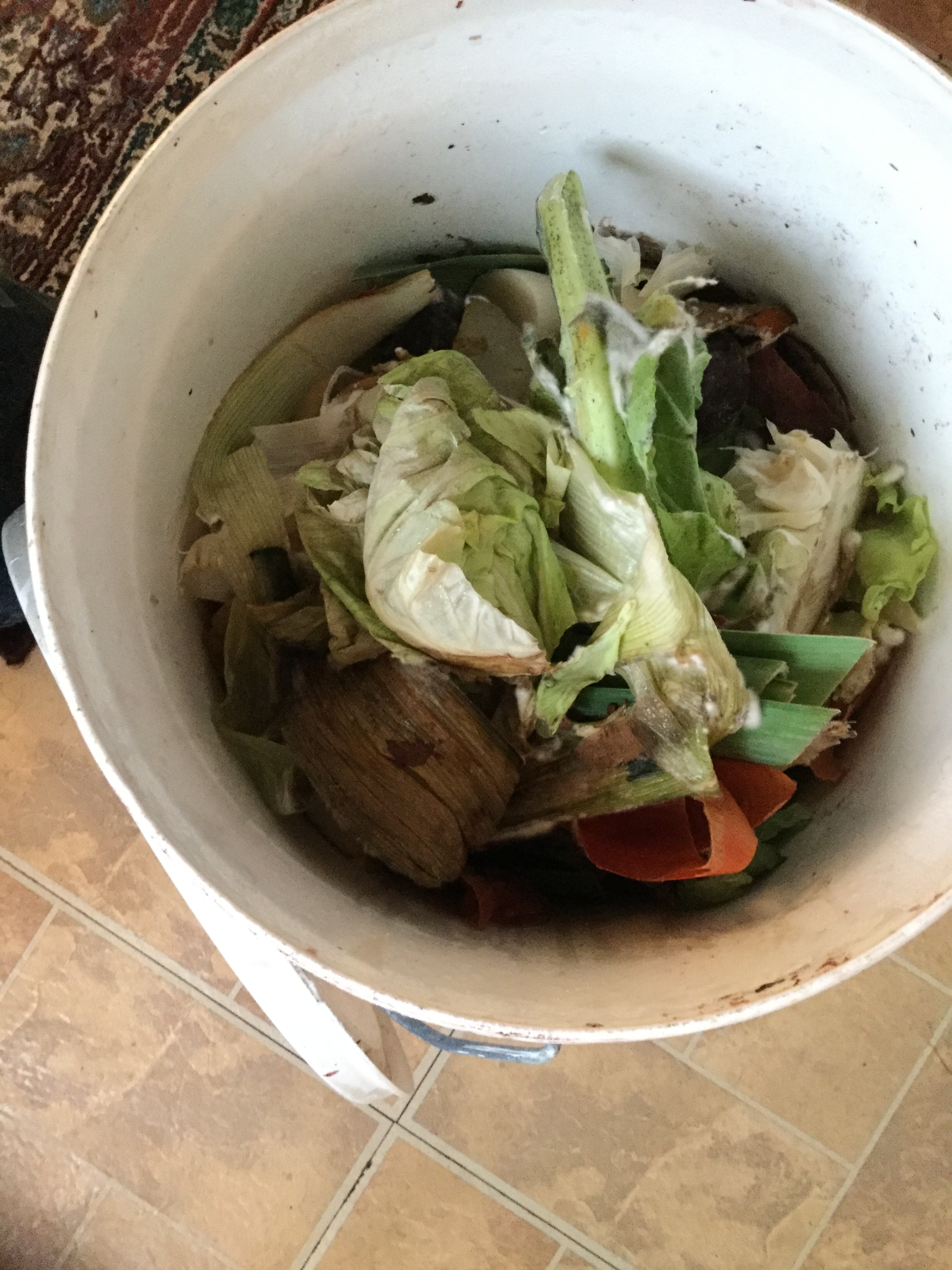
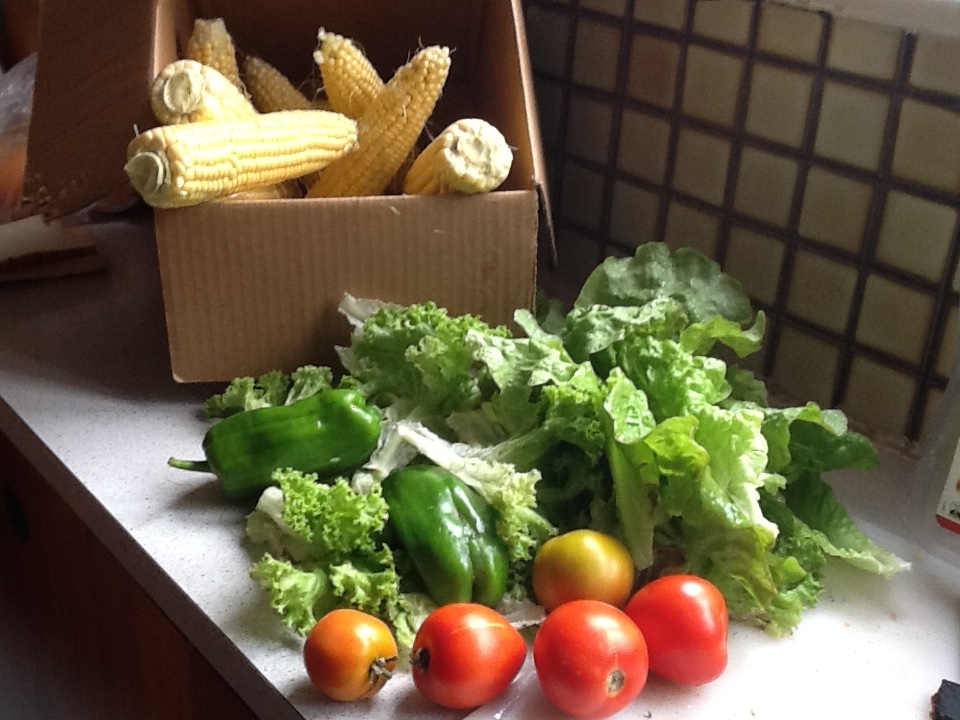
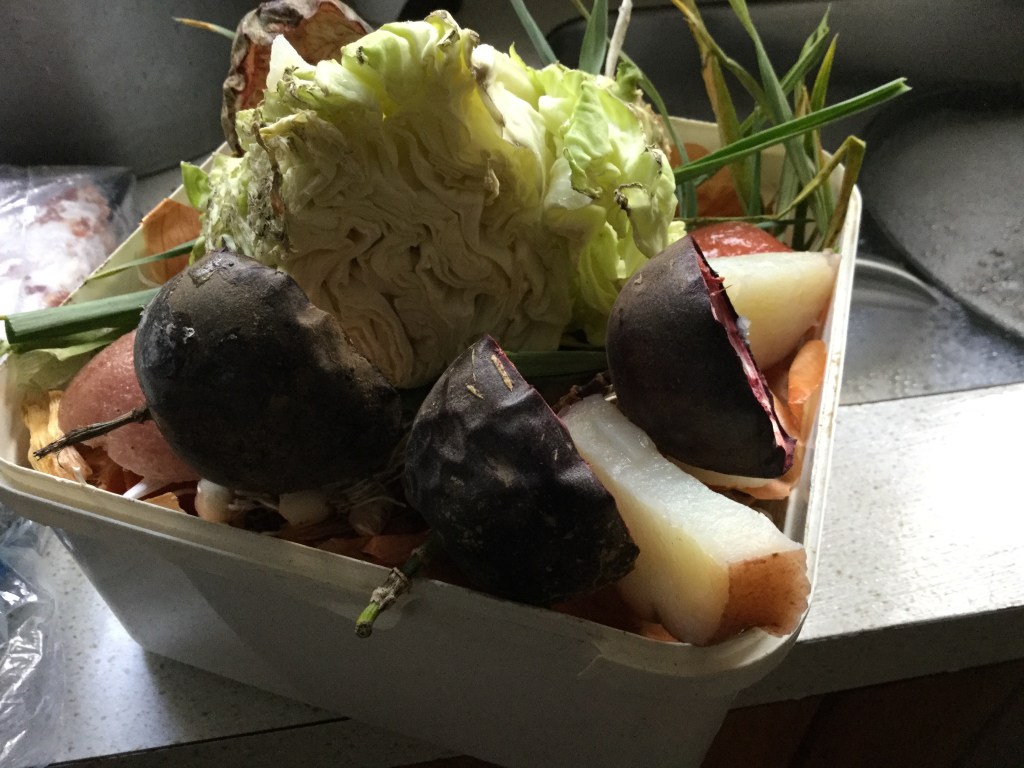
Put any food scraps that you do not want to keep longer or make into soup. Throw into an old ice cream container with the lid and store under the sink, on the bench or in the pantry.

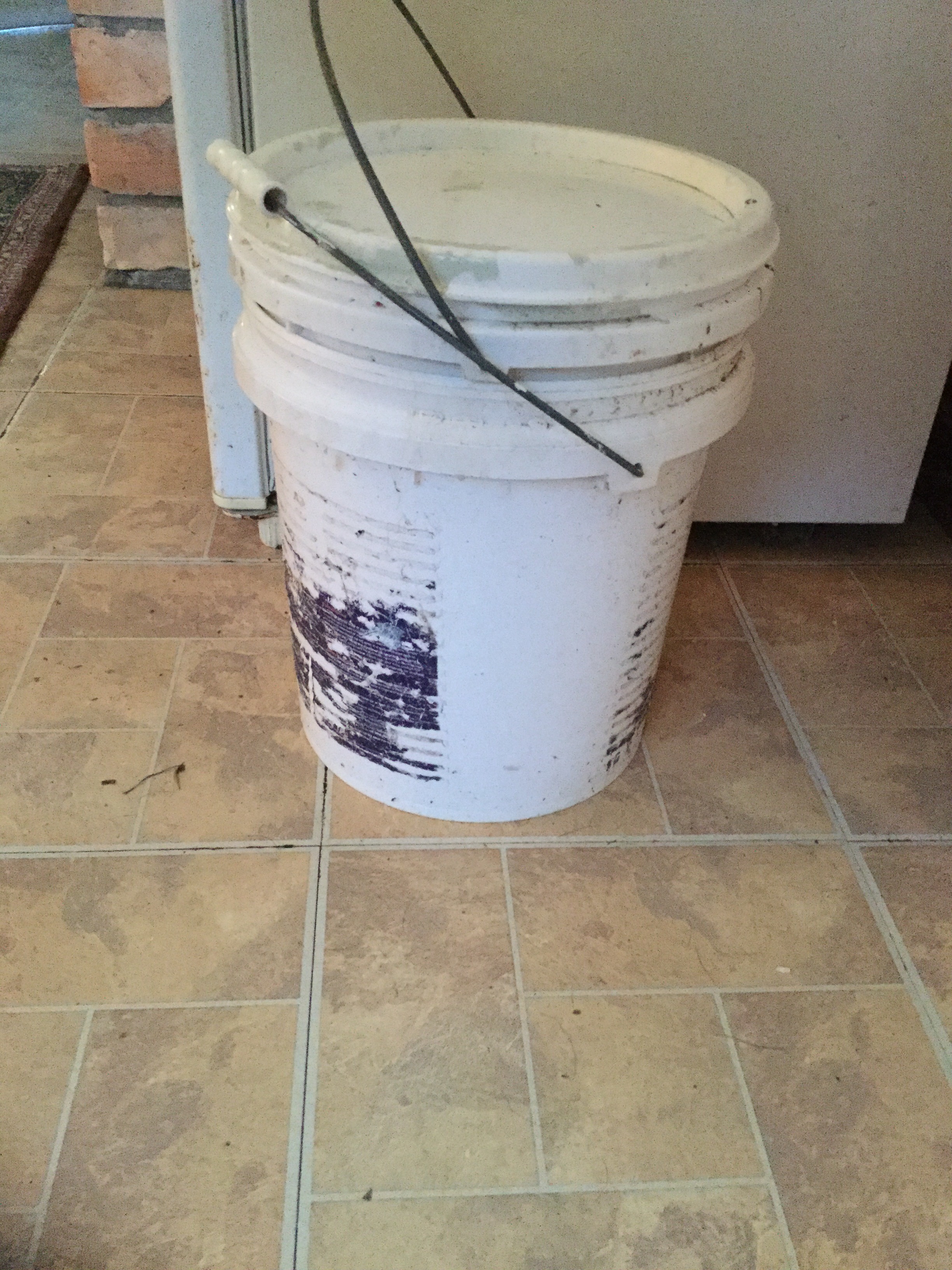
Put some food scraps from the ice cream container into the bucket, and the rest of foodscapes can be made into vegetable soups for long cold winter nights. Keep the large bucket with the lid on in a warm and shady place. You may notice that I have two buckets – one with holes on the bottom and the second bucket without holes.

A Bucket of food waste
Food scapes in the bucket

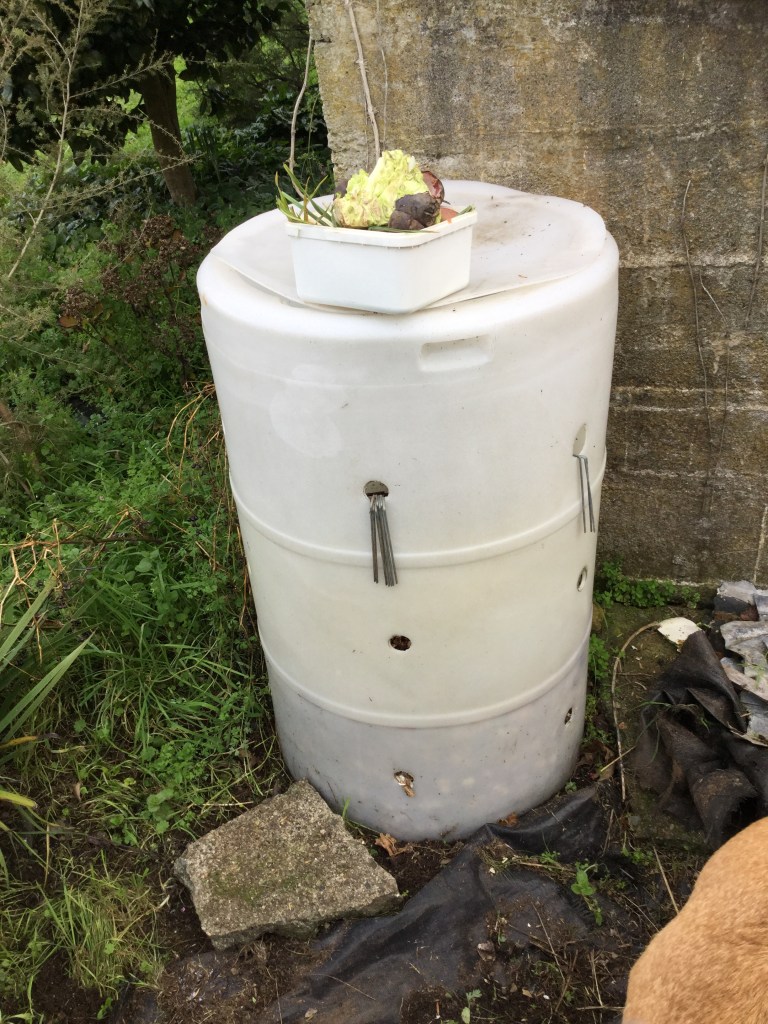
Once the large bucket is full and empty this large bucket to outside where there is a large drum with holes in the garden. This large white drum was left in the vast middle garden by the previous owners before 2014.

The holes surround the drum was for the air circulation, and of course, we know about having rats or mice creeping inside the drum, and it never happened due I checked regularly. Because we have got two dogs hanging around the gardens and fields by chasing rabbits, birds even possums.

Perhaps if you want to know what I have been doing recycling, other ways of making food scraps into the garden and updating my garden project… Follow my gardening blog…

Winter on the way!

Autumn was here
Glorious leaves – brown, yellow, red
warm sun shining through trees out in the fields. Leaves everywhere – there, over there, here or further away!
How perfect Autumn was here before the gloomy wild, wet winter to come!

Dogs have gone walkabout, sniffing out the scents – wild rabbits, pheasants, feral cats or birds out there. Running from one place to another place in the basking sunshine of Autumn season. How beautiful sight to see them running around!

Heating up the house

Winter has arrived already!

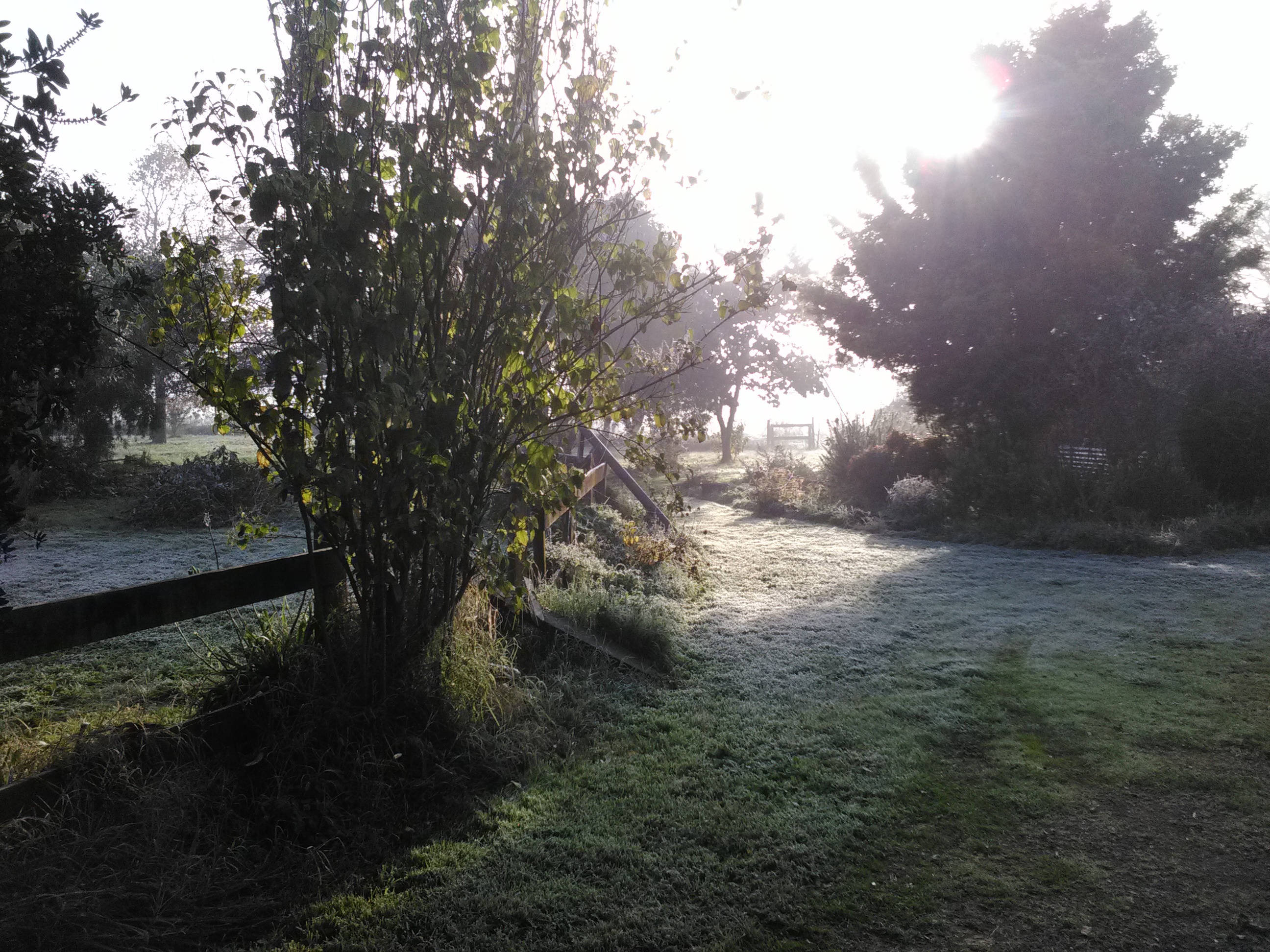
Jack the Frost – ouch and shivering on a freezing, frosty morning. Whiten over green grasses on the ground while sunshine peeping through tree branches in the field.

Oh, what a wonder of having a fireplace in the lounge – hooray! What a better way to give us warmth to our bodies and dogs’ bodies inside the house!

Let us do roasting marshmallows over the fire. Fire flames dancing through displaying red and yellow sparks inside the fireplace.

We can not wait for the beautiful Spring to come! So much work to be done in the garden – planting tulip and freesia bulbs, herb plants, iris rhizomes to be flowering soon while yellow dwarf native kowhais are flowering already. Too soon for Spring – Kowhai!!

Winter Flowers

This slideshow requires JavaScript.

Waking up – smelling the heavenly perfumes in the rooms

White and yellow flowers dancing in the air

How sweet smelling floating through the windows and side door!

Morning dews sight appearing in the winter garden

Clumps of Narcissus Papyraceus – what an awful long Latin name for any Deaf people to say or to finger spell!!

Our young dog sniffing perfume and wondering how strong does the smell?

To brighten up the gloomy day

Oh what a sight on a dreadful day!

For the richer or the poorer life out there!

poverty-india-      two sides of lives in the city

images

Watching the tv series – Les Misérables, I read the book by Victor Hugo and saw the performance through Opera Theatre. The story by Victor Hugo many years back in 1862, he wrote many stories on what he saw through his life by the nature of the law, justice, politic, religion, architecture and urban design of Paris and many other views. Hugo was a French poet, novelist, and dramatist of the Romantic movement. There was a movie called ‘The Hunchback of Notre Dame’ around 1956, which I recalled watching this movie. Hugo wrote this story around 1829 and finally completed in1831. Of course, several earliest films were dating back to 1905 – Esmeralda.

Today many people are facing poorer than richer in societies around the world. It was partially blamed to wars, financial crash, drug wars, climate global changing such as unable to grow fruits and vegetable due to storms, flooding or drought, job cuts and many other issues. On the other hand, a small number of people became more prosperous by achieving more financial such as winning lotto, inheritance from the family, business growths or as a drug lord.

In the past, we have: –

  • French Revolutions,
  • Industrial Revolution and Strike
  • The Great Fires – Rome 64 A.D, London 1212, 1666,  San Fransico 1906, Chicago 1871, and Boston 1872,
  • Poverty such as inadequate access to clean water and nutritious food, little or no access to livelihoods or jobs, conflict, inequality, poor education, climate change, lack of infrastructure, limited capacity of the Government and lack of reserves.
  •  Famine from the 15th Century to present including the Great Famine 1845 in Ireland, The Netherland, England and to other countries.
  • The Black Death – in Eurasia and spread to Europe from 1347 to 1351, then in Asia, North India and Uganda. Again repeat in Kyrgyzstan, China, European and the Middle East.
  • Cholera, bubonic plague, smallpox, and influenza
  • Sharemarket Crash, financial loss during the Depression Years
  • winning the lottery to gain wealth or business growth

What about people/children with disabilities’ lives in the world? Many of them are more likely to be economically disadvantaged, making them more vulnerable to crimes. People/children with disabilities have less access to health systems such as health care services, finding difficult in education without helps/support person.

The main barriers are: –

  • accessibility to anywhere such as public buildings without the ramp
  • the need for fair housing such as  flashing fire alarm lights for D/deaf, Hard of Hearing people,
  • Public Transportation such as lower ramp buses, seating area for the wheelchair
  • High unemployment
  • Disability Awareness
  • Communication – sign language for D/deaf and Hard of Hearing people/children, interpreters
  • social barriers – Differences (inequalities), in gender, ethnicity, race, religion, health or socioeconomic status, between individuals or groups that prevent them from achieving or accomplishing their goals, or deny their opportunity to access resources and to advance their interests.

Not everyone who has a disability is rich or wealthy while the other half of the people with disabilities are worst off or less worst off BUT they have a good heart and happy with their lives.

Take Richard Branson, Bill Gates, Stevie Wonder, Stephen Hawking, President Franklin Delano Roosevelt or Ralph Braun. They have living experience with disabilities. These people sent out many messages to the communities and to the Disabled Organisations in order to help other people/children with disabilities.