ahhhhh! What wrong with our own NZSL in ESOL teaching?

As a deaf teacher aide, ESOL tutor, NZSL tutor in me, something bought me attention in the ESOL classroom this month.How can any refugee students understand our native language – English if they come from Spain, Afghanistan, Columbia or China? The answer is difficult to grasp to understand our English speaking language even written language than sign language.Any ESOL teachers expect every refugee students to learn to listen the sounding out in English such in a conversation first. The ESOL teacher will write down the starter word, e.g., apple, the book on the white board and repeat saying the phrase.In the classroom, I noticed some of the hearing refugee students are struggling to learn to hear the sound of any words by looking at the sentence. Not all of them were able to find the word correctly after three weeks. They are still working on finding the word by saying out loud. Then they were told to write a word such as ‘apple’ without looking at the dictionary book. I looked up the survey result from many ESOL resources and the average result were 45% failed in listening and learning while 25% failed to read and write but they understood any words.mm, as a deaf ESOL signer/tutor/teacher aide with three languages – English, New Zealand Sign Language and English Signed language.I assist and supporting one Deaf refugee citizenship person in the same classroom as above. I use three languages, and lip read the ESOL teacher while this teacher is teaching all the students in the same room. It sounds an awfully lot of work for me to do than this ESOL teacher. However, this ESOL teacher uses less minimise of signs to this deaf student and less writing in the book. Impossible! Impossible!This ESOL teacher does not understand in our Deaf Sign Language and Deaf Culture. I gave a few excellent resources about Deaf people in the ESOL school, sign language and teaching methods with an ESOL Deaf student to this person and the director of the centre. There is a lot of works in the Literacy and Numeracy area from the Ministry of Education for Adult people including Deaf, Learning disabilities and refugee people in ESOL and Literacy courses in NZ.How the history of the first Deaf Education School established in New Zealand?Back in the 1860s, there was no Deaf school in New Zealand, and there were many families who have d/Deaf children here. The parents sent their Deaf child to England, Australia even to the USA where there were Deaf Schools. It was not very cheap to send their Deaf child to school by ship, and it was a very long way from home. In the early census record in New Zealand, it showed the year in 1878.”Deaf and Dumb.—The total number returned was 92; 25 of whom were stated to be “dumb,” but deafness from birth being a cause of dumbness, it is presumed that, in using the word “dumb,” deaf and dumb persons were referred to 58 of the total number were between 5 and 20 years of age, and 31 were upwards of 20 years of age.”https://www3.stats.govt.nz/historic_publications/1878-census/1878-results-census.html#idsect1_1_1927The first Deaf School established in Sumner, Christchurch, New Zealand in 1880. BUT there was a first teacher of the Deaf, and it was Miss Dorcas Mitchell of UK via Australia. She taught forty-two deaf children including eight of the Bradley Deaf children prior to 1877 and received no government assistance. Sadly Miss Dorcas Mitchell was not chosen to work for the Deaf Education as a Director by the Government and the Member of the Parliment chosen Gerit van Asch from England via The Netherlands. There were two different methods of teaching Deaf children in the early days – one was sign language by D. Mitchell while the second was oralist method by Gerit van Asch. However, during 1880, there was an international conference Education of the Deaf, in Milan there were many deaf educators including hearing educators. It was called ‘The Milan Conference’, and that was the time many educators banned sign language from being taught in the classroom. Many hearing educators believed oral education was better than signed language even they did not include a small number of Deaf educators during the voting system in Milan conference. But there were three Deaf directors of Europe, and they preferred to the used oral method.The sign language returned from time to time in 1910 to 1970s but not in the classrooms. Until the first sign language introduced to the Ministry of Education was a Total Communication (TC)- full English grammar including facial expression, body gestures, listening, speech, lip reading and finger spellings in the 1980s. That was an awfully lot of signs and the work to lip read, to write down even to learn to read for any Deaf person like me. Today we have many options of sign languages such as TC, NZSL (New Zealand Sign Language) and International Sign languages which are borrowed signs from ASL (America Sign Language), Auslan, British Signs. There is one more sign which we do not use

Source: ahhhhh! What wrong with our own NZSL in ESOL teaching?

A Butterfly Poem in NZSL

https://youtu.be/RXUfO66PA6wA poem which I signed in NZSL (New Zealand Sign Language)The Gracefulness of a butterflyHow gentle,and fragile they seem.Gently flutteringon a calm summers day,Floating like,a dream.But sadly,there time is over,Hardly before,it’s began.So enjoy your special moments,Like a butteflyin the sun.John Reid wrote this poem. 2012, 10 Janaury

Source: A Butterfly Poem in NZSL

A secret from the family

A baby born – one family kept one secret about their first child from their extended families and friends even workmates. During their baby scan, the nurse found out their pre-baby is not developing into a physical body. This family referral to me via to another organisation from their local specialist and GP last year.Last year, I received a new from this family, and they have a baby born late October – a healthy baby to the young family. The only people knew their secret, were their parents, two bosses and a couple of close friends.This family with a young baby – I called them, Charlie and Debbie as the parent and Alexandra as the baby. This family are the refugee from the Middle East. These names are fictional for this blog. They were grateful to listen to my experience with the friends I went to school, and I am working with one male who is over sixty-five years old.Alexandra was born with cerebral palsy and deaf. She is young and the specialist does not know if she will walk or have the speech to talk… Alexandra’s legs, spine and left side of her arm and hand are not perfect forms. She will continue to do physio regularly at home and the clinic. Charlie and Debbie are involved with one-three support groups this year. They want their daughter to become independent in the family. Charlie and Debbie hope to have some financial support for Alexandra because they are refugee recently in New Zealand. If they were in their homeland and they will suffer hardship financially support, and no helps in medical needs for many children with disabilities. Yes it is true and it is about giving empathy to other people who have not come across with disabled child in the family or friend. Today we have the new technology, parent support groups, equipment for children with special needs and resources of the support groups.Three of the stories, during my primary school at Hamilton West School and Hamilton Deaf Club/Hamilton Deaf Christian Fellowship. At Hamilton West School, we have a young girl called Ankica (fictional) with us. Today she is over fifty years old and doing well. We keep in touch most of the time.Ankica’s family came from Croatia in the early years and they lived in the Northland, New Zealand where there were many places to work as gum diggers. The Dalmatian families lived there in the Northland.Ankica born with cerebral palsy and deaf and nothing will stop her from doing any activities. Today she is still independent and uses advice from us wherever she wants to use, change the plan or to buy something.Her first language is English than New Zealand Sign Language or Total Communication Language. The Total Communication is a made up with Australian Sign Language, English Signed and oral during the 1980’s and 1990’s. Yes, Ankica is deaf and uses one-two hearing aids during the day but she does not sign much. Her life around at home and out in the community, she goes out in the wheelchair either manually or electric power wheelchair. Ankica is a self-employed at home and she used to work at the Workshop with other disabilities adult. Today she is a gardener, doing needleworks for business and outing with her favourite dog. Here is a photo of Ankica and her best friends – Timoti and Steve (fictional) and they helped her around at school even to follow her. The second person – an older man who his parents came from Poland via Germany after the war to New Zealand. His name was Jacek and he born cerebral palsy, speech impaired, limit in literacy and deaf. I visit and assist him every week or every fortnight for his needs. What he has was his left side of his body (leg and hand). Jacek does not use a wheelchair and a pair of hearing aids, and he walks around with his walking stick. His speech is difficult to understand at first, but we know what he was talking about from time to time. Jacek is working five days a week for the same company over forty-six years. The staff of the company looks after him and work together as an equal workplace. Recently the boss emailed me, and we discussed over the new technology which was computer digitalise calculators equipment for parts like nuts, bolts, screw caps – nothing big or small. I visited his boss and Jacek, and we sat down and talked together over the new technology if Jacek can do it or not. The company put Jacek on trial with the new technology and guess what! It was successful for Jacek to overcome the barrier by using the

Source: A secret from the family

A Time to plant and a time to uproot..

A Christmas is just around the corner for people who loves Christmas while other people who don’t celebrate Christmas.Waking up in the morning and preparing breakfast when looking out in the fields of flowers are blooming in time for summer in Waikato. Wondering what kind of news bring us today or tomorrow!In Syria – the city of AleppoThere is a never ending of peace for them and the most recent attack, was the chemical weapons attacking many people including many disabled people and children. They have nowhere to run or to hide somewhere in the underground buildings or the churches until the rescue teams come. Today they are trying to flee away from the war because there is no hope, no peace, no foods even medical supplies and the list so on. Syrian’s lives never been the same as in the past and the children may never see a kite flying in the sky, playing football or watching television. There are approximately 105,000 Deaf people in Syria (dated Dec 12th, 2016) and no one has got the actual figures of Deaf people or disabled people including children today. Because all the records have been lost or burned during the wars. I know there are more than 105,000 Deaf people including children and it could be 1 millions or even more than 1 millions people and children with disabilities. I have no idea if Institute for deaf and mute people (Aleppo / Halab) is there or gone in Aleppo. What about the school for the Deaf in Damascus, Homs and Lattakia?Syrian Deaf people sign in Levantine Arabic Sign Language which knows as Syro-Palestinian Sign Language. It is a combined of Jordon, Palestine, Syria and Lebanon. In Syrian refugee camp, there is a Center for Hope in Za’atari Camp and this Center for Hope runs by the Holy Land Institute for the Deaf. But it is not just for the Deaf people and children, there is a Za’atari Disability Center, with support from Episcopal Relief & Development. Looking at the verses which I alway remember this song from the Bible “Ecclesiastes 3” (New International Verison) during the church service and poetry. “A time to be born, a time to die,a time to plant and a time to uproot,a time to kill and a time to heal,a time to tear down and a time to build,a time to weep and a time to laugh,a time to mourn and a time to dance,a time to scatter stones and a time to gather them,a time to embrace and a time to refrain from embracing,a time to search and a time to give up,a time to keep and a time to throw away,a time to tear and a time to mend,a time to be silent and a time to speak,a time to love and a time to hate,a time for war and a time for peace. There is a song which sang by The Byrds and the lyric ‘Turn!, Turn!, Turn!’ It can be found on the websites even YouTube. This verse reminds me closer to Christmas time – the Birth of Jesus Christ and to share the good news with family and friends. Not just Christmas presents like toys and technology games/phone/mobile. The cities around Syria never be the same as in the past because it is all gone and into rubble buildings everywhere. There are many bitters and anger coming out from many Syrian people.Is there hope and peace for many Syrian people and children including people/children with disabilities?

Source: A Time to plant and a time to uproot..

Dealing with losing my job

Last night there was a final work Christmas dinner including ‘Thank you’ for working with Crosslight Trust, Hamilton, New Zealand. I was one of the staff members used to work for Crosslight Trust over seven years. My job role was a Community Support Worker/Tutor in Literacy/Numeracy/NZSL (New Zealand Sign Language) for the Deaf, Hearing Impaired and DeafBlind. But I am still working until the 22nd of December 2016 under Crosslight Trust. Let me explain what this business do and how does this business helps in the community….The Crosslight Trust established in 1988 and it was known as Barnabas Community House. They provided a full range of services, programmes and practical assistance to the community of Frankton and Dinsdale, West Hamilton area. Then came in 1998, we have had an Op Shop which was a second-hand shop for many low-income people and counselling. Finally the last of the services and assistance to the community were Cafe (Creative Activities for Elderly) and my work as Community Support Worker for the Deaf, Hearing Impaired and DeafBlind. Our service provided many food parcels, supporting and assisting many people who were on the income benefits by the Government.Sadly, this work place forced to closed down due to insufficient of funding by the Government and other organisations. Because our soon to be ex-workplace was under the Non-Profit Organisations. The only services, programmes and practical assistances – Op Shop, counselling and my work were shutting down, and leaving food parcels bank to another organisation under the Catholic Service and Cafe to another church – West Hamilton Community. It was a bit of blow for me because my work with the Deaf, Hearing Impaired and Deafblind is lost in the community and leaving them to the organisations such as Deaf Aotearoa, Blind Foundation and Hearing Association in Hamilton. These organisations do not have the same kind of services which I provide assisting, supporting in literacy/numeracy even teaching NZSL in workplaces. Each persons, I support and assisting them were not very happy but they will have to put up with the Deaf Aotearoa service which limited to their needs etc. It is a barrier and there are gaps between one organisation to another organisation.This morning I was looking back to the past when I started in 2008 and the people who I worked with and supported them. There were so many funny sides, most embarrassed things that they have done wrong, travelling out to the prison to teach one Deaf man for his literacy and the list so on.. One chap who is over severy-two came into my office and he showed me his ‘burnt’ hearing aids. I could not laugh in front of him and I asked him how he does do this. His replied was simple logic – put in the microwave to dry out the damp and wetness before going out to a Black & White Tie dinner. His hearing aids got damp and wet due to the shower while he was walking around the park and he realised that he was running late for dinner. He put his hearing aid in the microwave while he had a shower. I asked him if his audiologist explained the golden rule about putting the hearing aid in a safe place for drying out. What he replied was NO. The next problem was his insurance company refused to pay him for the replaced hearing aid and I emailed his insurance company if they were aware of the cost of hearing aids. The Insurance company replied was less than NZ$400.00 and I replied to them saying it was over NZ$1,000. It seemed logic that most of the staff at the Insurance Company have no idea on the cost of our disabilities equipment. We sorted out with his Insurance Company and this chap got a replaced hearing aid along with a bright Yellow stick-note “DO NOT PLACE HEARING AID IN THE MICROWAVE”. This Insurance Company staff have learnt about us – People with disabilities including Deaf, Hearing Impaired and DeafBlind. They changed and updated the policy through the Head Office based in Australia. Another memory was the trip to the prison once a week; I went through the barrier of gates and staff checked me. One day I waited and waited by the special way of testing at the gates where there were video cameras around and finally got in. Why? When I was at the barrier gate, and there was a guy doing ride on mower which was so loud. The staff realised what the problem was and I spoke to the top security officer to discuss over this accessible for me as a dea

Source: Dealing with losing my job

kia haha! (be strong)

Over a week, there has been a destructive earthquake – magnitude 7.8 quake in our country – New Zealand. This time it is in the upper South Island where there is the most tourist place called Kaikoura and the surrounding areas such as Hanmer Springs, Culverden and Cheviot. Kaikoura is a famous place where tourists visit and watch whales, eating crayfishes, birds watching or cave tours. There are so many activities where tourists can do during the holidays. One problem is the highway road along the coast from Christchurch to Picton which we call the Gateway to the North Island. The travelling times between Christchurch to Kaikoura is two hours while from Kaikoura to Picton is one and a half hour. The Gateway Costal Highway is blocking many people who are unable to travel in and out due to many landslips. Many tourists and local people are trying to get out or get foods, petrol and medical supplies into the devastated areas.
Here is one of the miracle story in the Herald NZ this morning.
http://www.nzherald.co.nz/nz/news/article.cfm?c_id=1&objectid=11747702

A centenarian lady pulled out of her historian home which called The Elms Homestead in Kaikoura. Here is one photo of the historian homestead. http://www.heritage.org.nz/the-list/details/7693

Many of the D/deaf people and their families keep in touch by texting and emails to contact their friends and other families who lives outside but the main problem was our TVNZ (Television New Zealand) did not allow any interpreters on the breaking news broadcasting. Yes, they did not do anything better for many D/deaf and hearing impaired people around NZ (New Zealand) again. A couple of days later, the group called Deaf Action which I have involved with this group, and we signed the petitions – the demand for interpreters on the breaking news during any natural disasters e.g. Earthquake for the Government. Lucky we have got a Minister for Disability Issues and our MP (Member of the Parliament) – Mojo Mathers who she is a hearing impaired lady. These two ladies sorted out the problem, and we have interpreters on the live broadcasting news over the last few days. It was really embarrassing for the rest of the world because, in Australia, USA, UK even in Europe, there is a plenty of interpreters on the live broadcasting news for the D/deaf people. So far, the Government and TVNZ still have not learnt anything better for us – D/deaf people even hearing impaired people. In the past, we have a famous NZ interpreter – Jeremy Borland and he had seen on TV during the earthquake in 2011. We don’t forget about the other interpreter – Evelyn Pateman who paired with Jeremy. I remember him when he was a trained interpreter for my University studies many years ago.
https://mcdem2.cwp.govt.nz/about/news-and-events/news/sign-language-interpreter-jeremy-borland-backing-new-zealand-shakeout/

The idea of making a video for the D/deaf community successful and here is one of the clips for you to look at his work for the Deaf community around NZ.
https://www.youtube.com/watch?v=zz1GCUiatBQ

Looking back in 2010 and 2011, Christchurch suffered two destructive earthquakes, and it made a huge impact on everyone including my late father’s side families living there. There was one hundred eighty-five people died in 2011 and this year it was two people died.
We never forget this and we continue to carry on doing the works. My great grandaunt wrote an email several years ago and she mentions “bugger the historian buildings and there were no used for now”. We can not keep the historian buildings for preserving and restoring again because it cost a lot of money. There are many people out there still want to keep the historian buildings today. In Christchurch, there was an oldest Deaf Society building in the past (1965 and the land in 1960) and they were forced and accepted that the building was not a bulletproof for the Deaf community. Also, it was uneconomical to repair the building too.

For us, we were not aware of the tremors in the Waikato area, but our dogs sensed something not right throughout the night of the earthquake. I received a couple of texts and emails in the next day. Some of my deaf friends who lives in Flagstaff, did feel the tremors and she thoughts it was her little dog. One thing she forgot was to have the brake on in her special bed which got wheels. Yes, there were some people who felt the tremors when I was teaching NZSL (New Zealand Sign Language) at the Central Library last week.

Sign Language

Deaf people around the world communicate using sign language as distinct from spoken language in their every day lives. A Sign Language is a visual language that uses a system of manual, facial and body movements as the means of communication. Sign language is not an universal language, and different sign languages are used in different countries, like the many spoken languages all over the world. 

https://wfdeaf.org/our-work/focus-areas/sign-language

Pin it

Paste a link and press Enterhttp://www.instytut-gluchoniemych.waw.pl/pliki/falkowski_zyciorys.htm

A sign language (also signed language) is a language which chiefly uses manual communication to convey meaning, as opposed to acoustically conveyed sound patterns. This can involve simultaneously combining hand shapes, orientation and movement of the hands, arms or body, and facial expressions to express a speaker’s thoughts. Sign languages share many similarities with spoken languages (sometimes called “oral languages”, which depend primarily on sound), which is why linguists consider both to be natural languages. Although there are also some significant differences between signed and spoken languages, such as how they use space grammatically, sign languages show the same linguistic properties and use the same language faculty as do spoken languages.[1][2] They should not be confused with body language, which is a kind of non-linguistic communication.  https://en.wikipedia.org/wiki/Sign_language

Mm, There are so many reasons to known where, who wrote, who was the first person created sign language for the D/deaf people and the lists go on…. Not to be confused with sign language as sign boards e.g. Keep Calm, Do not feed the cat, etc. In my theory, sign language gives benefit for all kind of people including children with disabilities, not just D/deaf people because there are people/children with speech impaired or learning disabilities out there and they can not communicate with their family even friends.  One of my experiences, I am teaching a group of young adults with multiple disabilities including learning disabilities and deaf.  More than four years ago, they came to the central library in the city of Hamilton where I am teaching NZSL (New Zealand Sign Language) and first of all; they were in shell/fragile life and unable to communicate back to their staff and family. Every week, I noticed there has been developing when they starting to open up and able to communicate. Today they were able to help and communicate in sign language to their staff, friends and family. Their support staff even managers learnt to communicate with them easily without having frustration, conflict in conversation e.g. throwing at the staff or friends in anger. My method of teaching is the tool for them – basic sign language, visual sign shapes, emotion signs and body gestures. 

Looking back on how sign language develops in the earliest days…. Here is one of the examples here – John Bulwer wrote the book called Chirologia in 1644 and it was about the manual alphabets. It can be found on this website. https://en.wikipedia.org/wiki/File:Jbulwer.jpgThe first record of the books about sign language and deaf, was the fifth century BC by Plato and he wrote about Socrates and his comment, “If we hadn’t a voice or a tongue, and wanted to express things to one another, wouldn’t we try to make signs by moving our hands, head, and the rest of our body, just as dumb people do at present?”[4]. This quote extracts from en.wikipedia as above. When a person who can not speak and it is not a problem because this person gives any gestures such as drink, phone, etc. I have alway asked by many students who came to learn sign language, and I asked them what did they sign for glasses or drink. They replied by body gesture as in glasses or drink, and I told them that were the signs they have been doing all the times. 

Sign Language plays an important role for many D/deaf people to overcome communicate with everyone in the communities around the world over many years. Sign language has changed and evolved into the system that people see today, just like people who speaks their mother’s tongue.

How does the sign language develop in the early in human history?

Think about hunter-gatherer societies, Egyptian hieroglyphs, counting tokens – in Mesopotamia, pictographs, cuneiform, and many other kinds of languages. The hunter-gatherer used their communicated tools by doing gestures and the ‘hoots’, and they were lower primates around 25,000-30,000 years BP. The making of communication when a primate group met another primate group from the outside circle, they developed a new method of the tool such as a rudimentary oral communication.

Humans rather using the word – primate, starting using painting pictures on cave walls and the painting pictures represented a story, spirit message, ritual exercise. These painting pictures can be found on the cave walls around the world today.

About 9,000 years ago or a bit more, the next communication was a counting token. This method was to use for trade or owning the property based on an agreement with one family to another family.

Another tool of communication was Cuneiform – a picture of a symbol which represented an idea or concept, ideographs and to represent sounds.

We assume that in the ancient times where a person is deaf and she/he would have difficulty speaking and learning the language. They continue to communicate with hand and facial gestures to enhance ideas in the hearing society.

The first record in the Deaf history was ca. 575-550 BC – a quote

“Deaf son (name unknown) of Croesus, king of Lydia; first recorded the deaf person in history. Croesus’ other son, Athys, was hearing and had his name preserved for posterity. Mentioned in Book I of Herodotus’ History, and in the Cyropaedia by Xenophon. (Some other sources say Croesus had only one son, deaf, named Athys, but this seems to be incorrect.) In Lydian-Greek mythology, Croesus consulted an oracle about his deaf and mute son, and was told the son would first speak only on “an unhappy day”. The legend goes on to say that when Croesus was later defeated in a battle, his life was saved when his deaf son suddenly spoke to request his father’s life be spared, although Croesus lost his empire.” 

 APA

Timeline of recorded deaf history – LibGuides at Gallaudet … (n.d.). Retrieved from http://libguides.gallaudet.edu/content.php?pid=352126&sid=2881782

Other examples can be found in the ancient Egypt and Greece, and it was fascinating to compare with Egypt and Greece. Because in the ancient time, during the BC era, many disabled people were not harmed by Egyptian and they lived in a generous way of life. The D/deaf people were selected by gods because of their peculiar behaviour. They were treated respectfully and educating through the use of hieroglyphs and gesture signs. In Greece, The Greeks felt better to kill any disabled people/children because the Greeks believe anyone would be the burden to society and put down to death. Yes, there are many D/deaf people were mistreated and persecuted because they were not given a chance to work on creating a language.

In Spain, in 1500’s Pedro Ponce de Leon, a Benedictine monk and he created the first sign language – “vow of silence” in the monastery. In 1620, Juan Pablo Bonet wrote a sign language dictionary and in the book he showed the outline how to learn sign language and contained the first sign language alphabet.

In France, the birth of formal sign language by Charles Michel del l’Eppe in 1775 and he was a French priest, an early advocate for deaf rights.

He established the first Deaf school which was the original public school for the deaf children. It is called the Insititution Nationale des Sourds-Muets a Paris (National Institute for Deaf-Mutes in Paris) and the school is there today. Charles Michel de l’Eppe was called the ‘ Father of the Deaf.’

How did this happen in France? One day l’Eppe was passing and stopping at one of the local house for a night. The family offered him to stay for the night, and he noticed two girls communicated differently way as body gesture. He asked the mother, and she replied that her two girls were deaf. He realised that sign language would benefit for any D/deaf children/people to communicate through school and in the society. He believed that sign language would help them a better life and able to interact with other people as their mother’s tongue.

The sign language is Old French Sign Language, and in this language, there are symbolic gestures that conveyed concepts and a sign language alphabet for the French language.

Looking at babies and their conductivities from twelve weeks to preschools, which comes first speech or gesture. To my understanding, it is the gesture before language development, social and cognitive because babies are growing all the times until they mastered their speech. They use their eyes to explores around our daily activities and grabbing our attended to them by making noises such as crying. Babies learn to memorise our mother’s tongue and who were are related to them from eight to twelve weeks and onward. That is how they are starting to use ‘coo’ or babbles words such as ‘b’,’p’ and ‘m’.

If a baby diagnosed the hearing loss and it may not/may be a problem for any parents of the deaf baby. There are plenty of resources on sign language for baby in the cognitive education around the world. Then the parents would start teaching their child in sign language in the way of the basic word such as drink, mum, dad. The child will develop a photo memory from time to time, and they learn up to 200 sign words a year than a child with speech development where it would be under 65 words. Every sign words they see, are stored in the child’s brain as a memory bank. A deaf child will develop in their way of creating and evolving a new sign language in the life.

It is the same as any teenagers developing a new word such as youse, etc. But many D/deaf teenagers and adult missed out many new words or have not come across anywhere in the newspaper, job application, health forms. It is a difficulty for any D/deaf person to keep up to date.

There are many Deaf families, and their first language is sign language of course. They communicate easily with each other in the same household even in the Deaf community. When they are outside their Deaf community into the hearing society, it brings a barrier of communicating, and they need an interpreter/communicator in the society. It is paramount for everyone because it is part of our life. I know some of the hearing children who comes from their deaf parents, and they feel embarrasses when their hearing friends come over to stay or to visit. The hearing children who I know, are brave enough to tell their hearing friends, and they do not mind. They share and learn to sign too. 

With Sign Language, I am Equal. Part Four

Equal Participation – Deaf people need to have equal access of participation in the personal, public and political area as everybody else. More importantly, it is necessary to ensure that deaf people have the opportunity to take up leadership roles, so that deaf people themselves can appropriately advocate for their rights and be involved in all decision-making processes  concerning their lives. This is a reflection of the slogan “Nothing About Us, Without Us.” equal-participation

Deaf Aotearoa – Equal Participation

Look at Japan Deaf community

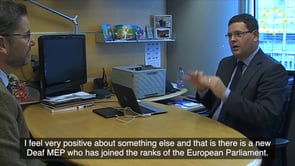
deaf-mps

Lifelong Learning – Access to education, vocation training and ongoing professional training and development, is key to gaining and retaining a job and earning a wage that allows independent living.

Enabling Good LIve

Deaf Indians = work

Deaf Christian Indian


Here are the last slogans over the International Deaf Week and my apologise that I have not completed these last two topics. There are so much works to be done in the Deaf communities along with the hearing communities around the world.

Today we have schools for the Deaf, Federation for the Deaf, Deaf Sports, Deaf theatres and the lists so on. But not every thing we expect to achieve our dream goal such as offical sign languages, deaf people who have equal right to work in the workplace as everyone, health sectors etc around the world. Because everyones are still learning or not fully aware that there are many D/deaf people out there and it is often we are isolated or separate from the hearing community due to communicate or the lack of keeping in touch. We, the Deaf people are not the only one, what about people who living in the rural country, out of reach county like in the desert in Africa, war-torn country with no network communication.

First of all, there are about 70 millions Deaf people who use sign language as their first language or mother tongue and the number of sign languages around the world are over 300. So far there are 36 legal recognition of sign languages around the world including here in New Zealand. Yes, in New Zealand, our NZSL (New Zealand Sign Language) passed the bill through the Government 10 years ago. It was announced on April 6th 2006 and it was a couple day before my birthday. This was how I remember easily even it was on our late cousin’s birthday too.

I am a deaf person who come from a hearing family – solo mother with four children, a deaf advocate for many disabled people, a leadership mentor under EGL, tutor for Deaf adults in literacy/numeracy, teacher aide, a community support worker and the list so on. I am often the last person to be contact or miss out the important thing by any hearing people. I have been there by missing out or left out for many years. Many other Deaf people have the same path as me if they were married to a hearing person, living in a relationship, working in the same building or in the extendend family.

Not everyones are lucky if they have got special equipment in their homes, workplaces, equal pay for their jobs, accessible or unaccessible to public/private transports even buildings and the list so on. What about the poor countries like in Africa or in India? Did they have got equipment to help them to become independent or not. Basically it is the Government and financial for everyone in the country. Today in New Zealand we, Deaf Action lobbies for flashing fire/smoke alarm in all public/private building because the Government does not recognise our important need for us to see as visual sight instead of hearing the sound.

Here is another announcement from the World Federation of the Deaf  Language Rights of Deaf Children

The World Federation of the Deaf (WFD) is an international non-governmental organisation which promotes the human rights of deaf people worldwide. An important part of our work is the promotion of the rights of deaf people, including deaf-blind people and deaf people with disabilities, to an education in their native indigenous sign language(s). The need for natural language acquisition in sign language is crucial for all deaf people.

The UN Convention on the Rights of Persons with Disabilities (UN CRPD) commits governments to recognising the importance of sign languages and promoting their use. The UN CRPD also entitles deaf people, on an equal basis with others, to recognition and support of their specific cultural and linguistic identity, including sign languages and deaf culture. Being allowed to develop their cultural and linguistic identities – including in educational settings – is a key right of deaf children.

What about Deaf adult and they need to improve their literacy/numeracy for their works and around home with their children!!  There are tutors/teachers of the Deaf adults like me around the world and we are seeking funding for us to continue teaching Deaf adults for example like learning to drive a car, assignments in electrical tools, building code, health issues. I am still learning to improve by writing this blog and doing writing books in Deaf History about our Hamilton Deaf Units in Waikato.


With the Sign Language, I am Equal: Part Three

Another campaign messages: Equal Employment Opportunities and Bilingual Education

Bilingual Education: Urges stakeholders to accept the need for bilingual education for a deaf child and to understand how quality bilingual education should be provided in a sign language environment. Bilingual education is a social-cultural approach of using sign language as the language of instruction in all subjects with a parallel strong emphasis on teaching reading and writing of the language used in the country or society.


Prince Harry visited to a Deaf school in Africa

Zero Project in Asia Deaf schools

The Bilingual Education around the world, do you realise that there are many urgent needs for the teachers, principals including Prime Minister/MPs to continue teaching sign language for the deaf children in bilingual education or not?

Deaf children have the right to access to be in their school by having a teacher aide with sign language skill and Deaf culture, equipment such as flashing lights, Ipad for recording from teacher like homework to do and to teach new friends to learn to sign language. In New Zealand, there will be shortage of teacher aide/support worker for the special needs children/deaf children due to funding by the Government. It will be frustrating for many deaf children who can not access to education materials and without interpreters/teacher aides because they will be lost and unable to catch up with learning abilities when they reaches adult even during in the transition to work place or stay home. I was a deaf teacher aide for two teenager boys in the past and I discovered their learning problems where the teachers did not picked up. These two teenagers developed more fluency in sign language by using NZSL (and English Signed for literacy) by me. One of these teenager boys have got a Deaf mother and their first language was NZSL. The second teenager boy’s parent were one of the migrant people and his parents came to live in New Zealand from Laos. Because the parents want the best education for their two boys in New Zealand. The second teenager and his parents’s first language was a tonal language – Tai-Kadal language family and it is the official language of Laos and closely related to Thai language. Our NZSL is listed in the school curriculum and the children will have the right to access any language including NZSL they choose to learn in bilingual education. BUT we need more resources such as video of story telling along with interpreters and closed captioning and special technology such as Skype for video conferencing.

You will be amazed to read this details from my own experience when I was working with people who come from oversea. I am continuing to work with a Deaf Somalia lady for her literacy today.

Equal Employment Opportunities: Sign language competency for communication and provision of interpreters mean that deaf people can do almost any job. It is important for deaf people to equally aspire securing jobs that reflect their interest and competency. The main barriers to employment arise from inaccessible work environments rather than an inability to hear.

There are 360 million people worldwide who have hearing loss/deaf. A rough idea of how many D/deaf people are working in the USA and there are around 46%-58% according to the research by the Galluadet Unvierstiy in 2011 and leaving around 4%-5% of Deaf people who are not working in USA.  US Deaf people who are working or not     One person wrote a blog and he mention that there are 67% of Australian Deaf people who are unemployed while in the developed countries there are 90% of unemployed Deaf people.

Over the last few years, there has been increasing awareness to hire deaf people to workforce such as working in a cafe, runs a Deaf cafe, coffee cafe, McDonalds, offices and factories. In Europe, England, Canada and USA, I visited friends and family of mine during my OE/holiday for many years and I popped in one of many cafe where there was a deaf person working there. It was pleasures to see that the business hired deaf person and able to interacted with many customers. I recalled one time when I was in Paris and I was signing to a few deaf people who are not from France, in the cafe and pizza restaurants. My deaf friends do not understand French language let alone leaving me to read and ordered for them. One of the waiter did not realise that I was deaf even he noticed that I was signing to my deaf friends. He communicated with me through body gesture and spoken French langauge (simple French phrases) to me. We understood well and ordered the meal no problem as all. The manager noticed us and out of the blue I was given a free dinner one evening when I walked back to the hotel via this cafe after the conference. This waiter and the manager knew about Deaf people and the Deaf history in Paris. In Lyon, I was staying there and I visited many cafe during my walk about around the countryside. I mention to the staff in Lyon that I am deaf. Out of blue, they signed to me even they were not deaf. I asked them how did they know deaf people or sign language. Their replied was there is a large Deaf families living in Lyon for many years. Simple that is the way how staff should hire deaf people to work or to learn to sign.

Many D/deaf people have got the skill during the transition from school to training college or University. It was their choice to studying carpentry, farming, barista, lawyer, linguist or teacher for the Deaf etc. I was one of them in New Zealand. Not every Deaf person got a good job to their liking because they need money to pay mortgage, bills, rents and foods etc. I know some Deaf people who are working as a welder, mechanics, farmers, home care assistants, cleaners, draftsman even a courier. One of my friends, he works for one company and he works this company over 46 years in Hamilton. His formates are excellent with him and they have no problem working with him. His disabilities are deaf, speech impaired and cerebral palsy. His workplace adapted the equipment and installed a new technology that matched him to work over the period of times. The latest technology, his manager asked me to visit and discussed over the technology that will suit this disabled friend of mine. So far, there have been no problem at work.

We, Deaf people completed the work by deadline time than normal people who can not completed their deadline works. I do know why because many normal people chatted so long, tend to forget where the information are, using more over the phone lines than checking emails/faxes more often etc. We have visual contact on every details to get the work done. There are many other issues which I can not mention here.

What about the rest of the Deaf people in New Zealand? There is one lady who I know and her qualification is a law. She can not get a job because of the cost to support her in the workplace.  There is another Deaf lady who is a doctor and she is lucky to have some special equipment that support her around workplace. It cost her a lot of money to buy equipments. In New Zealand, many workplaces are slow to learn to understand about Deaf culture, sign language and getting the equipment into workplaces. The other problems are attitude and financial BUT that problems should be removed and start looking at yourself to change your attitude. Do not embarrasses yourself if you have a deaf person working with you!

There is a guideline about Equal Employment Opportunity in USA and have a good read it.

Equal Employment Opportunity in USA

Simple solution for you all – starting learning about Deaf people and what their skill are. Do not worry about financial to get special equipment even get a flashing fire alarm in workplace. A flashing fire alarm is a part of the rule for Occupation Health and Safety and it is equal for everyone. Technology is growing and improving better for us to access in workplace. You will realise that it is only one-off by getting equipment than hiring and firing many people in the workplace.

Update: With the sign language, I am Equal. Part two…

Here are the example of sign language from Somali Deaf person who I am supporting over four years.

641085471

This picture of sign recorded in Egypt and it is a one hand manual alphabets. Around the world it is a universal sign language and it is the same for spoken language. But some countries have the similar signs that related to the earliest days for example USA sign language traced back to France and it produced the first old French-American sign language in 1817. But it has been proposed that ASL (American Sign Language) is a creole with LSF (French Sign Language) as the superstrate language and with the native village sign languages as substrate languages. Our NZSL is not the same way as in the literacy way for example deaf people write in sentence by signing like – School, I go. Me go home., me, have two children home., 3pm movie Hamilton. These sentences when deaf people wrote down on the paper or email, are linked to their NZSL conversation. It does not show that they are bad in writing in English because it is their communicate methods. They do not realise that there is a rule when writing in full English grammar because no one explained to them during the school. In NZSL, yes there are full morphology, syntax and structures.

There are so much to say to you all in this blog. I just want to give you some ideas on how D/deaf people develop sign language around the world. I will do some more stories on this one in the future…

Accessibility – We have the right to access anywhere such as public buildings, government buildings, car parks, home, transports, laws and technology. For example, we have televisions, Internet, YouTube, video in our homes and in public buildings such as in the library, movie theatre for many years.

Captioning in television/video. No one thought about captioning/subtitles for the D/deaf and Hearing Impaired people because they presume that we could hear or lip read a bit or well. The answer is wrong and we can not lip read well, let alone we can not hear the sound or voice over the phone, mobile, by watching the television/video or to see singers in music video etc. We do not feel the same right as the other people who can and we feel left out for many years. We were privilege to have some wonderful people established the idea to produced captioned television programme series, music video over 40 years ago. That is a start, but we need more because technology keep changing and updating for everyone.

Phones/faxes.  Many mobile phones are wonderful for us to use by sending/receiving texts and video conferencing through signing each others than using voice mails/messages which was impossible for us. Many landline phones are no good for us which it is the same for mobile phones except texting/video. In the old days, fax machines were excellent tools for us and we write out on paper to send out or to received in. Sadly there are not many fax machines available for elderly Deaf people because they do not like computer or never want to try out internet/email. It cost them too much money on their superannuation because they do not receive a lot of money even they will say it is wasting money on buying expensvie computers/tablets.

Interpreters – What a wonderful example to use an interpreter available for us during the public meetings, job interview, News/Parliament broadcasting in Europe, Canada and USA but not in New Zealand and Australia. The only time we have is to watch Emergency new breaking on Television and there will be an interpreter available. For example, during the Christchurch Earthquake, in the earliest television breaking news, there was no interpreter to tell many Deaf people around New Zealand and no one had no idea what happened. It was a major crisis and it made impact on the Deaf community because there was no access to information. Our Government staffs including MPs and the Broadcasting Media accepted that we need the information via interpreters because it was our right to access information through media such as Internet and television than listening on the radio.

What about fire alarms in public/government buildings and in our homes? We have been told to installed a fire alarm, yeh BUT what about the flashing light? The service people and the technicians people have forgotten about us again because they never thought about our deafness. We can not hear the sound from the fire alarm and we do not want to depended on other people in the house or in the buildings even workplace. We want to be independent because we CAN DO ourselves just like everyone. The main problem is the cost of making flashing fire alarm for us and the price tag range from $500 to $900 for one equipment. In the shops, the products – smoke/fire alarm are from $20 to $50 and these products does not have flashing light systems.